Exam questions · Biology · Mitosis, Growth and Stem Cells
The Cell Cycle and Mitosis
- 9 exam questions
- 25 marks
- 8 quick checks
-
1 Name [1 mark]
Name the type of cell division that produces two genetically identical cells for growth and repair.
Show answerHide answer
Model answer
Mitosis.
Mark scheme
- Mitosis — 1 mark
-
2 State [2 marks]
State two reasons why mitosis is important in a human.
Show answerHide answer
Model answer
Any two from: growth (and development); repair of damaged tissue; replacement of worn-out cells.
Mark scheme
- Growth / development — 1 mark
- Repair of damaged tissue — 1 mark
- Replacement of cells — 1 mark
-
3 Name [3 marks]
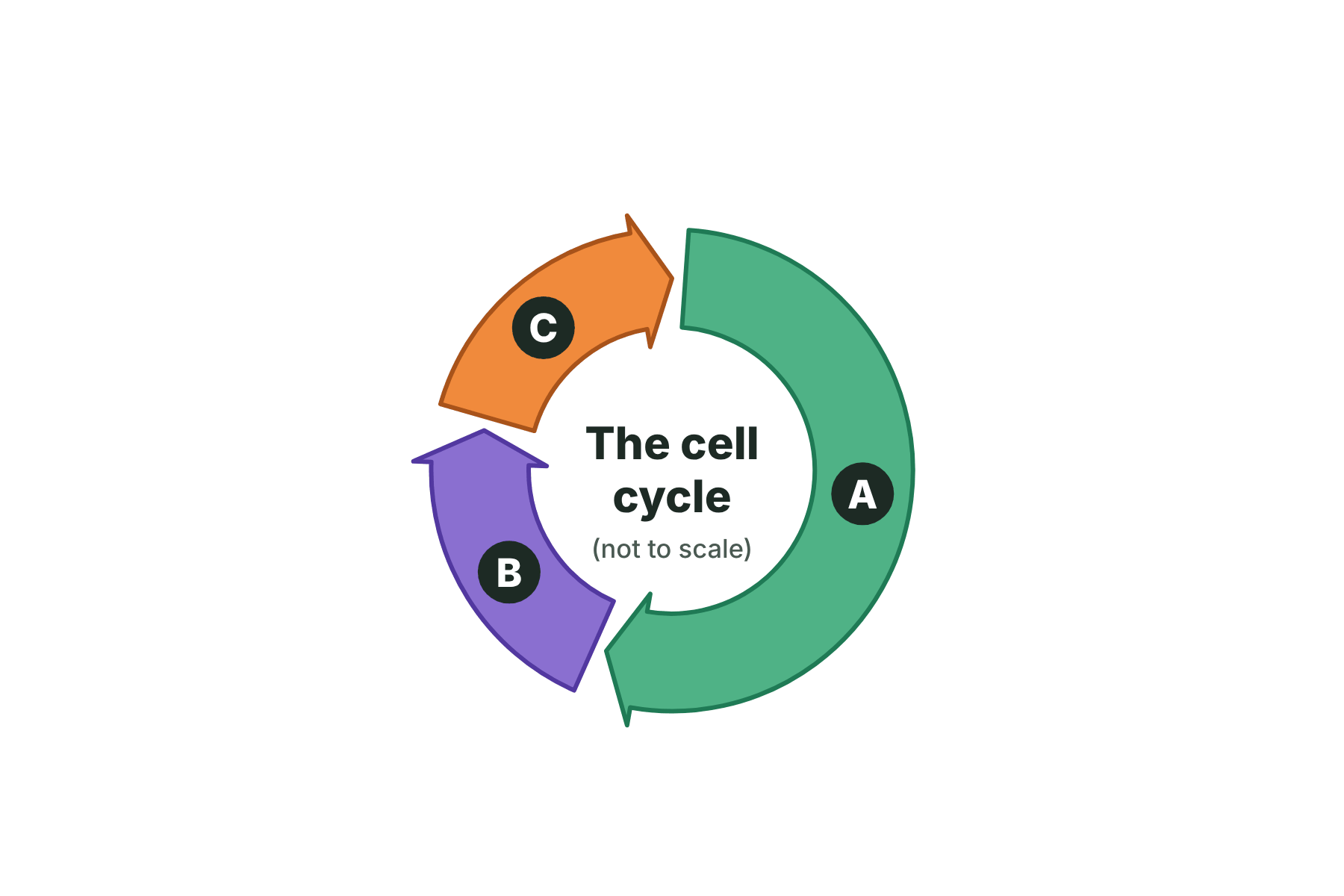
Figure 1 shows the three stages of the cell cycle. Name the stages A, B and C.
Show answerHide answer
Model answer
A is growth and DNA replication (accept interphase). B is mitosis. C is the division of the cytoplasm and cell membrane (accept cytokinesis).
Mark scheme
- A: growth and DNA replication — 1 mark
- B: mitosis — 1 mark
- C: the cytoplasm (and cell membrane) divides — 1 mark
-
4 Describe [3 marks]
Describe what happens in a cell during the first stage of the cell cycle, before mitosis.
Show answerHide answer
Model answer
The cell grows. The number of sub-cellular structures, such as ribosomes and mitochondria, increases. The DNA replicates to form two copies of each chromosome.
Mark scheme
- The cell grows — 1 mark
- More ribosomes and mitochondria / sub-cellular structures — 1 mark
- DNA replicates, giving two copies of each chromosome — 1 mark
-
5 Explain [2 marks]
A human skin cell has 46 chromosomes. It divides by mitosis. State the number of chromosomes in each new cell, and explain your answer.
Show answerHide answer
Model answer
46 in each new cell. The DNA is copied before the cell divides, and one copy of each chromosome is pulled to each end, so each new cell gets a full set.
Mark scheme
- 46 — 1 mark
- DNA replicated first / one copy of every chromosome goes to each new cell — 1 mark
-
6 Put in order [2 marks]
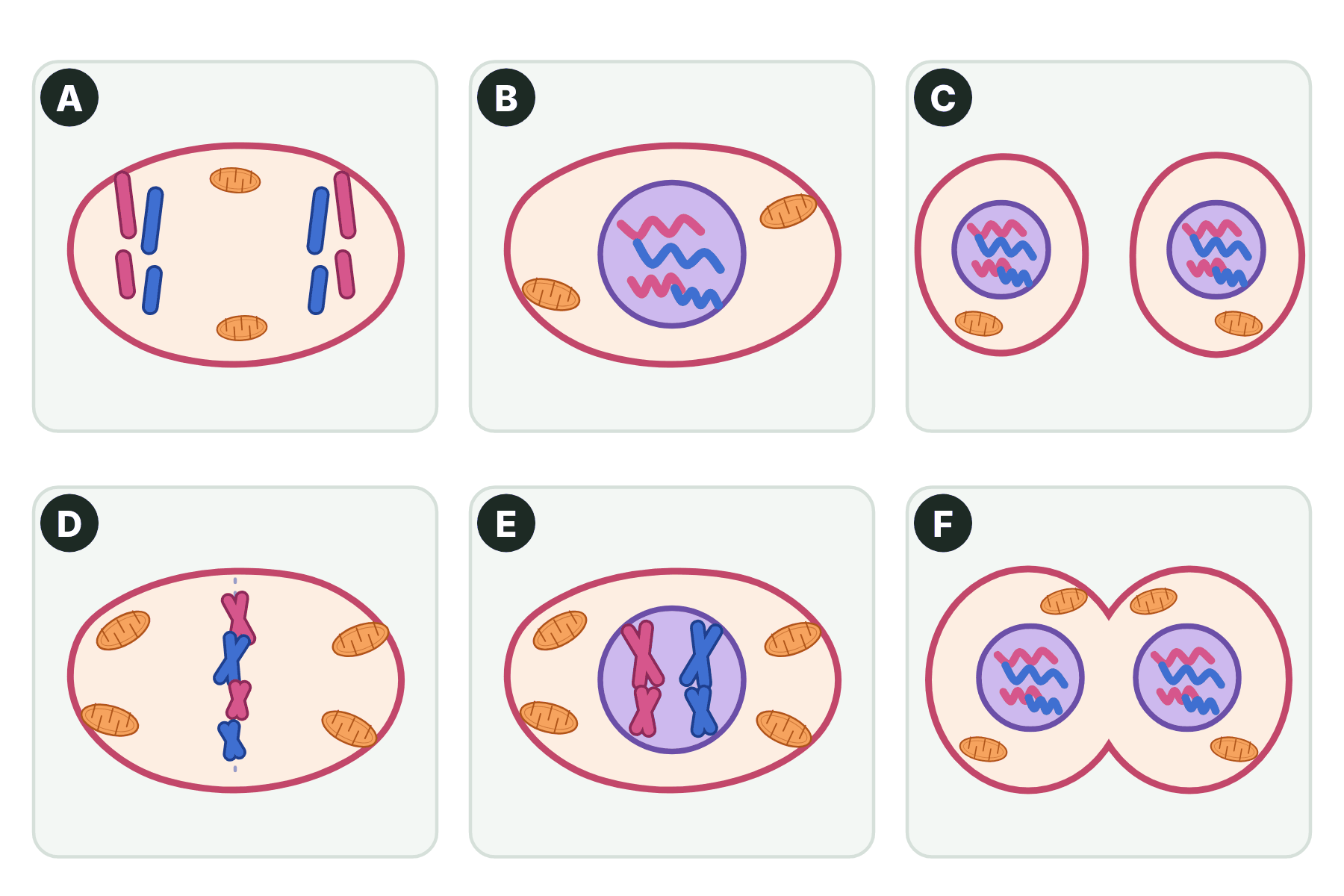
Figure 2 shows six stages of mitosis in the wrong order. Write the letters in the correct order, starting with the cell before it divides.
Show answerHide answer
Model answer
B, E, D, A, F, C.
Mark scheme
- B first and C last — 1 mark
- E, D, A, F in the correct order between them — 1 mark
-
7 Calculate [2 marks]
A cell divides by mitosis. Every new cell then divides, and this happens 5 times in total. Calculate the number of cells at the end.
Show answerHide answer
Model answer
\(2^{5} = 32\) cells.
Mark scheme
- Doubles each time / \(2^{5}\) — 1 mark
- 32 — 1 mark
-
8 Explain [4 marks]
Explain how mitosis helps a cut in the skin to heal.
Show answerHide answer
Model answer
Cells at the edge of the cut divide by mitosis. This makes new cells, which fill the gap and replace the damaged cells. The new cells are genetically identical to the original skin cells, so they have the same genes and do the same job, and the skin is repaired.
Mark scheme
- Cells next to the cut divide by mitosis — 1 mark
- New cells are made — 1 mark
- They fill the gap / replace damaged cells — 1 mark
- New cells are genetically identical, so they do the same job — 1 mark
-
9 Describe and explain [6 marks]
Describe the stages of the cell cycle, and explain why mitosis produces two genetically identical cells.
Show answerHide answer
Model answer
In the first stage the cell grows and the numbers of ribosomes and mitochondria increase. The DNA replicates, giving two identical copies of each chromosome. In mitosis, one set of chromosomes is pulled to each end of the cell and the nucleus divides. Finally the cytoplasm and cell membrane divide, forming two cells. The two cells are genetically identical because the DNA was copied exactly before division and each new cell receives one copy of every chromosome, so each has the same genes and the same number of chromosomes.
Mark scheme
- The cell grows and makes more ribosomes and mitochondria — 1 mark
- DNA replicates / two copies of each chromosome — 1 mark
- In mitosis one set of chromosomes is pulled to each end — 1 mark
- Nucleus divides, then cytoplasm and membrane divide — 1 mark
- Each new cell gets one copy of every chromosome — 1 mark
- So cells have the same genes / are genetically identical — 1 mark
Quick check
-
1
How many cells does one cell make when it divides by mitosis?
Show answerHide answer
B: Two
Mitosis, followed by division of the cytoplasm, makes two cells.
-
2
What happens to the DNA before mitosis?
Show answerHide answer
C: It is copied
The DNA replicates, giving two identical copies of each chromosome, so that each new cell can have a full set.
-
3
What happens to the chromosomes in mitosis?
Show answerHide answer
A: One set is pulled to each end of the cell
One set of chromosomes is pulled to each end of the cell and the nucleus divides.
-
4
A human cell with 46 chromosomes divides by mitosis. How many chromosomes are in each new cell?
Show answerHide answer
D: 46
Mitosis makes genetically identical cells with the same number of chromosomes as the parent cell.
-
5
Which of these is NOT a job of mitosis?
Show answerHide answer
C: Making egg cells with half the chromosomes
Mitosis is used for growth, repair and replacement. Making egg and sperm cells uses a different type of cell division, which you meet later in the course.
-
6
A cell divides by mitosis 3 times. Every new cell also divides. How many cells are there at the end?
Show answerHide answer
B: 8
The number doubles each time: 1, 2, 4, 8. That is 2 to the power 3, which is 8.
-
7
What are the two new cells formed by mitosis called?
Show answerHide answer
A: Daughter cells
The two cells formed when a cell divides are called daughter cells.
-
8
A student says: "The two new cells are identical to the parent cell because they are the same size." What is wrong with this?
Show answerHide answer
D: Identical means the same genes, and it is the DNA copying that makes this so
Cells being genetically identical means they have the same genes. It is the copying of the DNA before division that makes them identical, not their size or shape.