Exam questions · Biology · Cell Division
Stem Cells
- 9 exam questions
- 25 marks
- 8 quick checks
-
1 Name [1 mark]
Name the plant tissue that contains stem cells.
Show answerHide answer
Model answer
Meristem.
Mark scheme
- Meristem — 1 mark
-
2 Describe [2 marks]
Describe what is meant by a stem cell.
Show answerHide answer
Model answer
An undifferentiated cell that can divide to make more cells, and that can differentiate into specialised cells.
Mark scheme
- An undifferentiated cell — 1 mark
- Can divide / produce more cells and differentiate into other cell types — 1 mark
-
3 Name [3 marks]
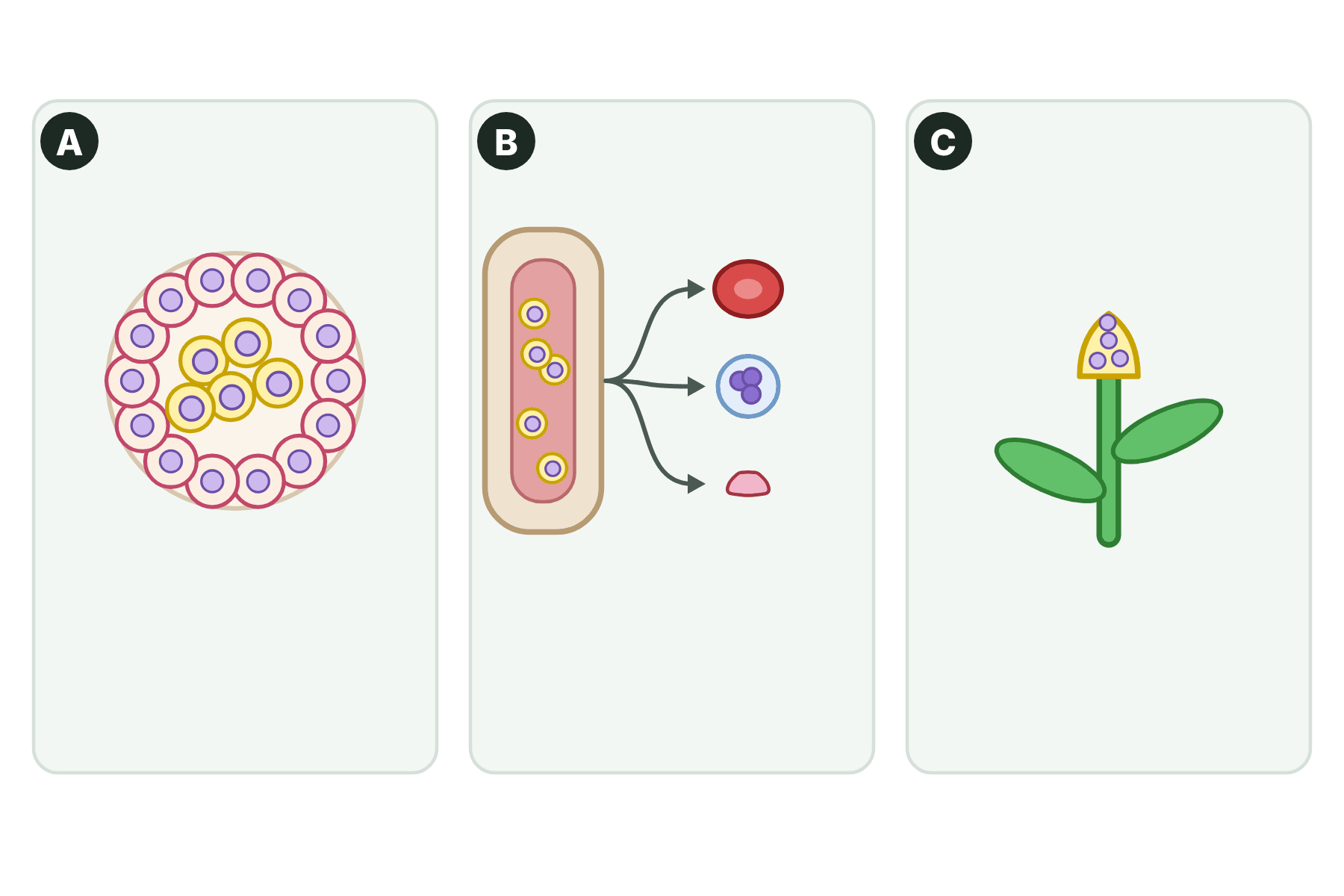
Figure 1 shows three places where stem cells are found. Name the places A, B and C.
Show answerHide answer
Model answer
A is an embryo. B is (adult) bone marrow. C is a meristem (in a plant).
Mark scheme
- A: embryo — 1 mark
- B: bone marrow — 1 mark
- C: meristem / plant shoot tip — 1 mark
-
4 State [2 marks]
State two places in the human body where stem cells are found.
Show answerHide answer
Model answer
In the embryo and in the (adult) bone marrow.
Mark scheme
- Embryo — 1 mark
- (Adult) bone marrow — 1 mark
-
5 Describe [2 marks]
Describe one difference between stem cells from human embryos and stem cells from adult bone marrow.
Show answerHide answer
Model answer
Embryonic stem cells can become most types of human cell, but adult bone marrow stem cells can become fewer types, such as blood cells.
Mark scheme
- Embryonic stem cells can form most types of cell — 1 mark
- Bone marrow stem cells can form fewer types / mainly blood cells — 1 mark
-
6 Explain [3 marks]
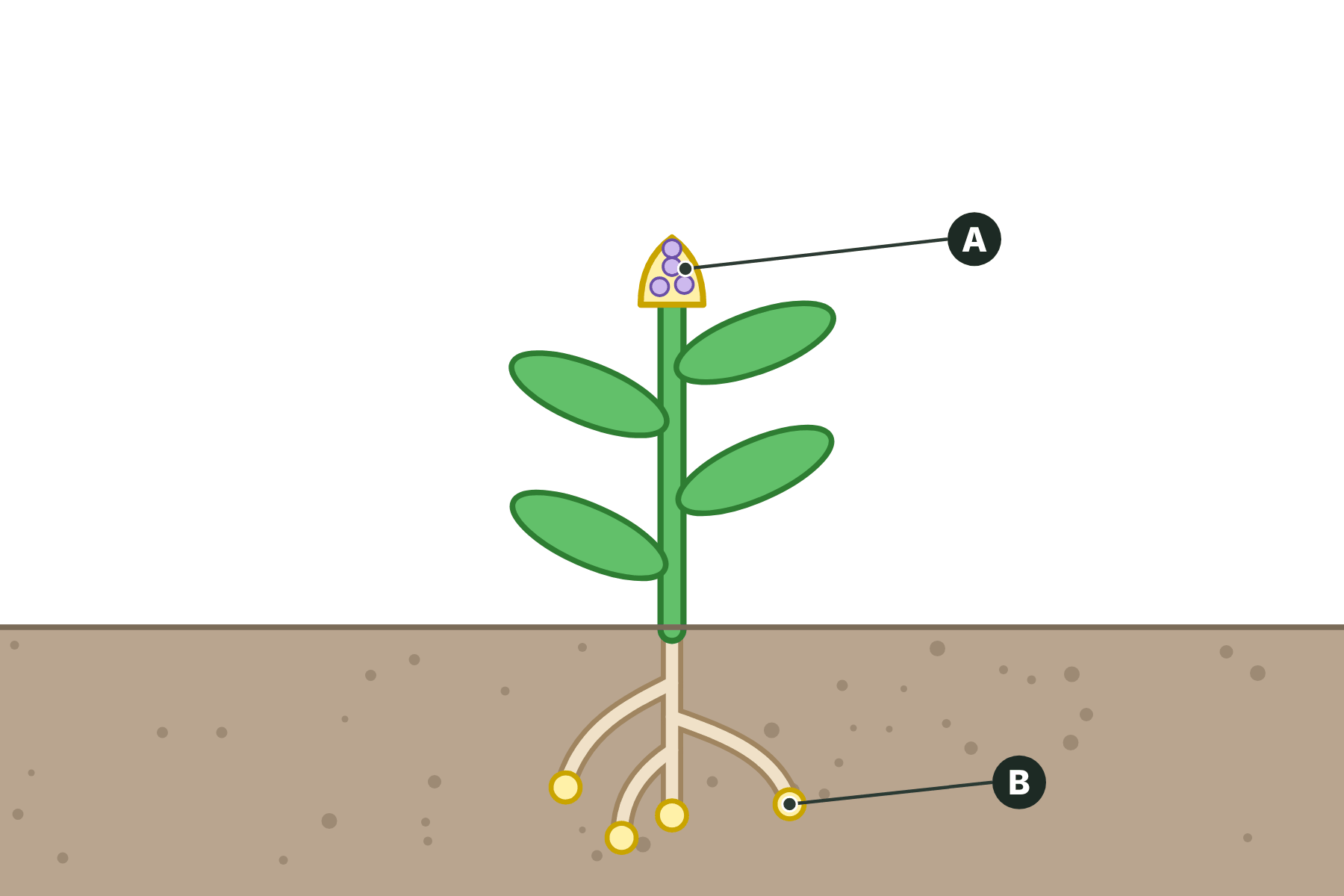
Figure 2 shows a young plant. Name the tissue found at A and at B, and explain why the plant can keep growing throughout its life.
Show answerHide answer
Model answer
A and B are both meristem tissue (meristems). The plant can keep growing because meristems contain stem cells that keep dividing and differentiating throughout the life of the plant.
Mark scheme
- A and B are meristems — 1 mark
- Stem cells in meristems keep dividing — 1 mark
- And differentiate into any type of plant cell, throughout its life — 1 mark
-
7 Explain [3 marks]
Explain how stem cells help a human embryo to develop into a baby.
Show answerHide answer
Model answer
Stem cells in the embryo divide to make many more cells. The cells then differentiate into the different types of specialised cell, such as nerve, muscle and blood cells. The specialised cells form the tissues and organs of the baby.
Mark scheme
- Stem cells divide to make more cells — 1 mark
- Cells differentiate into different specialised cells — 1 mark
- Specialised cells form the tissues and organs — 1 mark
-
8 Explain [3 marks]
Stem cells from bone marrow can be used to replace blood cells but not brain cells. Explain why.
Show answerHide answer
Model answer
Adult bone marrow stem cells can only differentiate into a limited range of cell types. They can form blood cells, but they cannot differentiate into most other types of cell, such as brain cells.
Mark scheme
- Adult stem cells differentiate into fewer types of cell — 1 mark
- They can form blood cells — 1 mark
- They cannot form most other types, such as brain cells — 1 mark
-
9 Compare [6 marks]
Compare stem cells in human embryos, in adult bone marrow and in plant meristems.
Show answerHide answer
Model answer
All three are stem cells, which means they are undifferentiated, they can divide, and they can differentiate. Embryonic stem cells are found in human embryos and can become most types of human cell. Stem cells in adult bone marrow can become fewer types of cell, including blood cells. In plants, meristem tissue is found at the tips of shoots and roots and can become any type of plant cell, throughout the life of the plant. So the difference is in the range of cells each can make and the length of time they are active.
Mark scheme
- All are undifferentiated cells that divide and can differentiate — 1 mark
- Embryos: most types of human cell — 1 mark
- Bone marrow: fewer types, such as blood cells — 1 mark
- Meristems: any type of plant cell — 1 mark
- Meristems are in the tips of shoots and roots — 1 mark
- Meristems stay active throughout the plant's life / embryonic cells more types than adult — 1 mark
Quick check
-
1
What does undifferentiated mean?
Show answerHide answer
C: Not specialised for a particular job
An undifferentiated cell has not yet specialised for a particular job.
-
2
Which cells can differentiate into most types of human cell?
Show answerHide answer
B: Embryonic stem cells
Stem cells from human embryos can be made to differentiate into most types of human cell.
-
3
What can stem cells from adult bone marrow form?
Show answerHide answer
A: Many types of cell, including blood cells
Adult bone marrow stem cells can form many types of cell, including blood cells.
-
4
Where are meristems found?
Show answerHide answer
D: At the tips of the shoots and roots
Meristems are found at the tips of shoots and roots, where the plant grows.
-
5
What can meristem cells become?
Show answerHide answer
C: Any type of plant cell
Meristem tissue in plants can differentiate into any type of plant cell, throughout the life of the plant.
-
6
Why can a plant keep growing throughout its life?
Show answerHide answer
B: Meristems keep producing new cells
Its meristems contain stem cells that keep dividing and differentiating for the whole life of the plant.
-
7
Why is a red blood cell NOT a stem cell?
Show answerHide answer
A: It is specialised and cannot become other types of cell
A red blood cell is specialised for carrying oxygen. It has differentiated and does not divide to make other cell types.
-
8
Which statement about stem cells is correct?
Show answerHide answer
D: Embryonic stem cells can become more types of cell than adult stem cells
A stem cell can make more cells like itself and some of the cells it makes can differentiate. Embryonic stem cells can become more types of cell than adult stem cells.