Flashcards · Biology · Cell Structure
Cell Specialisation and Differentiation
-
What is a specialised cell?
A cell with a structure that is suited to its particular job.
-
What is differentiation?
The process by which a cell changes to become specialised.
-
Why does a sperm cell have a long tail?
So it can swim to the egg.
-
Why does the middle of a sperm cell contain many mitochondria?
They release the energy needed for swimming.
-
What is the job of the acrosome?
It contains enzymes that digest the outer layer of the egg so the sperm can get in.
-
How is a nerve cell adapted to carry impulses over long distances?
It has a long axon, and a myelin sheath that insulates it.
-
Why do nerve cells have branched dendrites?
They connect to many other nerve cells.
-
What do muscle cells contain that lets them contract?
Special protein fibres that slide over each other, and many mitochondria for energy.
-
How does the shape of a root hair cell help it?
The long projection gives a large surface area to absorb water and minerals.
-
Why do root hair cells have a large permanent vacuole?
It speeds up the movement of water into the cell.
-
What does xylem transport?
Water and mineral ions, from the roots up to the leaves.
-
Why is xylem strengthened with lignin?
The rings stop the hollow tube collapsing and make it strong.
-
What does phloem transport?
Dissolved sugars to wherever they are needed.
-
What are sieve plates?
The walls between phloem cells, with holes that let sugars flow through.
-
What is the job of companion cells in phloem?
Their mitochondria supply the energy for moving sugars.
-
Do animal cells or plant cells keep the ability to differentiate throughout life?
Plant cells. Most animal cells differentiate early.
-
Put these in order, smallest first: organ, cell, tissue, organism.
Cell, tissue, organ, organism.
-
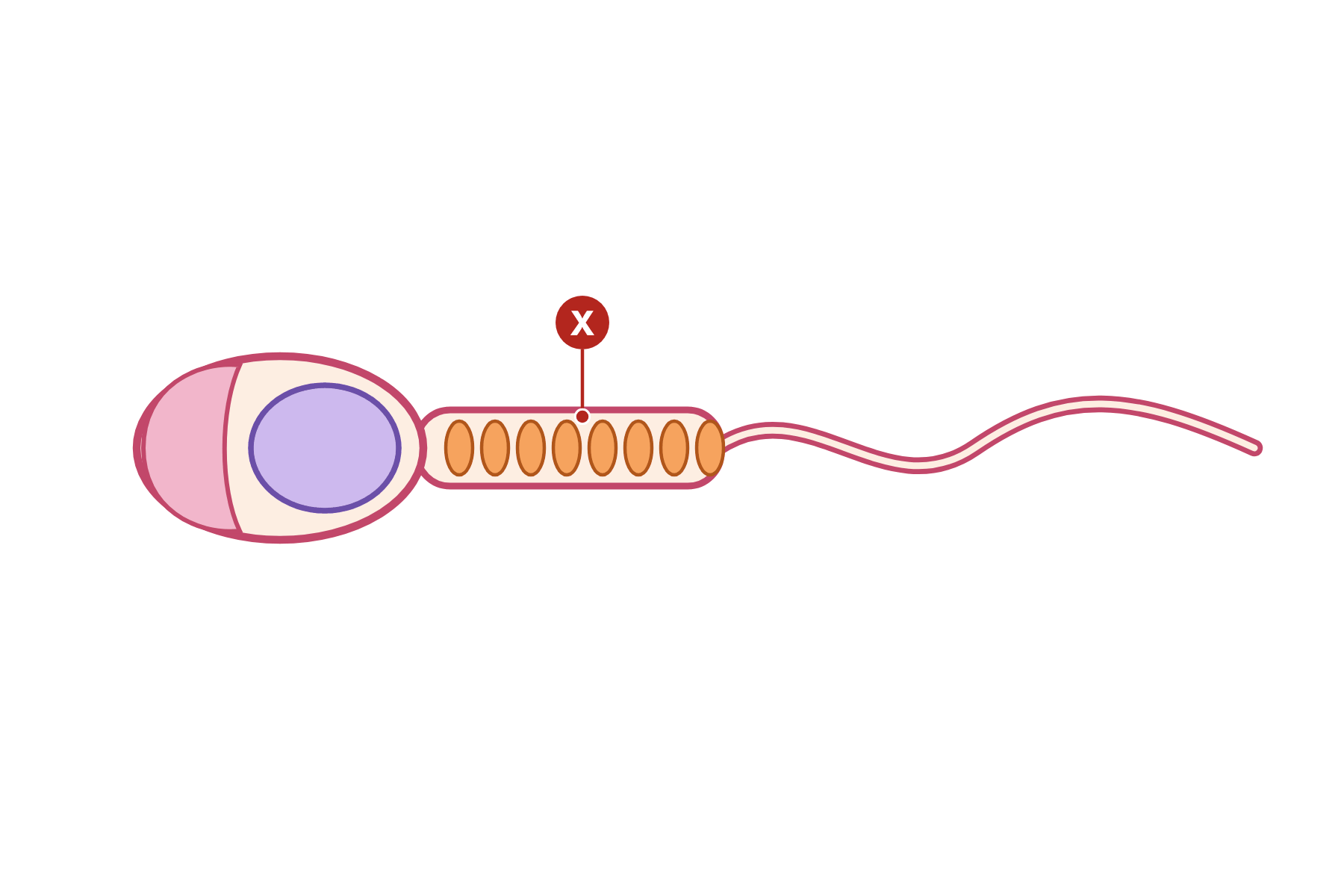 Name the part marked X on this sperm cell, and explain why it is there.
 Mitochondria in the middle section. They release the energy from respiration that the tail needs for swimming.
-
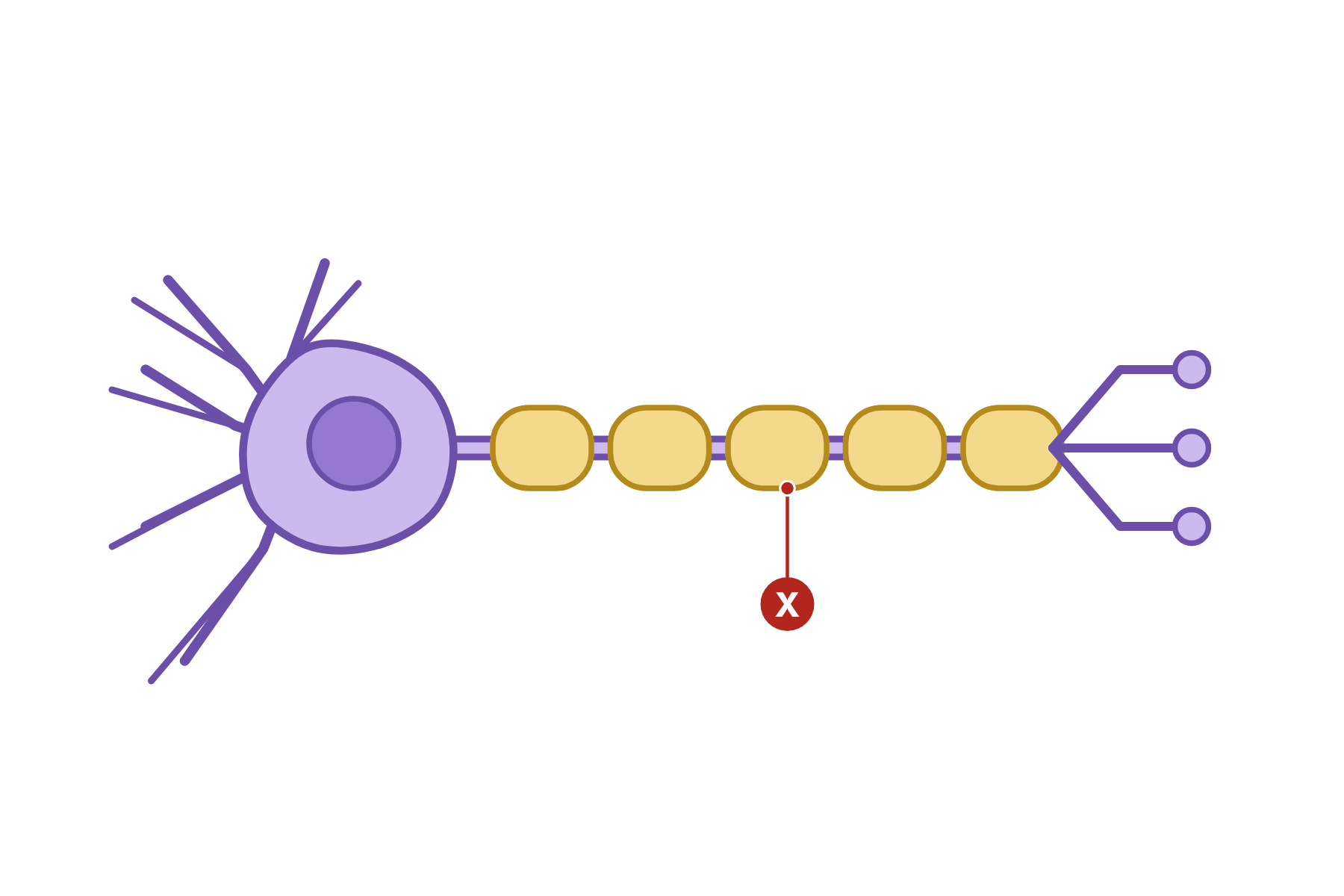 Name the part marked X on this nerve cell and say what it does.
 The myelin sheath. It is a fatty layer that insulates the axon and speeds up the impulse.
-
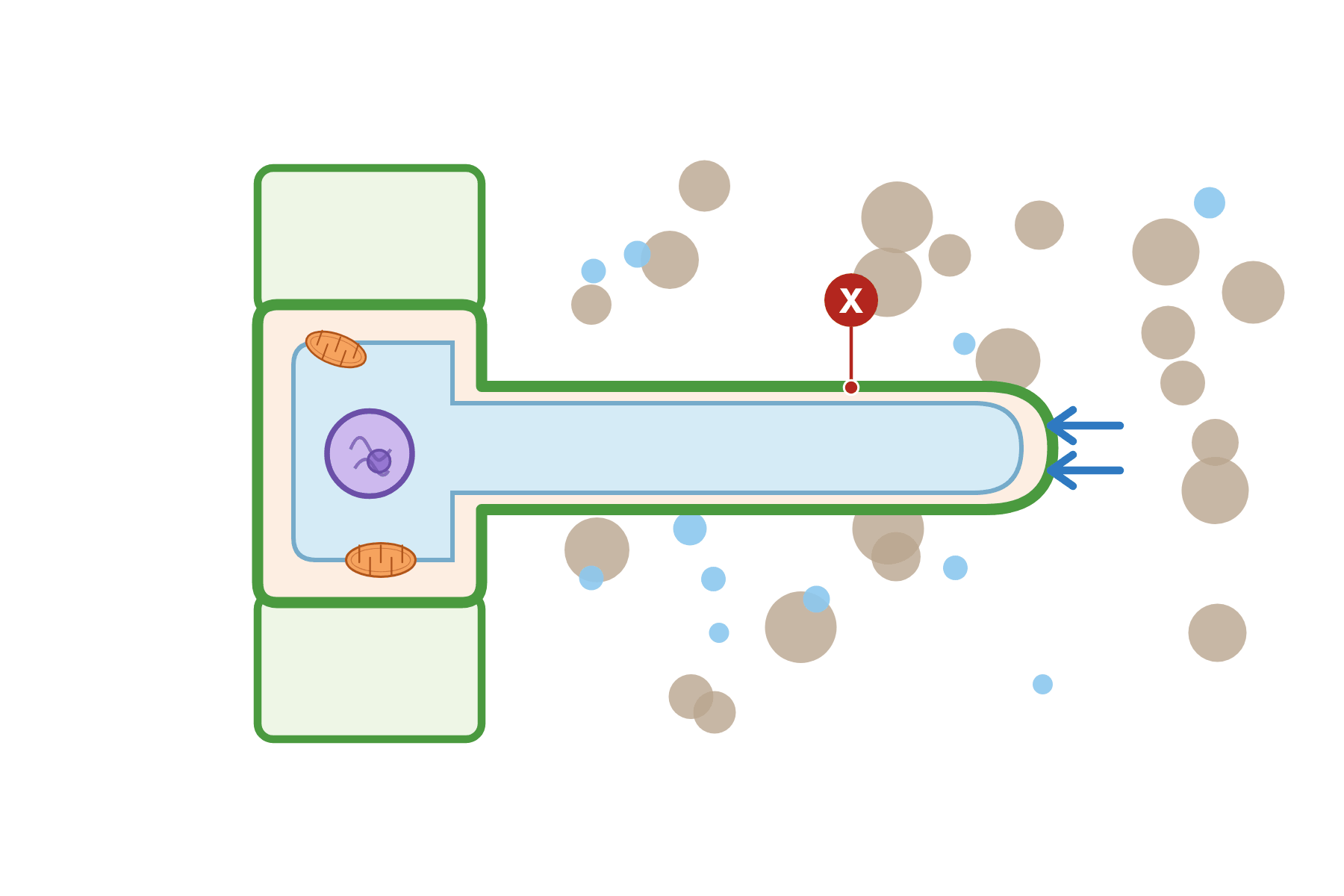 What is the structure marked X on this root hair cell, and how does it help?
 The root hair. Its long, thin shape gives a large surface area for absorbing water and mineral ions from the soil.