Flashcards · Biology
Mitosis, Growth and Stem Cells
-
Where are the chromosomes in a human body cell?
In the nucleus.
-
What is a chromosome made of?
A long molecule of DNA, coiled up.
-
What does each chromosome carry?
A large number of genes.
-
What is a gene?
A short section of DNA that contains the instructions for making one protein.
-
What shape is a DNA molecule?
A double helix: two strands twisted around each other.
-
How many chromosomes are there in a human body cell?
46, arranged as 23 pairs.
-
Where does each chromosome in a pair come from?
One from the mother and one from the father.
-
A cell has 12 pairs of chromosomes. How many chromosomes is that?
24.
-
A cell has 20 chromosomes. How many pairs is that?
10.
-
Which is bigger, a gene or a chromosome?
A chromosome. A gene is only a short section of one.
-
Which pair of chromosomes decides whether a person is male or female?
The sex chromosomes: XX in females and XY in males.
-
What is a genome?
All of the genetic material of an organism.
-
Does a bigger number of chromosomes mean a more complex organism?
No. A dog has 78 and a human has 46.
-
True or false: a gene contains several chromosomes.
False. A chromosome carries several genes.
-
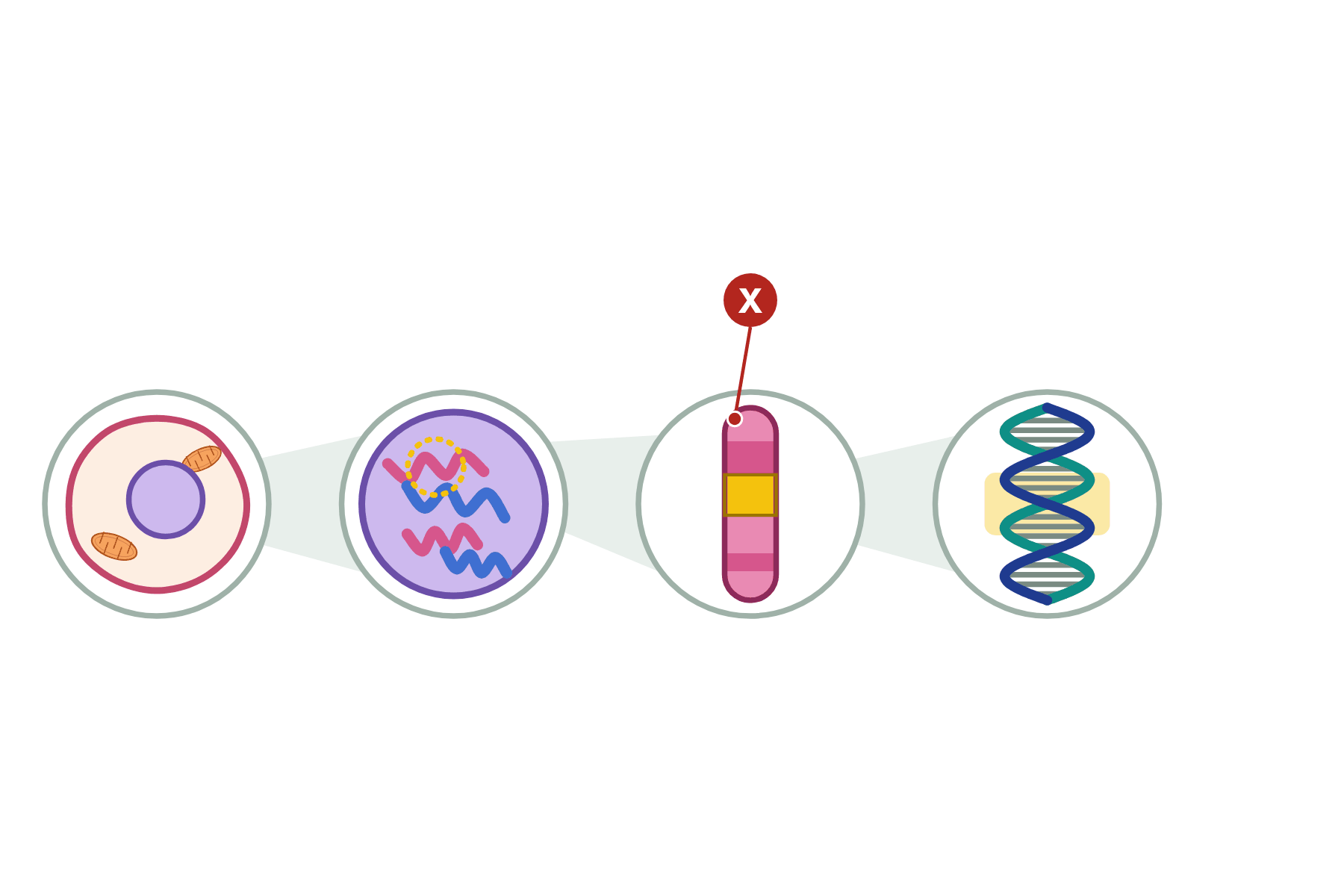 What is the structure marked X in this diagram?
 A chromosome: a long, coiled molecule of DNA that carries a large number of genes.
-
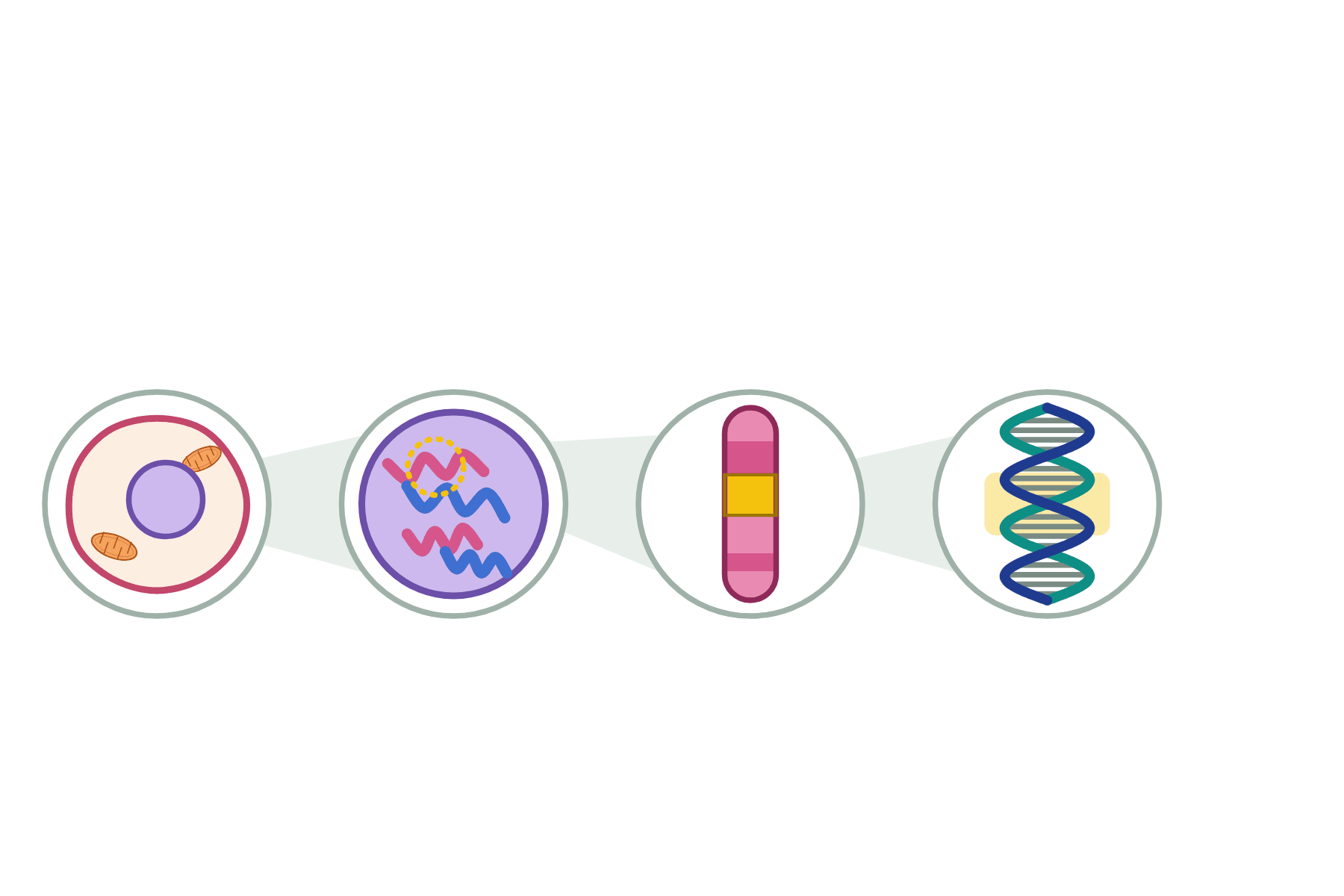 Name each level from the cell down to the gene.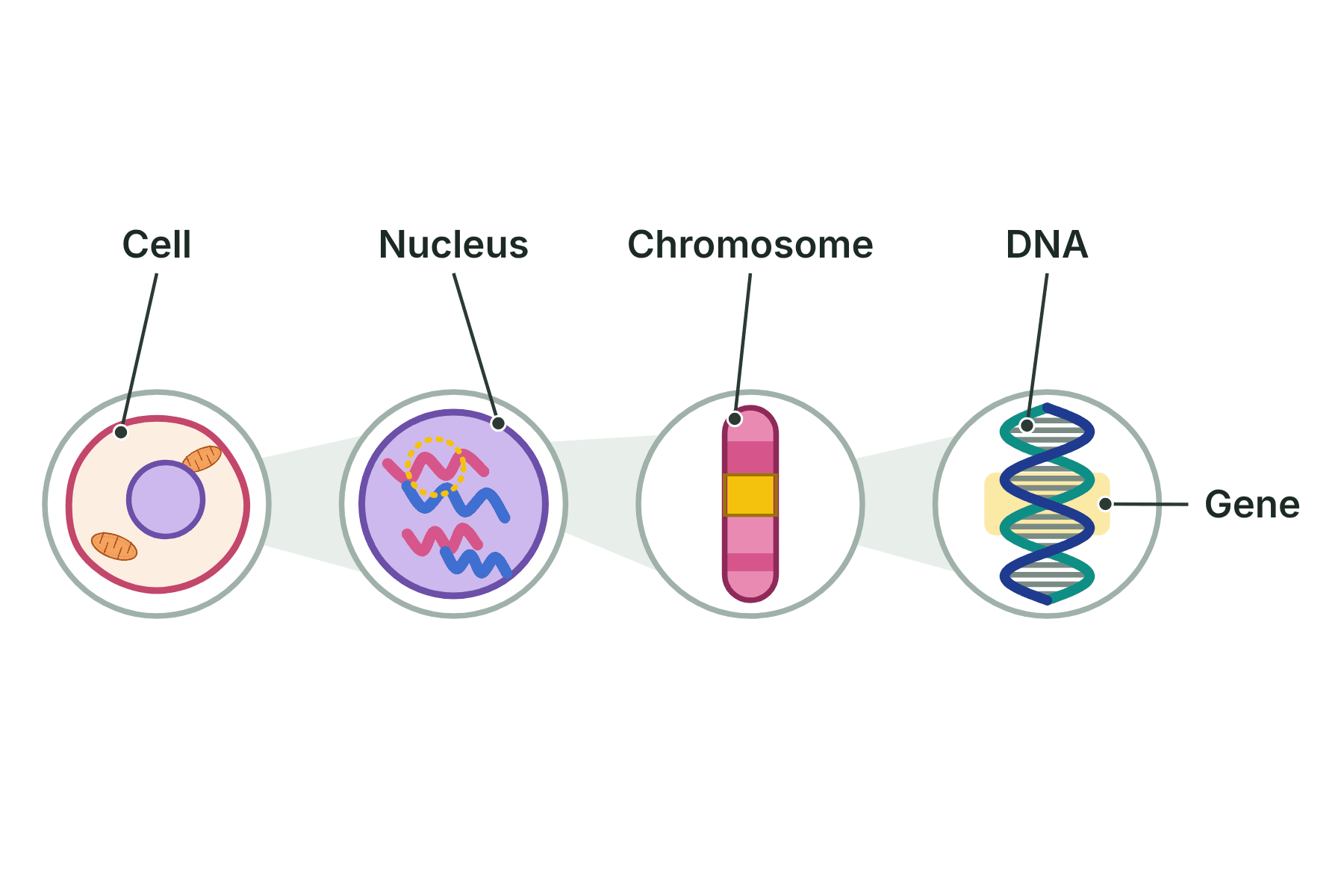
-
How many chromosomes are there in a human body cell, and how are they arranged?
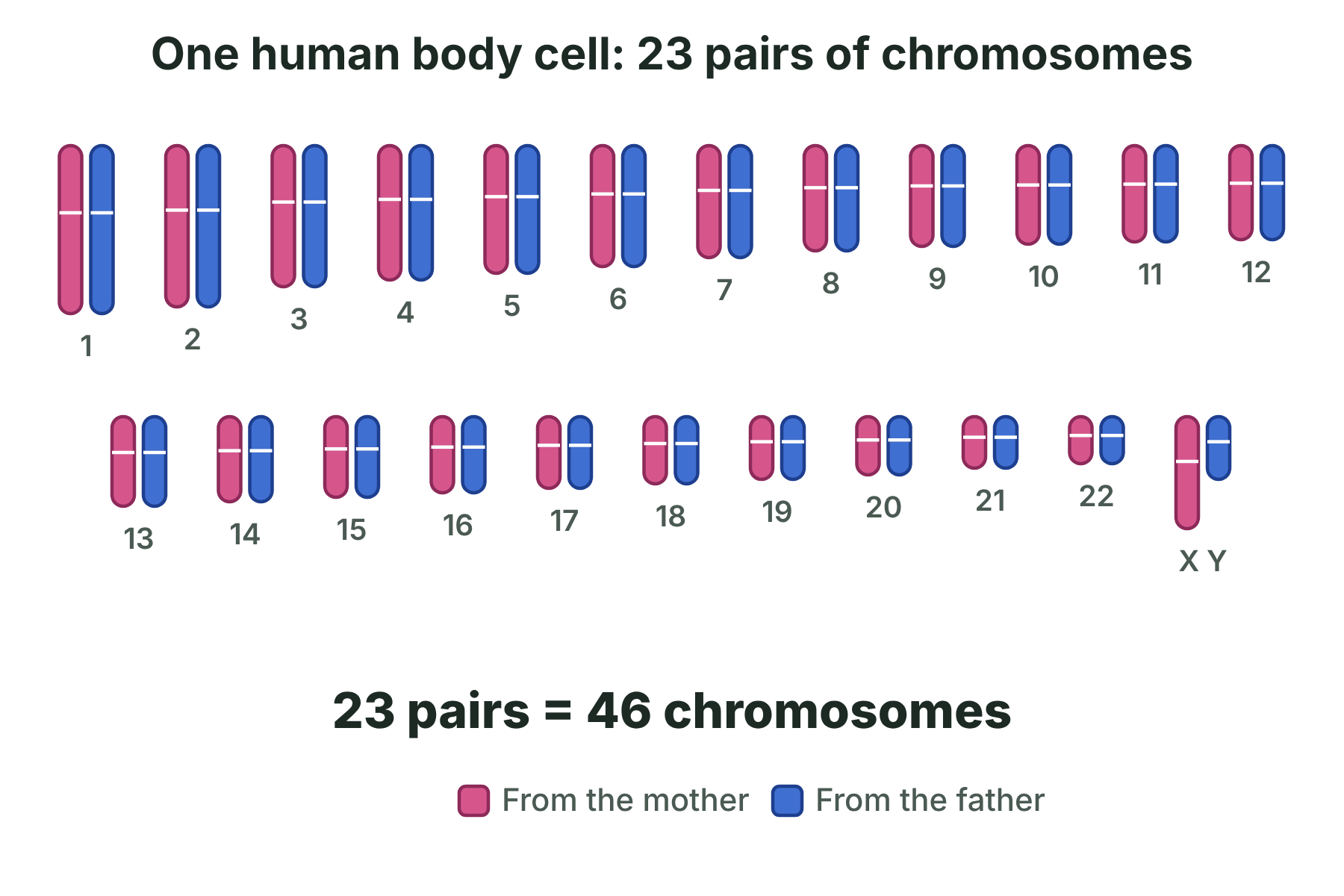
46, arranged as 23 pairs. One chromosome in each pair came from each parent.
-
What is the cell cycle?
The series of stages a cell goes through to grow, copy its DNA and divide.
-
What are the three stages of the cell cycle?
Growth and DNA replication, mitosis, and division of the cytoplasm and cell membrane.
-
What does the cell grow and make more of before it divides?
Sub-cellular structures such as ribosomes and mitochondria.
-
What happens to the DNA before mitosis?
It replicates, giving two identical copies of each chromosome.
-
What happens to the chromosomes in mitosis?
One set is pulled to each end of the cell, and the nucleus divides.
-
What happens at the end of the cell cycle?
The cytoplasm and cell membrane divide, forming two identical cells.
-
How many cells does mitosis make from one cell?
Two.
-
A human body cell has 46 chromosomes. How many does each cell have after mitosis?
46.
-
What does genetically identical mean?
Having exactly the same genes.
-
Give three reasons why mitosis is important.
Growth and development, repair, and replacement of cells (also asexual reproduction).
-
Which stage of the cell cycle takes the longest?
Stage 1, growth and DNA replication.
-
How many cells are there after 5 divisions, starting from one cell?
32, because \(2^{5} = 32\).
-
What do we call organisms made by mitosis from a single parent?
Clones: they are genetically identical to the parent.
-
Do you need the names of the phases inside mitosis for AQA?
No. You need the three overall stages and what happens in mitosis.
-
Why must the DNA be copied before a cell divides?
So that each new cell gets a full set of chromosomes.
-
What common mistake is made about identical cells?
Saying the cells are identical to the parent in size or shape. It is the genes that are identical.
-
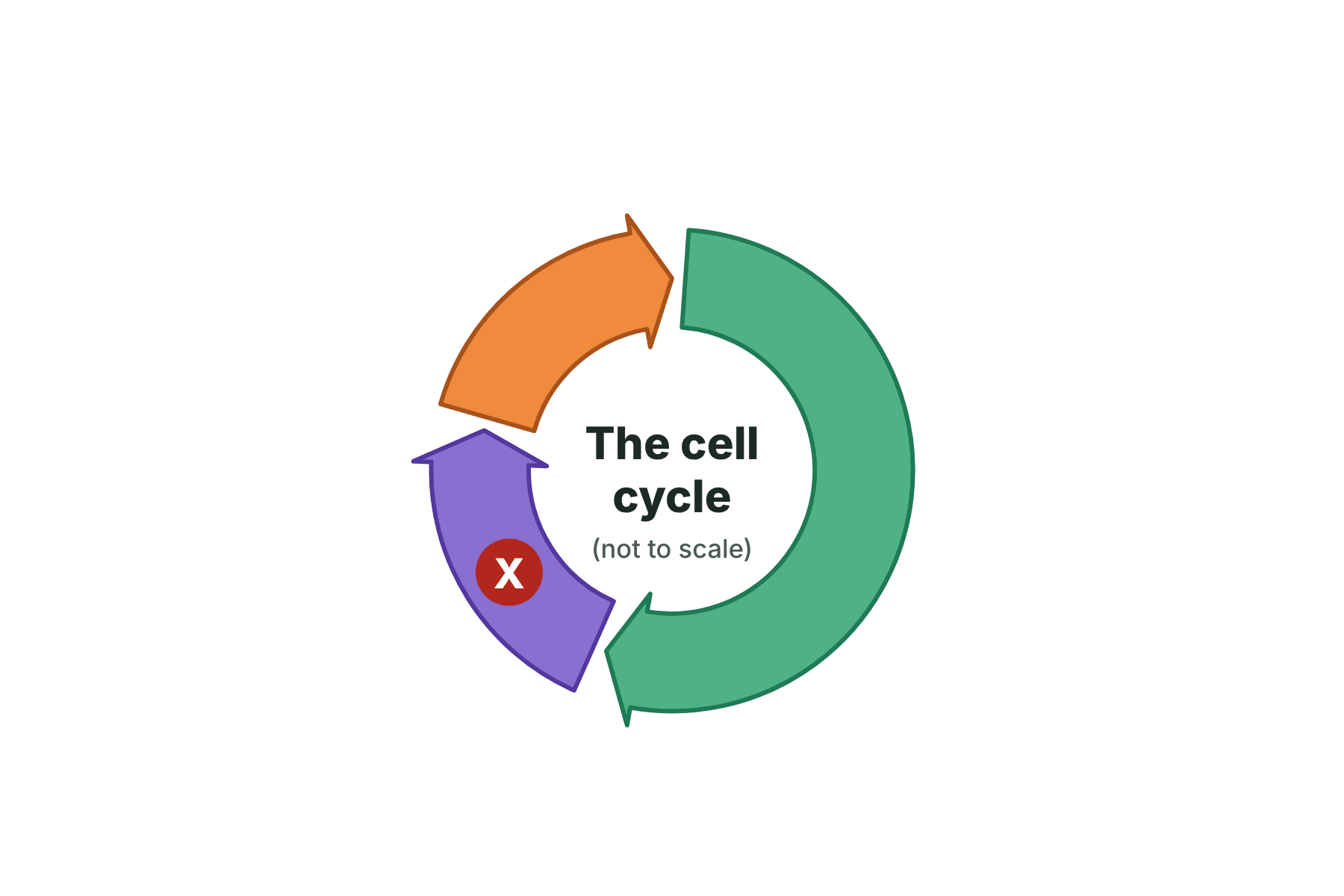 Which stage of the cell cycle is marked X, and what happens in it?
 Mitosis. One set of chromosomes is pulled to each end of the cell, and the nucleus divides.
-
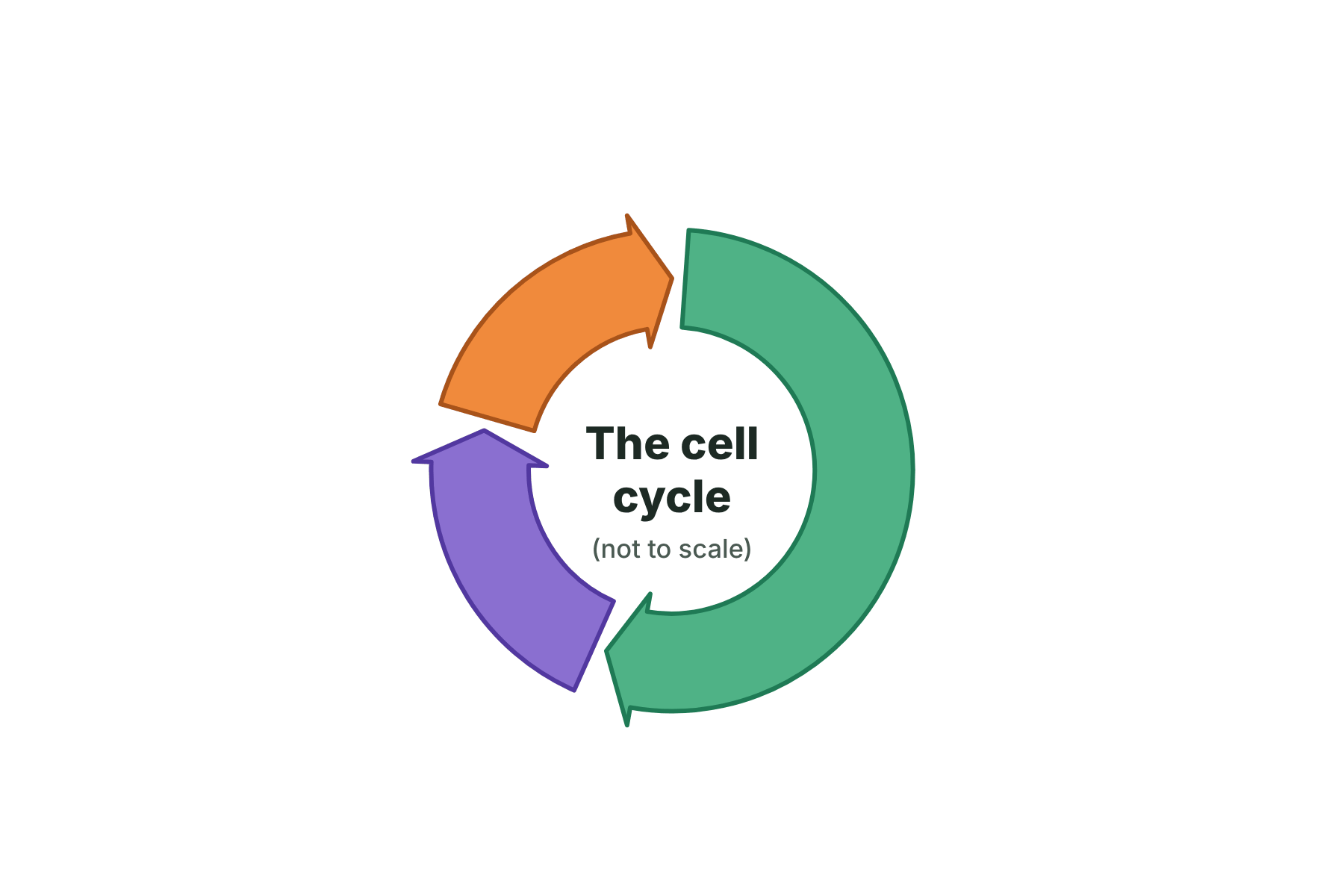 Name and describe the three stages of the cell cycle.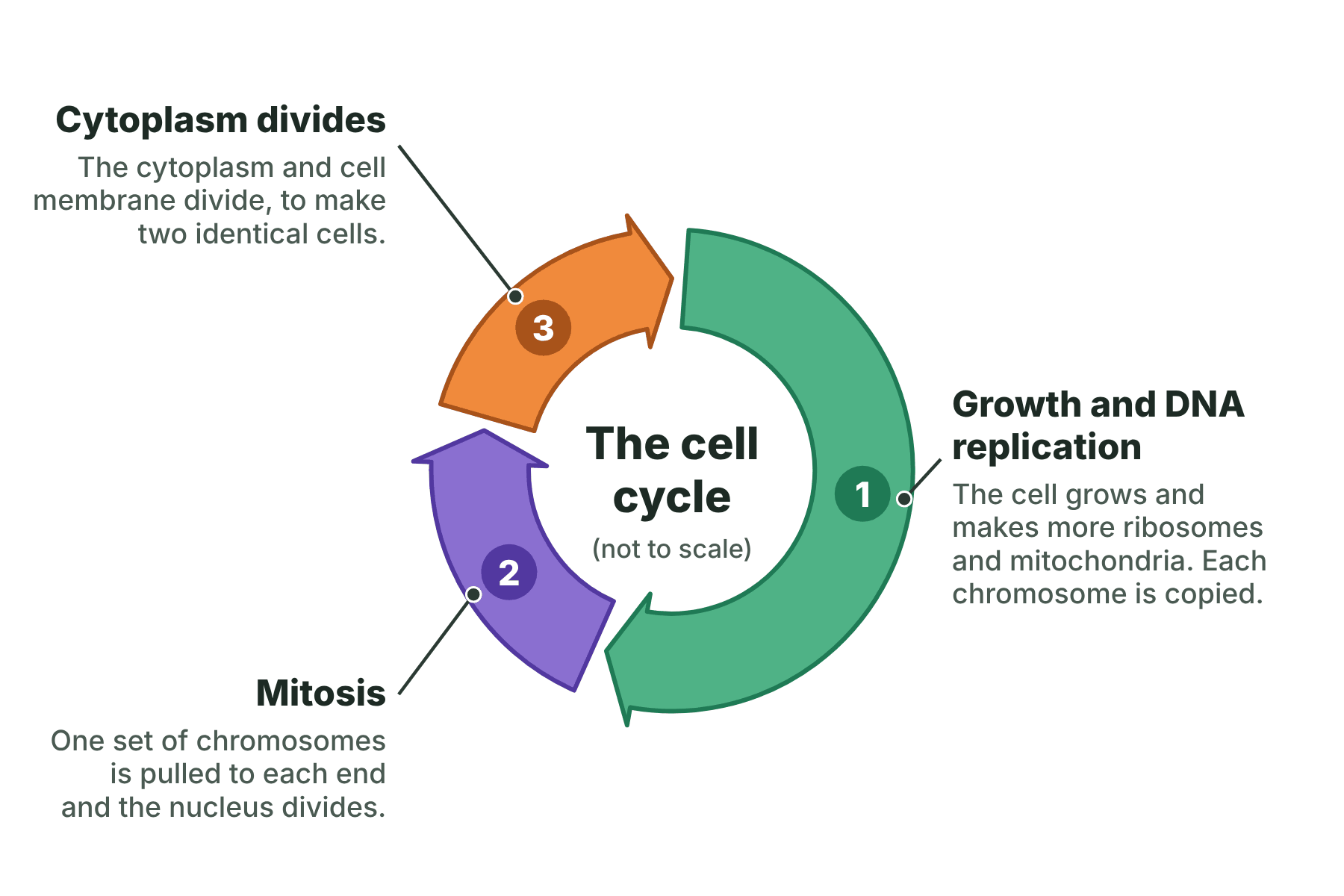
-
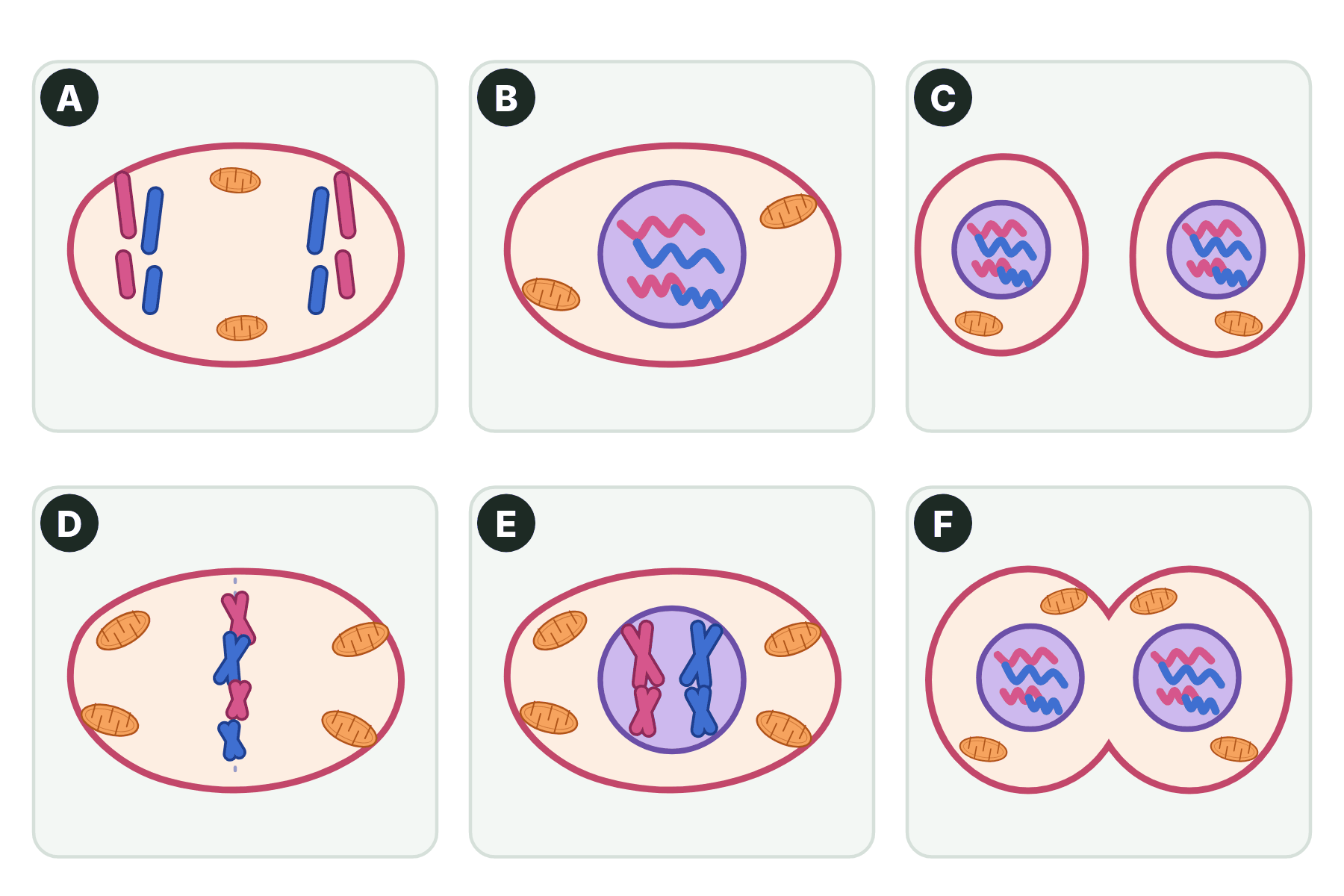 Put these six stages of mitosis into the correct order.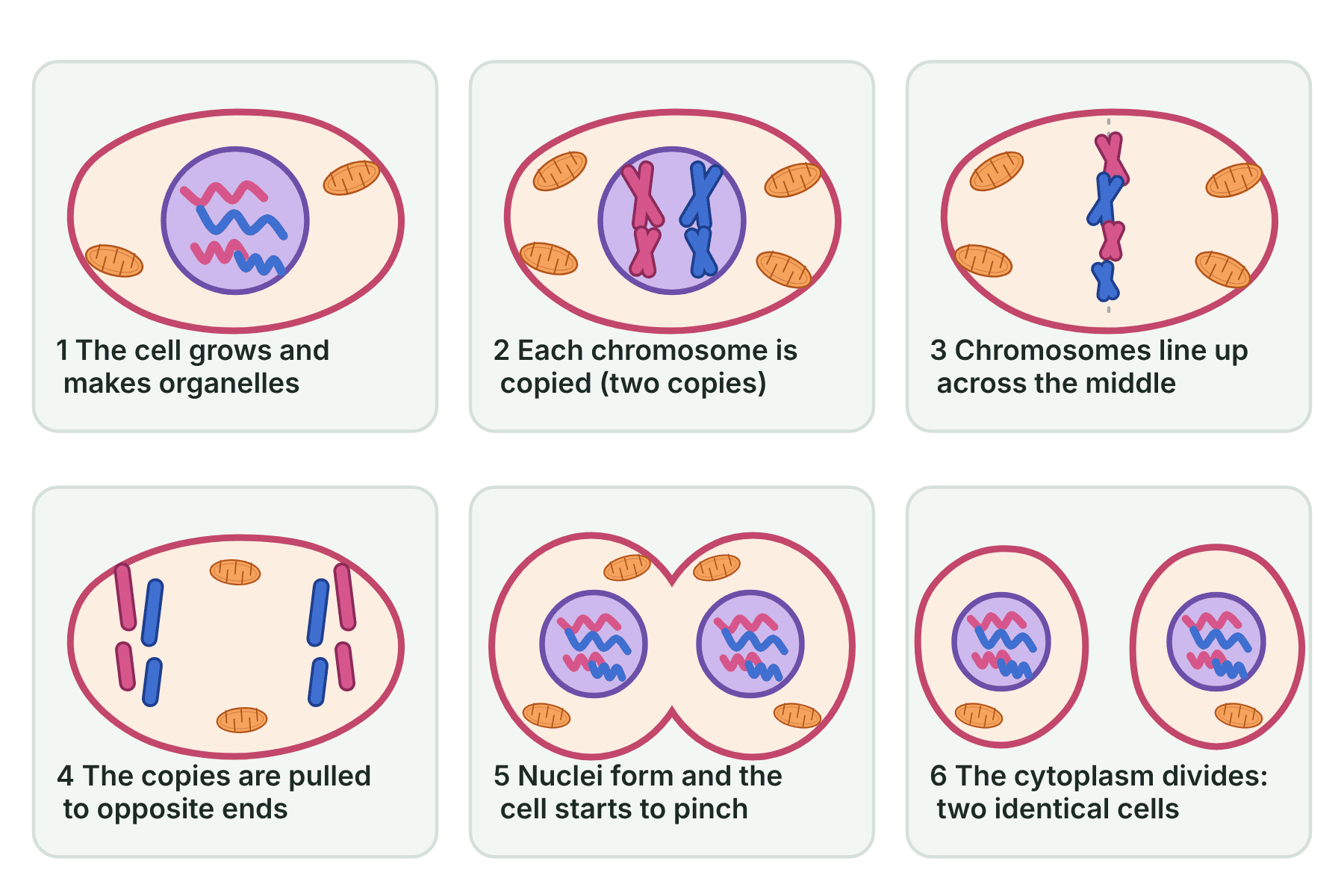
B, E, D, A, F, C.
-
What is a stem cell?
An undifferentiated cell that can divide to make more cells of the same type, and can differentiate into specialised cells.
-
What does undifferentiated mean?
Not yet specialised for any one job.
-
What is differentiation?
The process by which a cell changes to become specialised for its job.
-
Where are stem cells found in an embryo?
The whole early embryo is made of stem cells, which can differentiate into most types of human cell.
-
What can stem cells from human embryos become?
Most different types of human cell.
-
Where are stem cells found in an adult human?
In places such as the bone marrow.
-
What can adult bone marrow stem cells form?
Many types of cell, including blood cells.
-
What is the job of stem cells in adult animals?
To replace worn-out cells and repair damaged tissue.
-
What are meristems?
Tissues in plants that contain stem cells.
-
Where are meristems found in a plant?
At the tips of the shoots and the tips of the roots.
-
What can meristem cells become?
Any type of plant cell, throughout the life of the plant.
-
Why can a plant keep growing all its life?
Its meristems keep dividing and differentiating throughout its life.
-
Why do embryonic stem cells have more uses than adult stem cells?
They can become most types of cell, while adult stem cells can become fewer types.
-
Which has more types of cell it can make: an embryonic or an adult stem cell?
An embryonic stem cell.
-
Can a specialised cell such as a red blood cell become any other cell?
No. It has already differentiated, which is why stem cells matter.
-
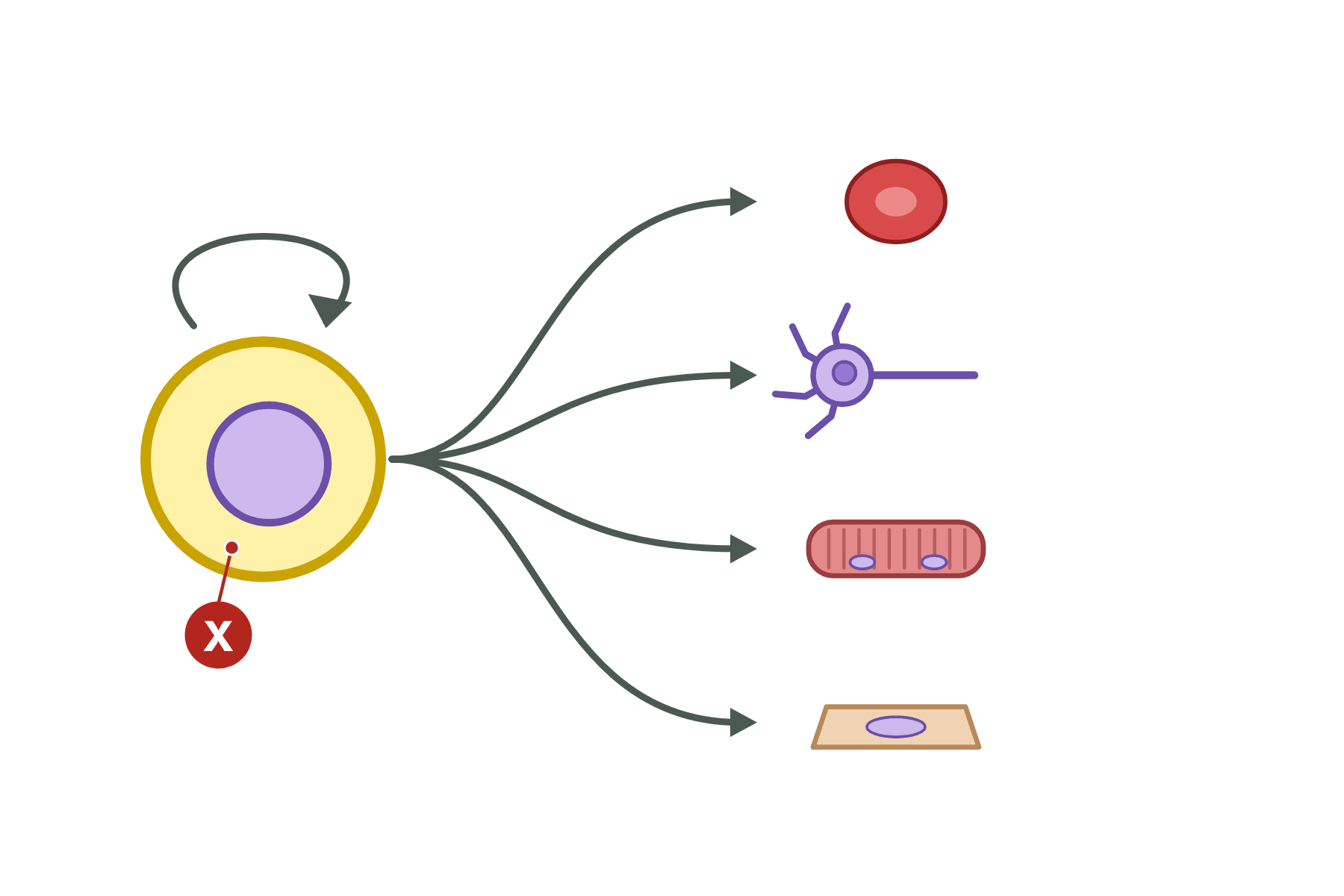 What can the cell marked X do?
 It is a stem cell. It can divide to make more stem cells, and it can differentiate into specialised cells.
-
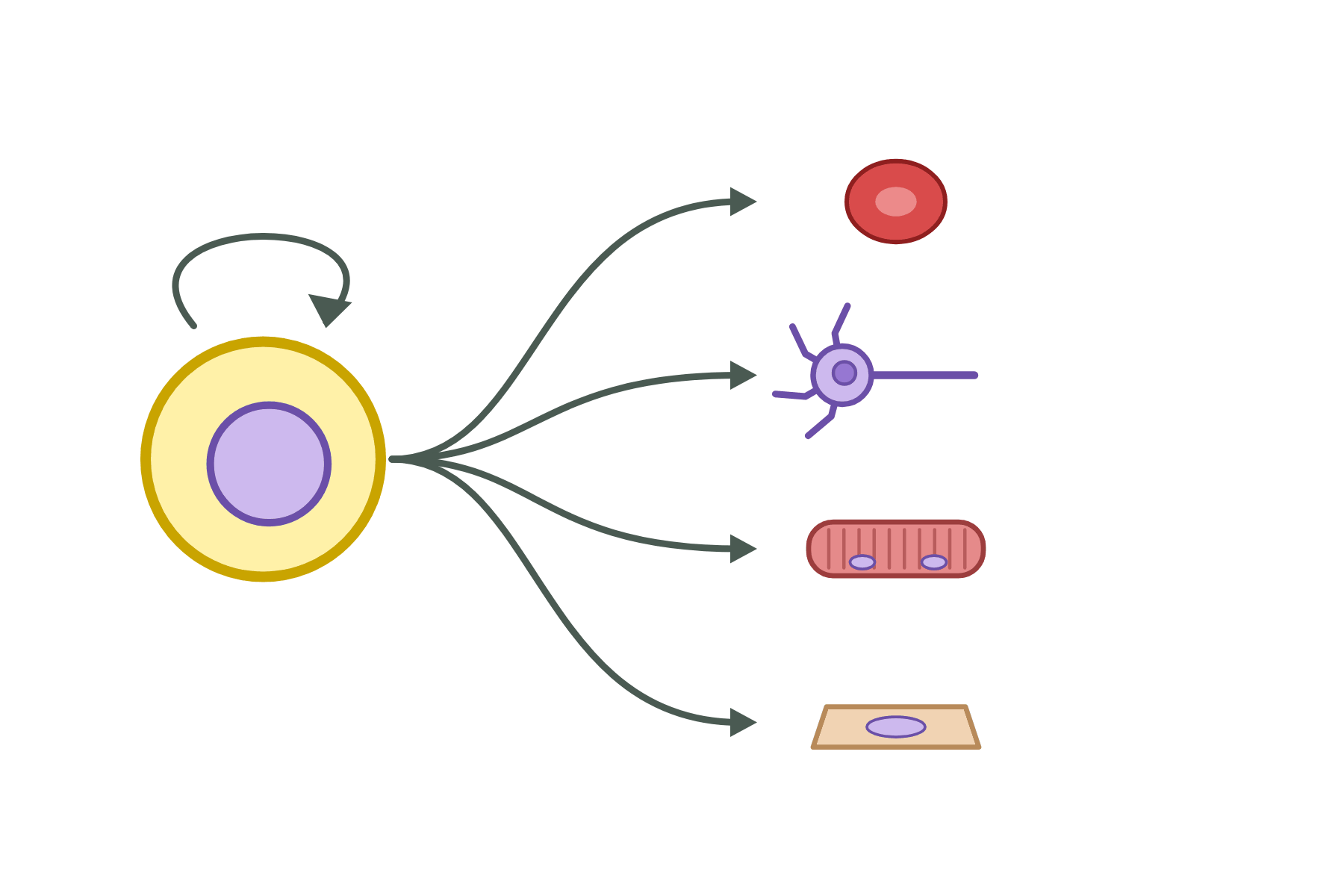 Name this cell and the cells it can become.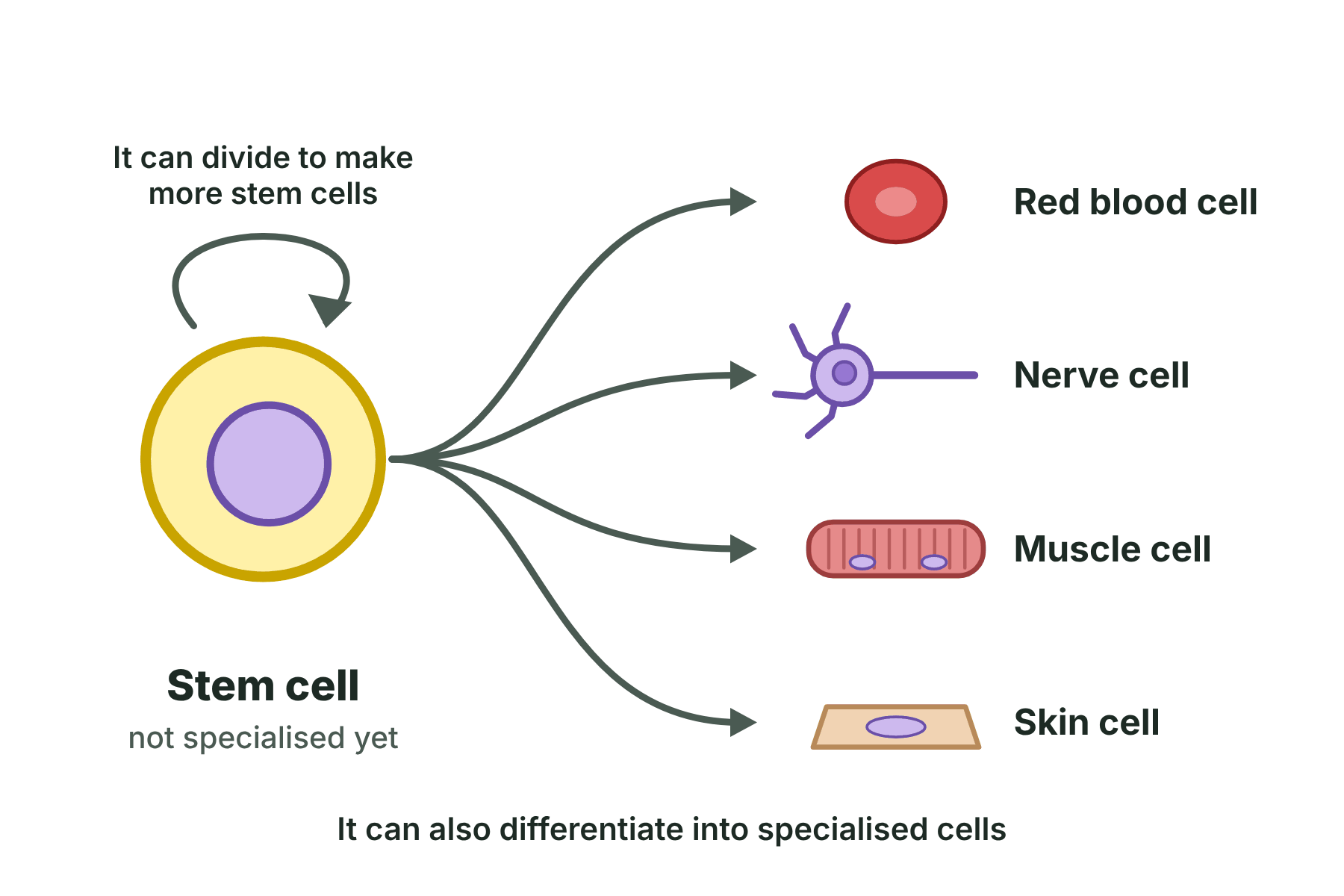
-
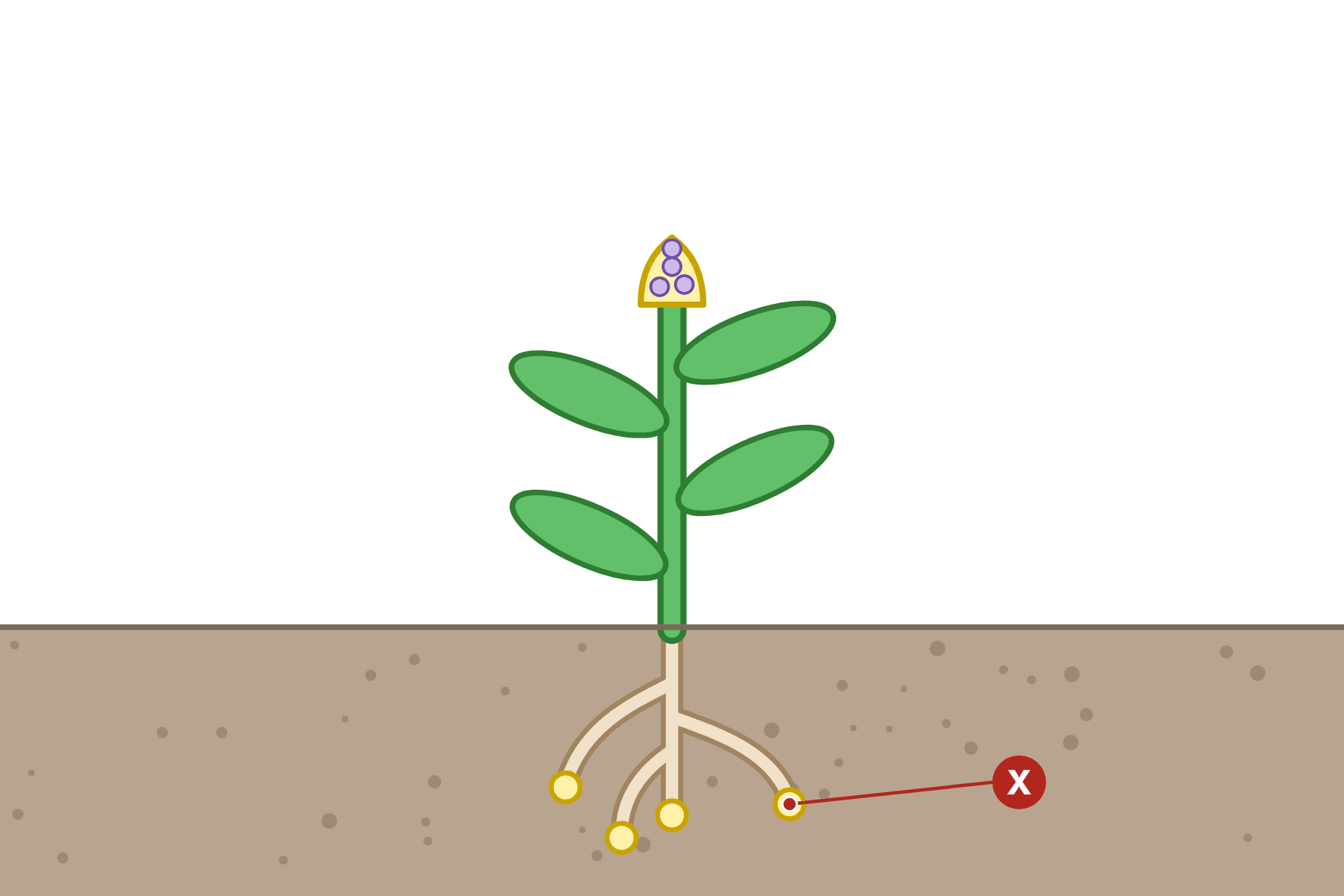 What is the structure marked X in this plant, and what is its job?
 A meristem at a root tip. Its stem cells divide and differentiate, so the root keeps growing.
-
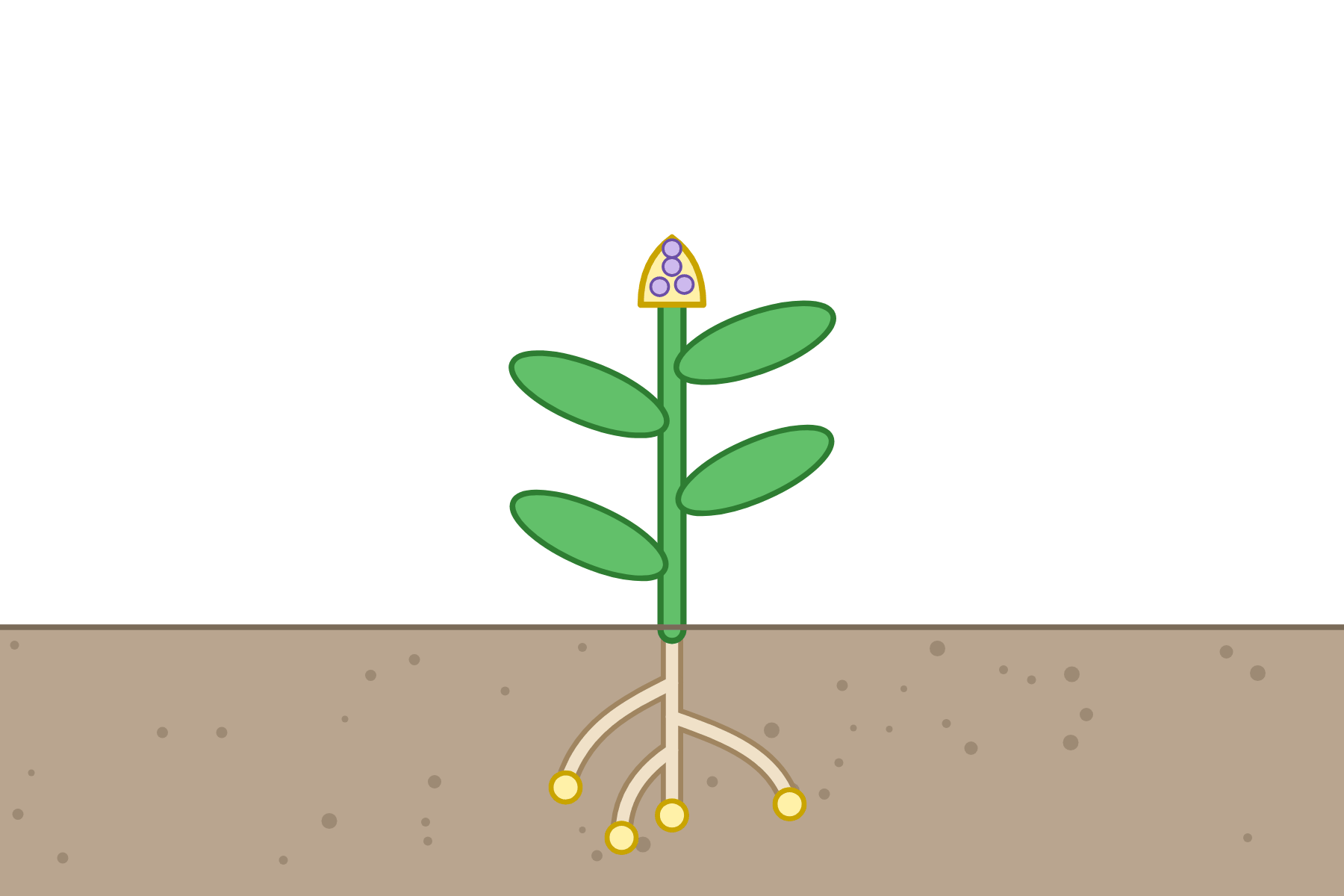 Where are the meristems in this plant?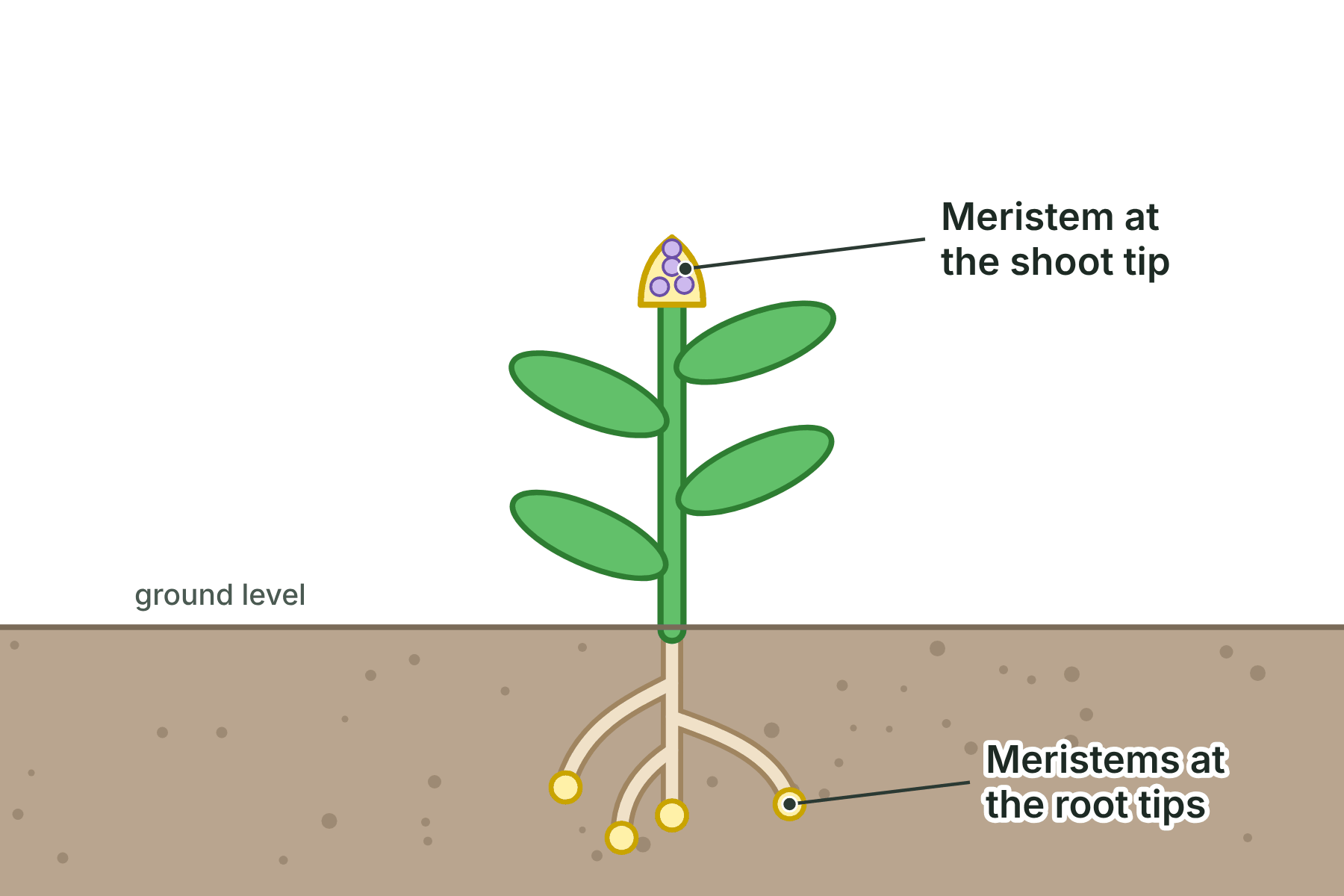
-
Name two conditions stem cells may be able to help treat.
Diabetes and paralysis.
-
What is therapeutic cloning?
Producing an embryo with the same genes as the patient, to get stem cells for treatment.
-
Why are stem cells from therapeutic cloning not rejected?
The embryo has the same genes as the patient, so the patient's body does not see the cells as foreign.
-
What is meant by rejection?
The body's immune system attacking cells that it sees as foreign.
-
Give one risk of using stem cells in treatment.
They could transfer a viral infection to the patient.
-
Why do some people object to using embryonic stem cells?
Because the embryo is destroyed, and some people have ethical or religious objections.
-
Why does using adult stem cells avoid this objection?
No embryo has to be destroyed to get them.
-
What is the drawback of adult stem cells compared with embryonic ones?
They can become fewer types of cell.
-
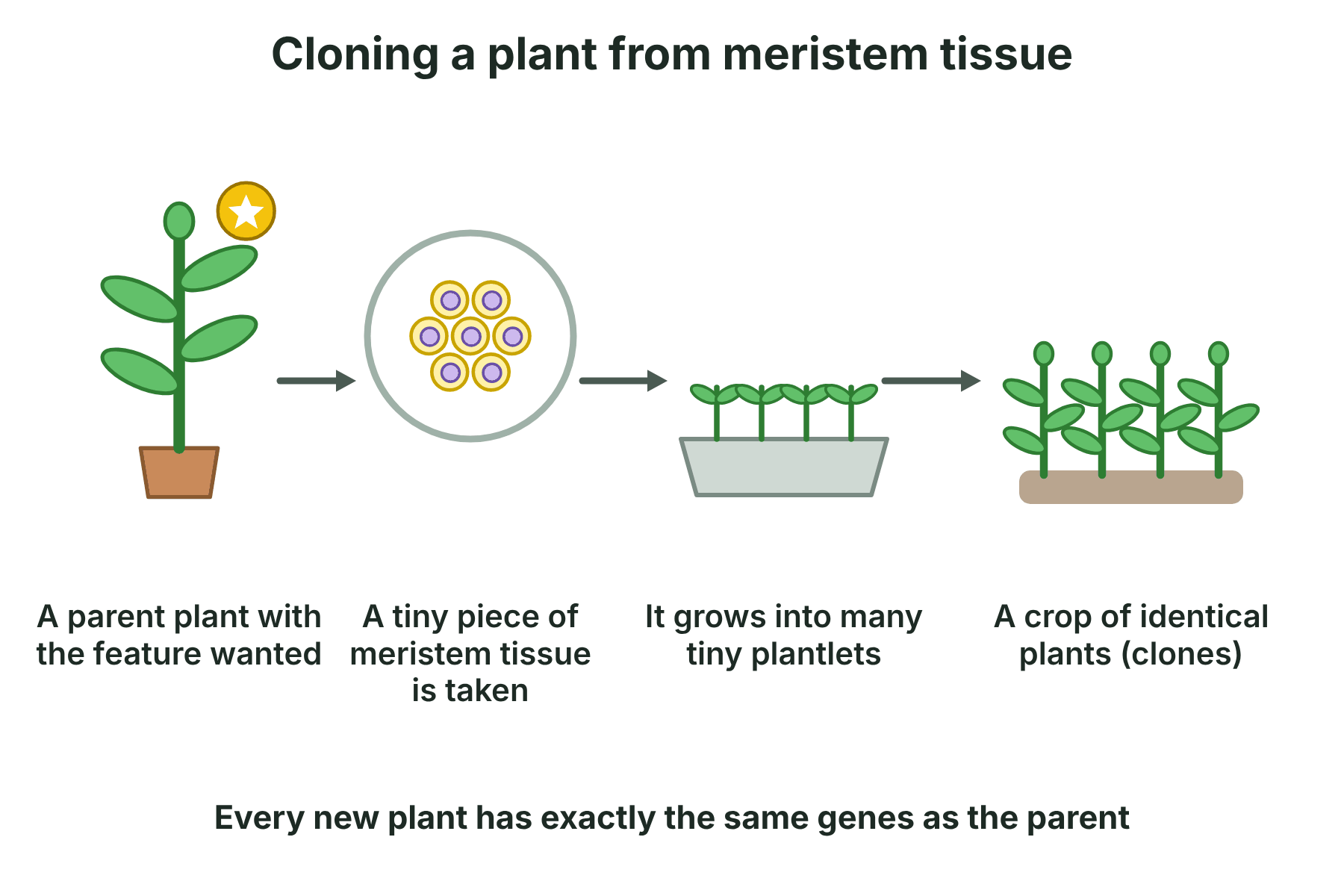
How can meristem stem cells be used?
To make clones of plants quickly and economically.
-
Give two uses of cloning plants from meristems.
Protecting rare species from extinction, and producing large numbers of disease-resistant crop plants.
-
Why are cloned plants all the same?
They are made from the parent's cells, so they have the same genes.
-
What is the main drawback of growing a crop of clones?
One disease could harm every plant, because they all have the same genes.
-
In an exam question that says "evaluate", what must you include?
Benefits, risks or objections, and a conclusion.
-
Do you need to know how stem cell techniques are carried out?
No. The specification says this is not required.
-
What does "ethical" mean in "ethical objection"?
Based on moral principles about what is right and wrong.
-
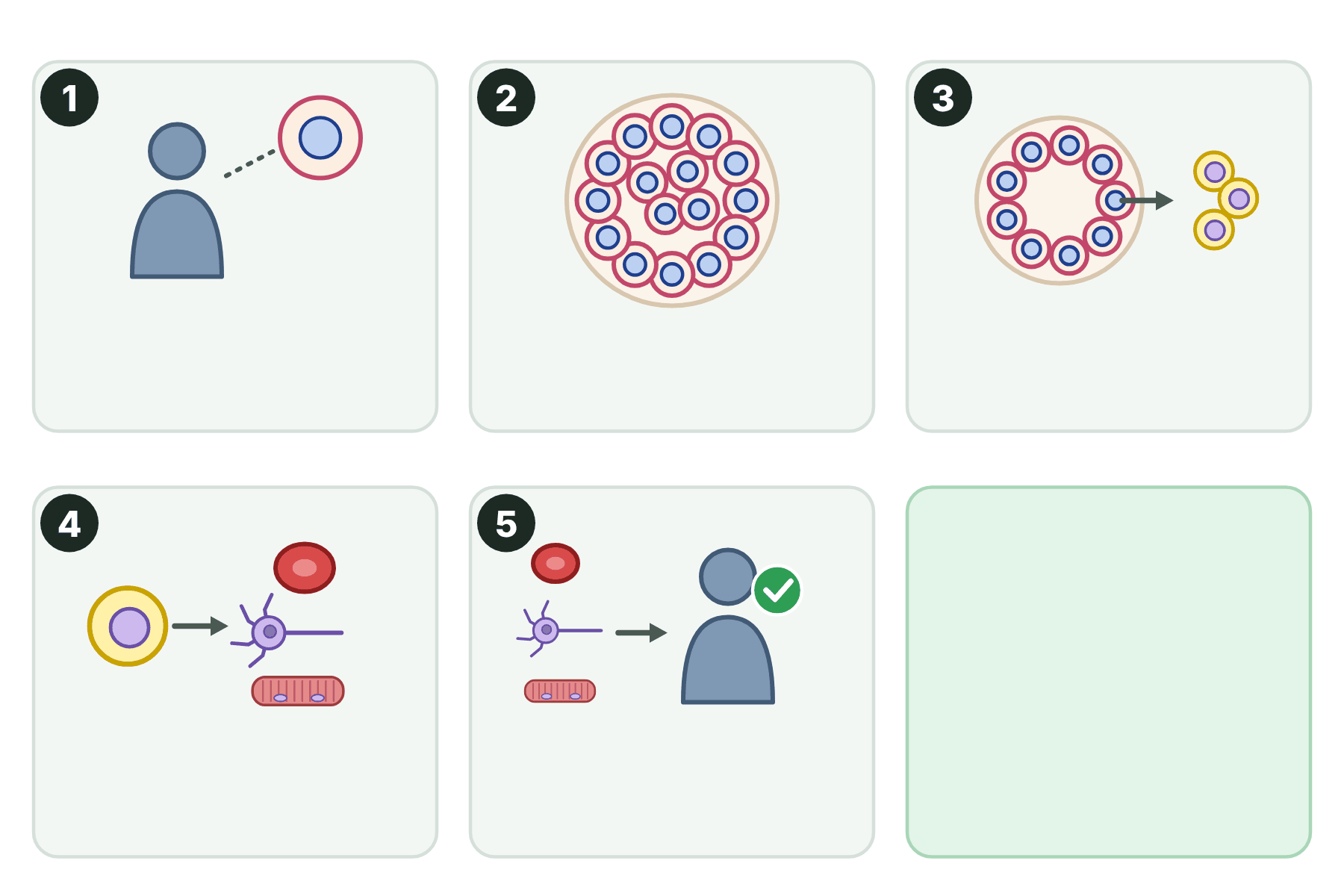 Describe what happens in each stage of therapeutic cloning.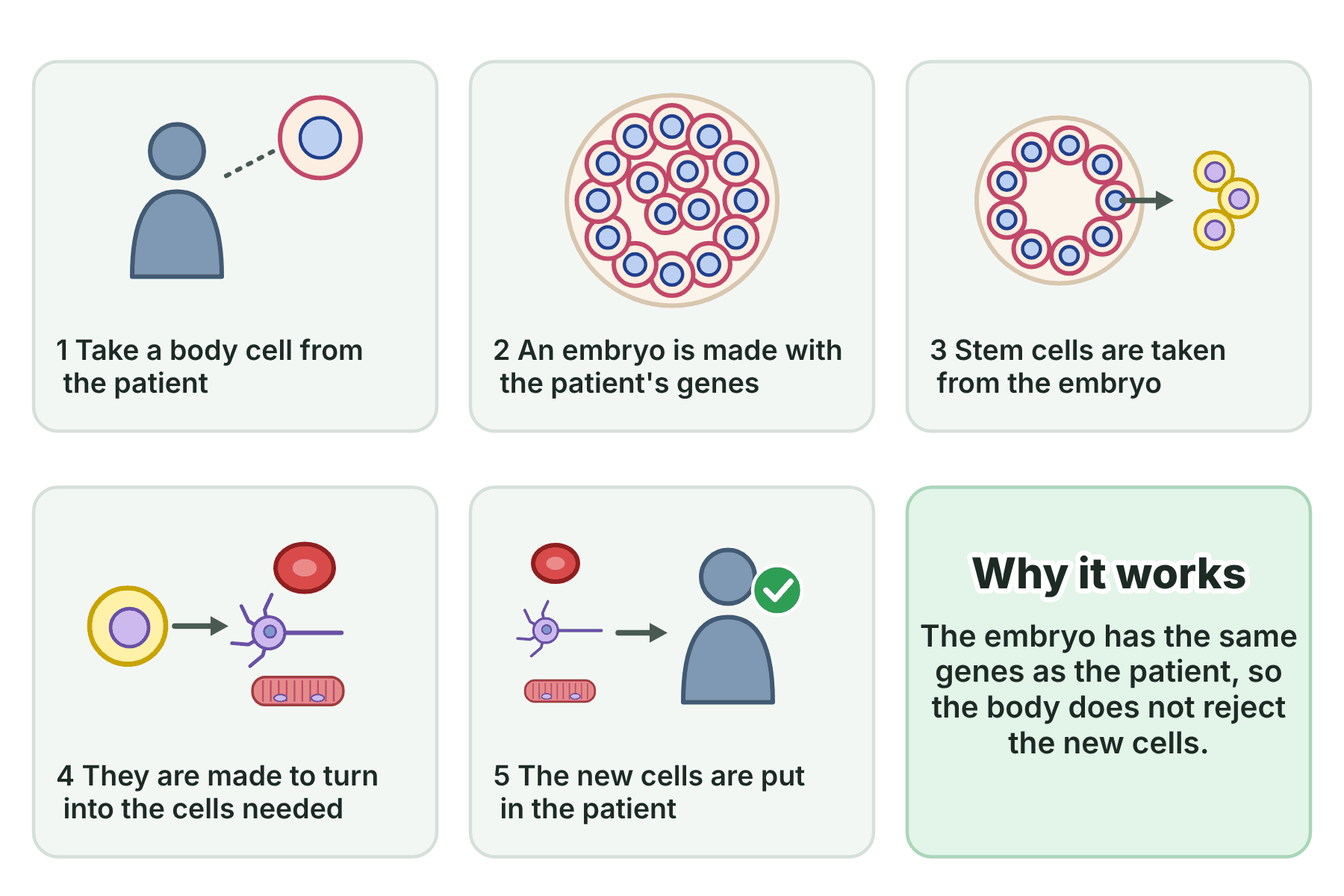
-
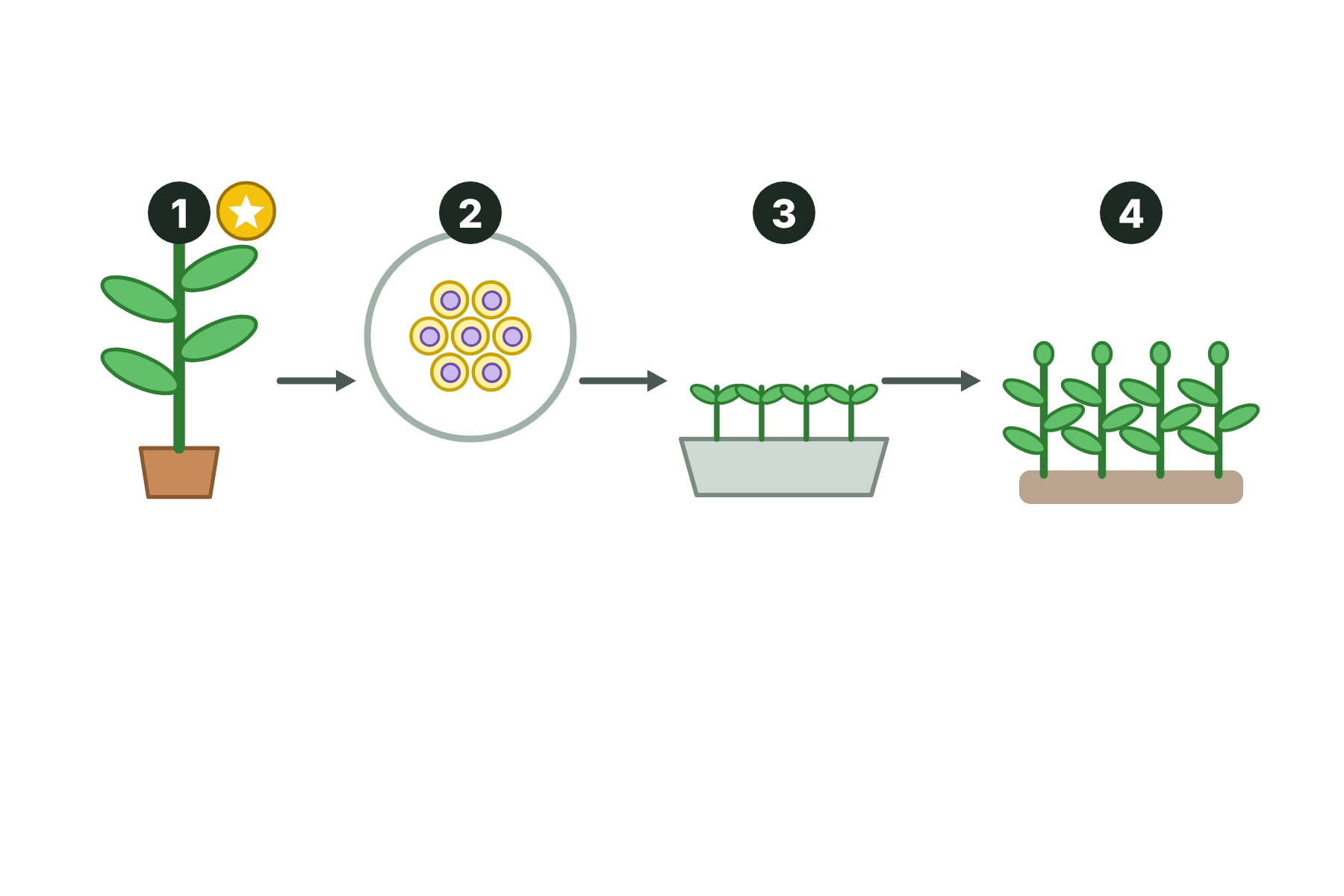 Describe how a plant can be cloned from its meristem tissue.