Flashcards · Biology · Transport In and Out of Cells
Active Transport
-
What is active transport?
The movement of substances from a more dilute to a more concentrated solution, against a concentration gradient, using energy from respiration.
-
What does active transport need?
Energy from respiration.
-
Does active transport move substances up or down the concentration gradient?
Up it: from low concentration to high concentration.
-
Which sub-cellular structures release the energy for active transport?
Mitochondria.
-
Why do cells that do a lot of active transport have many mitochondria?
They release the energy from respiration that active transport needs.
-
What is a carrier protein?
A protein in the cell membrane that picks up a particular substance and moves it across.
-
Give an example of active transport in plants.
Mineral ions being taken into root hair cells from the dilute soil solution.
-
Why do plants need mineral ions?
For healthy growth. For example nitrate for proteins and magnesium for chlorophyll.
-
Why can't root hair cells take up ions by diffusion?
The ions are at a lower concentration in the soil than in the cell.
-
Give an example of active transport in animals.
Sugar being absorbed from the gut into the blood.
-
Why is active transport needed to absorb sugar from the gut?
Sometimes the concentration of sugar in the gut is lower than in the blood.
-
Why must the body absorb sugar?
Sugar molecules are used for cell respiration.
-
What happens to active transport if a cell stops respiring?
It stops, because there is no energy.
-
Why does waterlogged soil reduce ion uptake?
Less oxygen means less respiration, so less energy for active transport.
-
How does active transport differ from diffusion?
It goes against the concentration gradient and needs energy. Diffusion goes down the gradient and needs none.
-
Which processes need no energy from the cell?
Diffusion and osmosis.
-
Which process moves only water?
Osmosis.
-
What does "against the concentration gradient" mean?
From a lower concentration to a higher concentration.
-
What is the usual mistake about active transport?
Saying it is the same as diffusion, or forgetting that it needs energy.
-
Is a ball rolling uphill a good picture of diffusion or active transport?
Active transport: it takes energy to push it up.
-
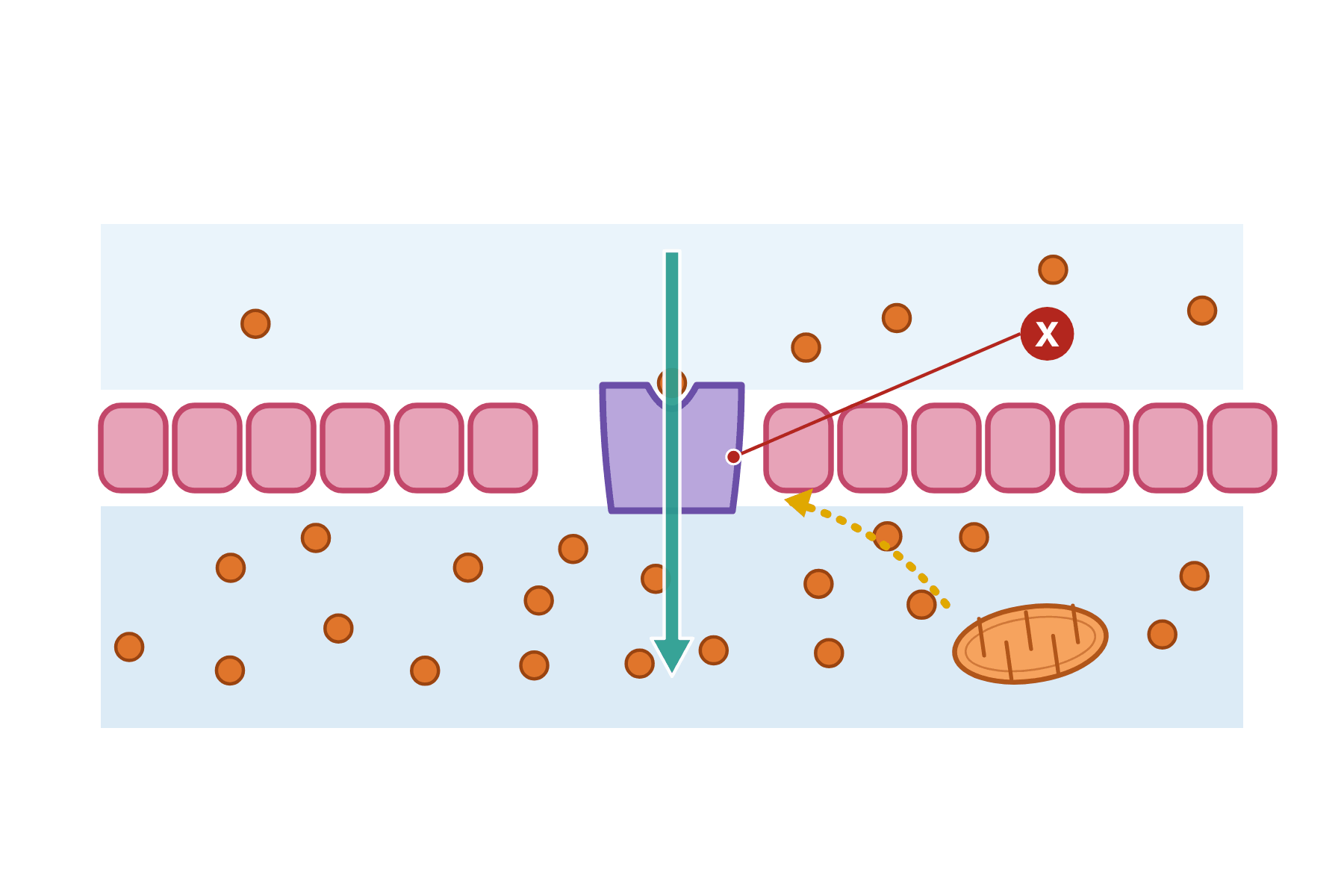 What is the structure marked X, and what does it do?
 A carrier protein. It picks up a substance and moves it across the cell membrane, against the concentration gradient, using energy from respiration.
-
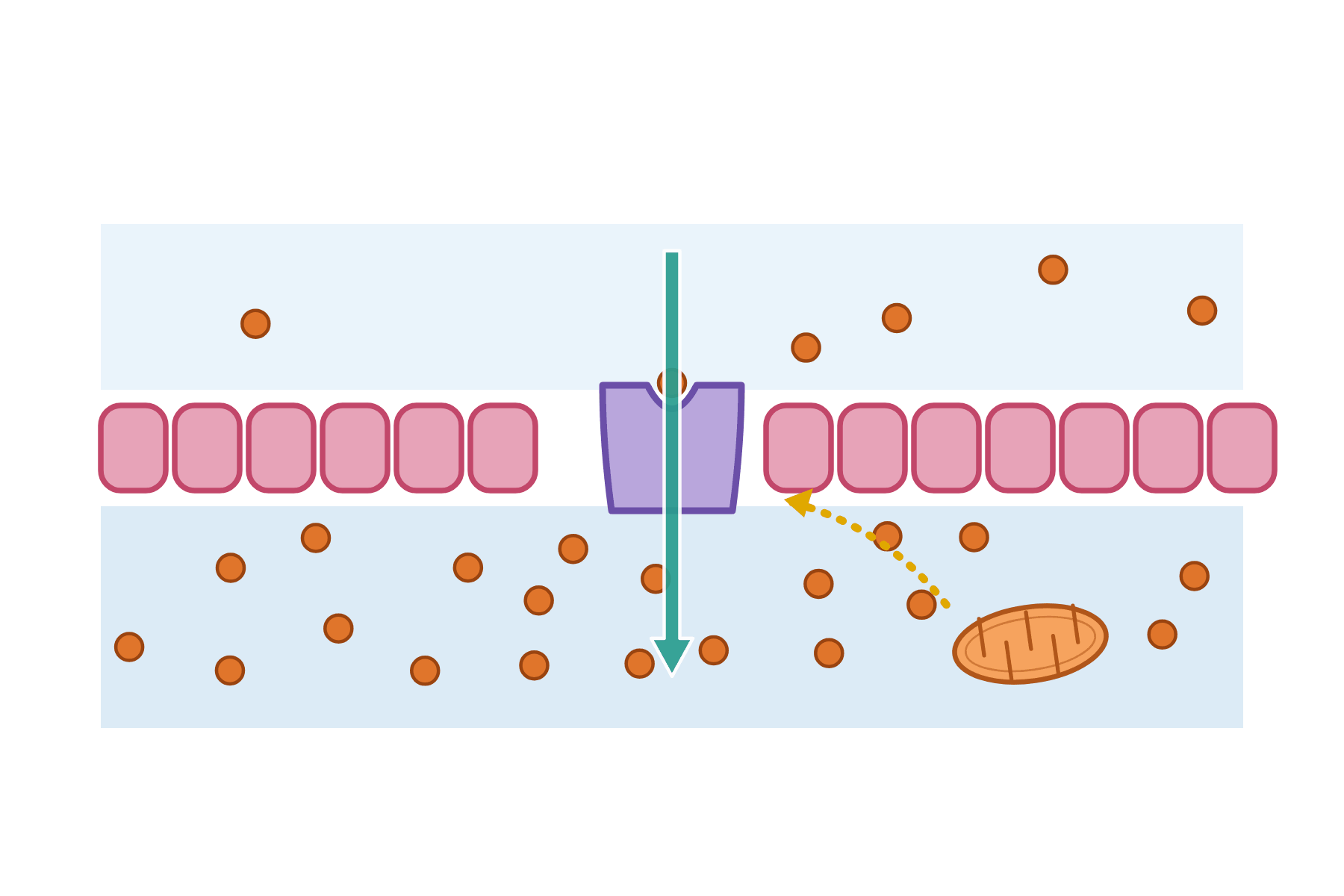 Label this diagram of active transport and say what the mitochondrion is for.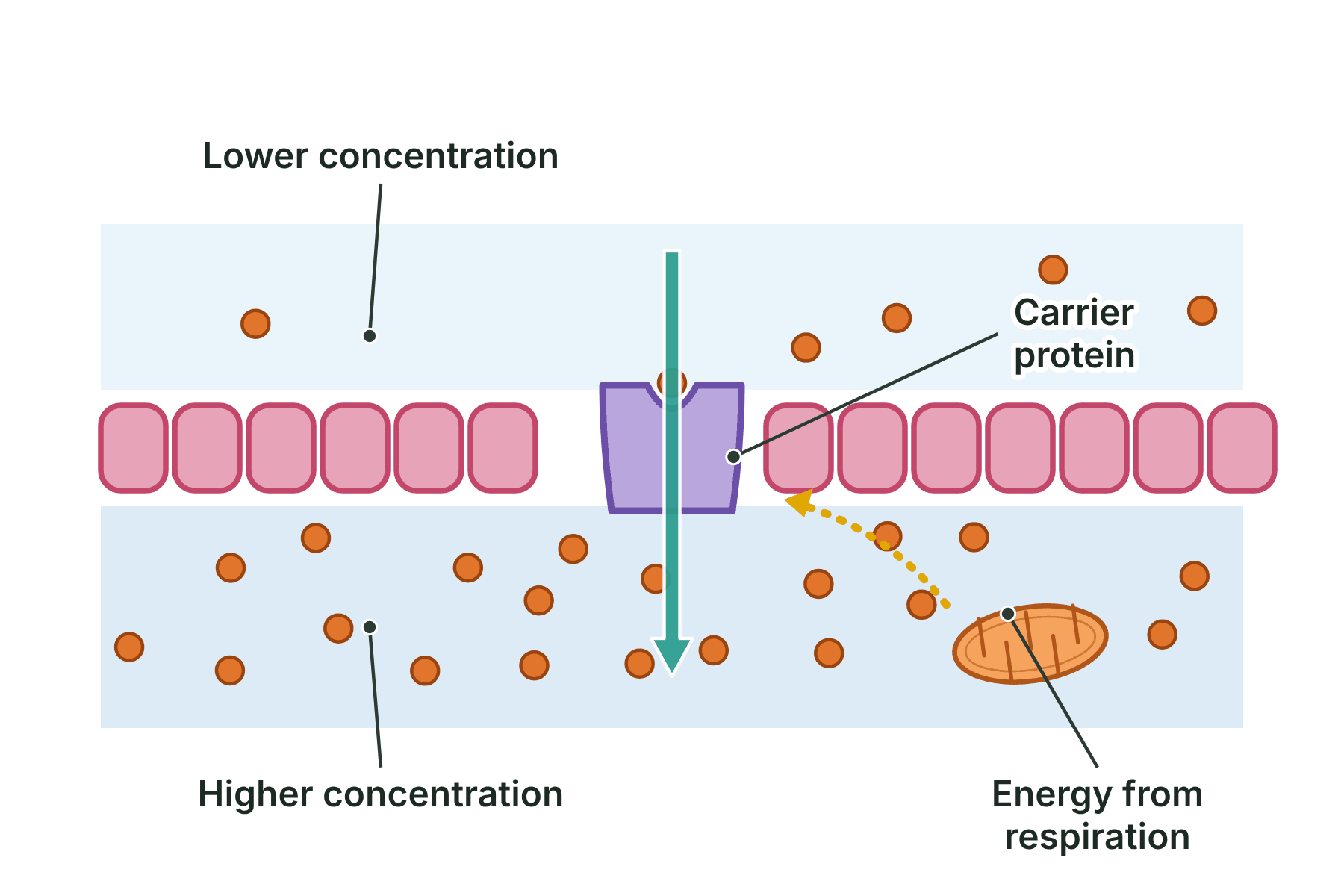
-
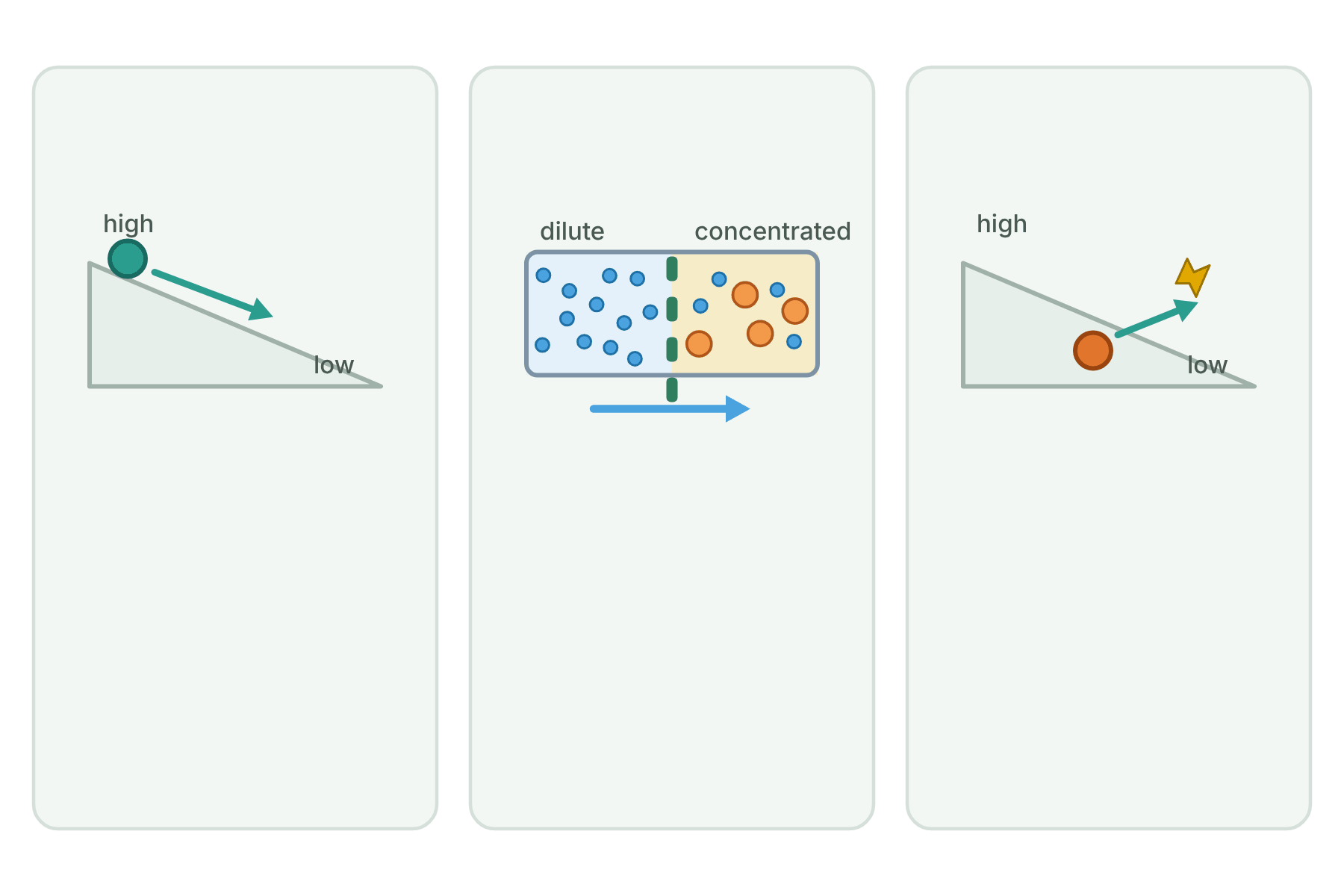 Name each process and say which needs energy.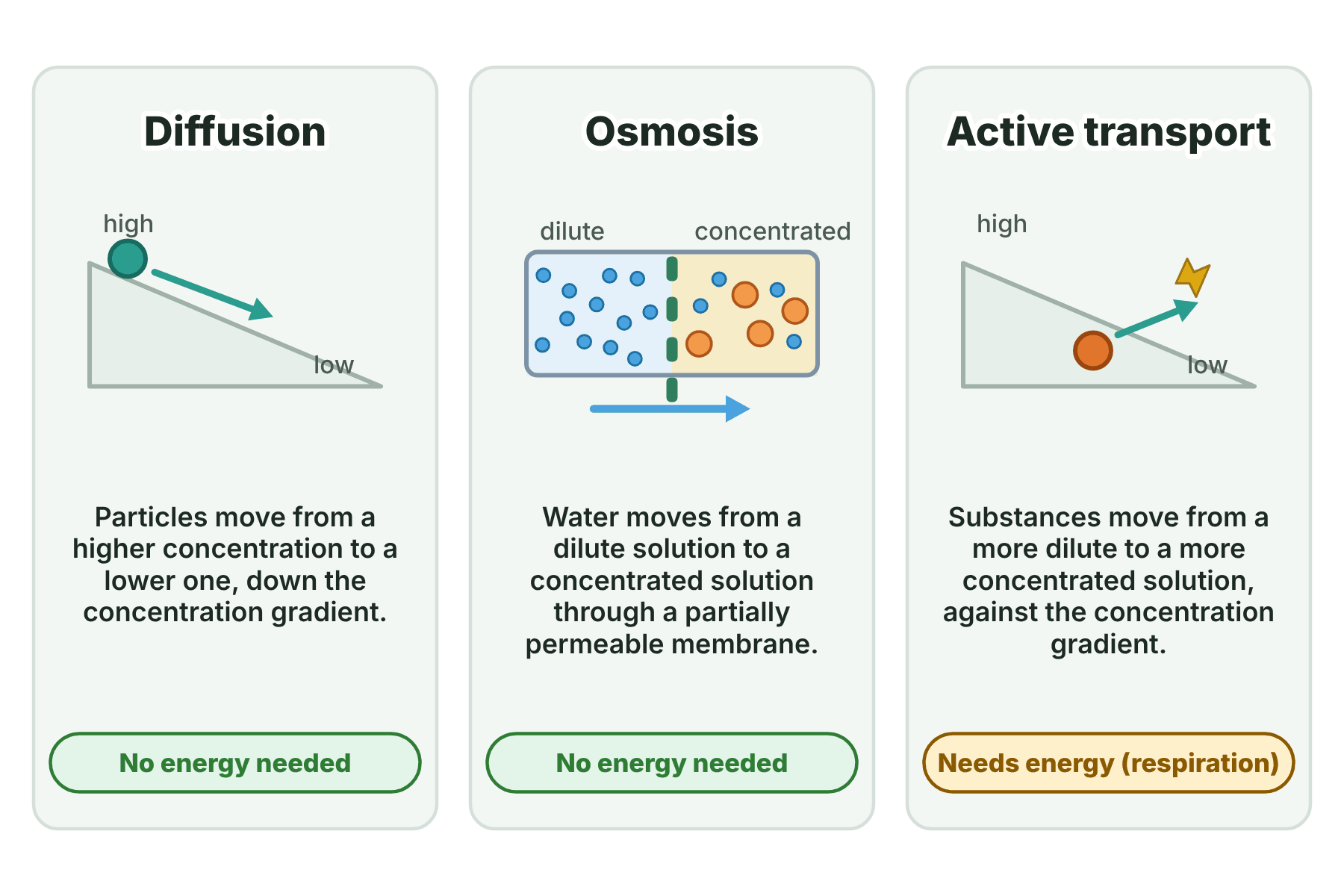
-
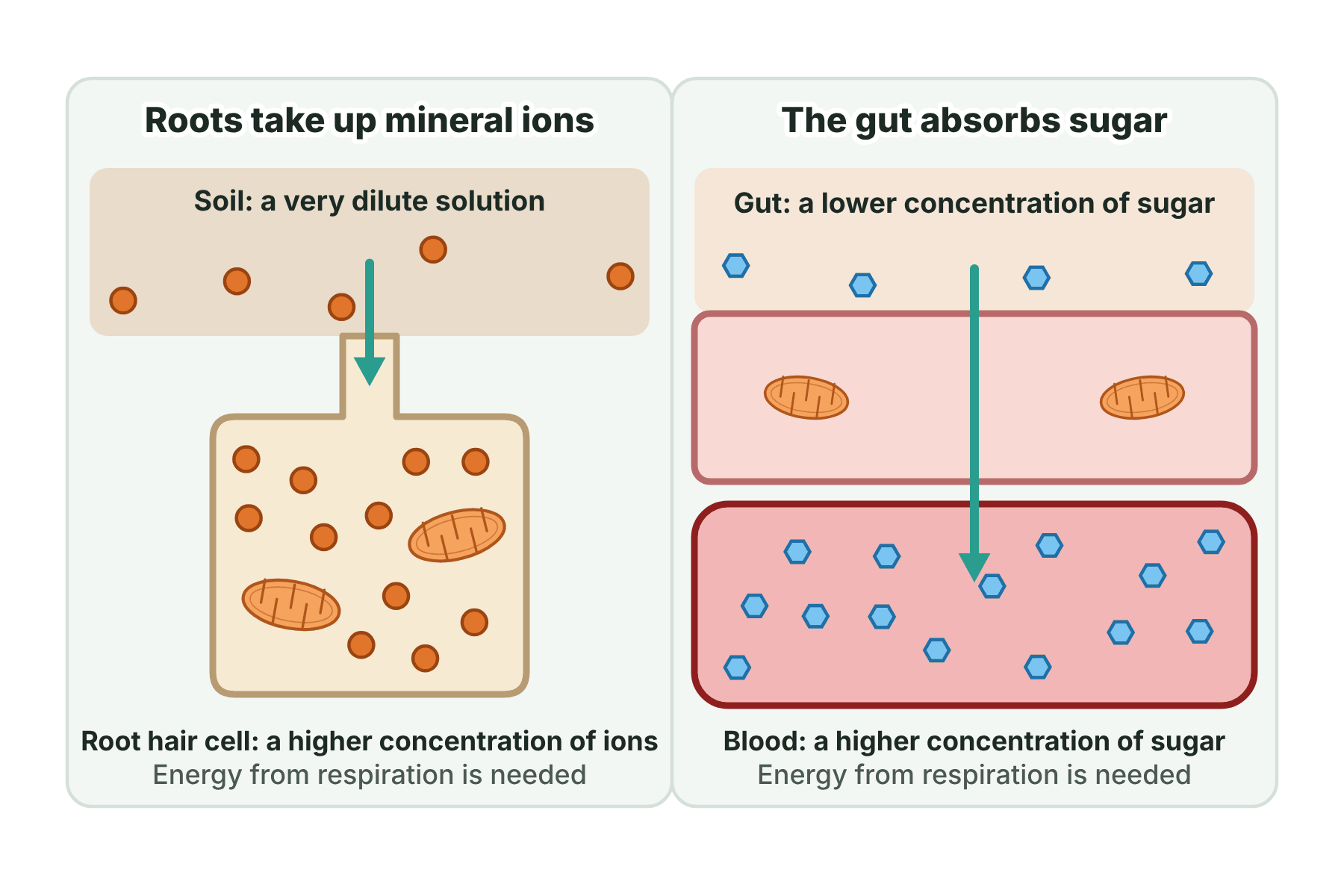 Why can't a root hair cell take in mineral ions by diffusion?
 The mineral ions are at a lower concentration in the soil than in the root hair cell, so they would diffuse out. Active transport moves them in against the gradient, using energy from respiration.