Viewing as
Teaching this? The teacher view adds 2 files, the mark schemes and the model answers.
History · Crime and punishment in medieval England
Crime and Punishment in the Later Middle Ages
How the king's government took on more of the work of justice after 1200, and how new laws followed the Black Death and the Lollards.
Learning Objectives
- 1Describe the new royal officials who enforced the law after 1200.
- 2Explain why new crimes were created, including the Statute of Labourers and the heresy laws.
- 3Assess how far crime and punishment changed across the whole period c1000-c1500.
Setting the Scene
After 1200 English kings built up a much larger system of royal justice. Towns were growing, and the country was shaken by the Black Death (1348-49), which killed around a third of the population. New problems led to new laws - and the king's officials, not just the village, now did much of the work of enforcing them.
- 1194 Coroners are appointed to investigate suspicious deaths.
- 1195 Richard I appoints Keepers of the Peace.
- 1285 Statute of Winchester: watchmen in towns and the hue and cry reinforced.
- 1348 The Black Death reaches England.
- 1351 Statute of Labourers and the Treason Act.
- 1361 Justices of the Peace are established in every county.
- 1401 De Heretico Comburendo: heretics can be burned.
New Royal Officials
Law enforcement was still local, but the king's officials took on more of it.
-
Coroners
From 1194, coroners investigated any unexpected or suspicious death, holding an inquest with a jury.
-
Keepers of the Peace
Appointed from 1195 to keep order in troublesome areas; in 1361 they became Justices of the Peace (JPs).
-
Justices of the Peace
Local landowners who heard minor cases and kept order in each county - still the backbone of local justice in 1500.
-
Royal judges
Judges travelled on circuits to hear serious cases at the assizes, and the King's Bench court sat in Westminster.
Law Enforcement in Towns and Villages
The community was still expected to play its part.
-
Statute of Winchester
In 1285 Edward I ordered towns to have watchmen at their gates at night and made every man keep weapons to join the hue and cry.
-
Tithings and hue and cry
Still used, especially in the countryside - a clear sign of continuity from Anglo-Saxon times.
-
Parish constables
Local men chosen for a year to keep order and bring suspects to the JPs.
-
Trial by jury
Juries of local men now decided guilt instead of the ordeal.
New Crimes, c1200-c1500
Each new law was a response to a problem the authorities feared.
-
Statute of Labourers
Date: 1351. What it did: Capped wages at pre-plague levels; peasants could not leave their lord. Why: The Black Death caused a labour shortage and peasants demanded more pay
-
Treason Act
Date: 1351. What it did: Defined high treason, punished by hanging, drawing and quartering. Why: Kings wanted to protect their authority
-
De Heretico Comburendo
Date: 1401. What it did: Heretics who refused to recant could be burned. Why: The Lollards challenged the Church
-
Poaching laws
Date: Throughout. What it did: Hunting on private or royal land punished. Why: Landowners protected their game
Punishment in Public
Punishments in the later Middle Ages were still public and aimed at deterrence and retribution. Prison was still mainly for holding people before trial or for debtors.
Punishments, c1200-c1500
- Fines The most common punishment for minor crimes.
- Stocks and pillory Public humiliation for crimes such as cheating customers.
- Hanging For serious crimes, including theft of goods worth more than 12 pence.
- Hanging, drawing and quartering For treason - the harshest punishment of all.
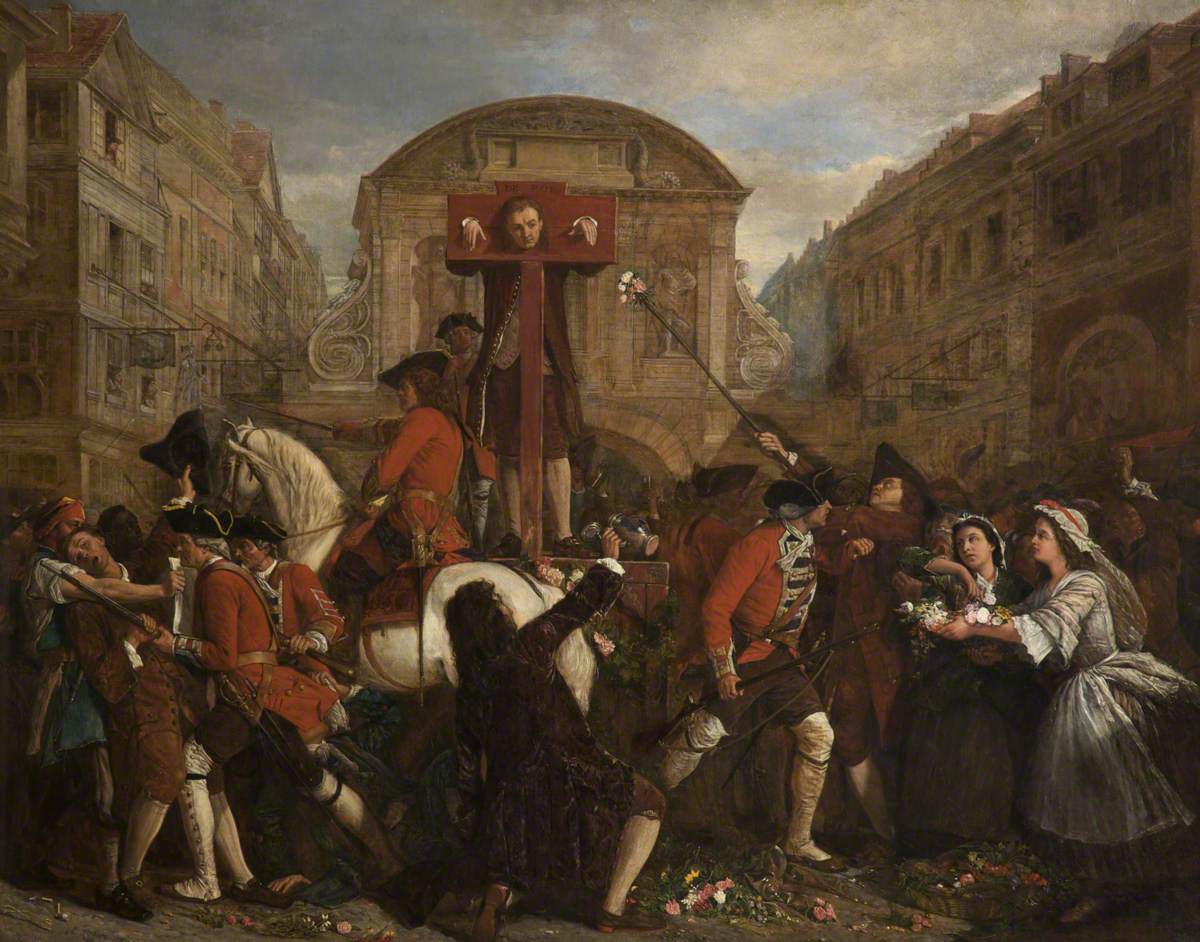
Public punishment was meant to shame and deter.
Crime and Punishment c1000-c1500
Medieval justice
-
Crimes
- Theft most common
- treason most serious
- poaching
- moral crimes
- heresy
-
Enforcement
- Tithings
- hue and cry
- sheriffs
- coroners
- JPs
- watchmen
-
Trials
- Oath-helpers
- ordeal until 1215
- combat
- juries
-
Punishments
- Wergild
- fines
- stocks and pillory
- mutilation
- hanging
- burning heretics
-
The Church
- Church courts
- sanctuary
- benefit of clergy
- end of ordeal
-
The king
- King's Peace
- Forest Laws
- murdrum
- royal judges
- new statutes
Can I...?
Tick off what you can already do for the exam.
- 1Explain the difference between crimes against the person, property and authority
- 2Explain how tithings and the hue and cry worked
- 3Describe the Forest Laws and the murdrum fine
- 4Explain sanctuary and benefit of clergy
- 5Explain why trial by ordeal ended in 1215
- 6Describe the roles of coroners and JPs
- 7Explain why the Statute of Labourers was introduced
- 8Judge how far crime and punishment changed c1000-c1500
Summary & Exam Focus
- Royal officials - coroners, Keepers of the Peace and JPs - took on more of law enforcement.
- The community still mattered: the hue and cry, watchmen and juries.
- New crimes followed new fears: the Black Death, treason and heresy.
- Punishment stayed public, harsh and aimed at deterrence.
Exam focus
Explain why there were changes in the definition of crime in the period c1200-c1500. (12 marks) (12 marks)
Link each new law to the problem that caused it - the Black Death, the Lollards, the protection of royal authority.
Key terms
The vocabulary this lesson expects you to use. Each one is linked from the first place it appears above.
- Coroner
- An official who investigated suspicious deaths, from 1194.
- Justice of the Peace (JP)
- A local landowner appointed to keep order and try minor cases, from 1361.
- Statute of Labourers
- A 1351 law capping wages after the Black Death.
- Treason Act
- A 1351 law defining high treason.
- Heresy
- Holding religious beliefs that go against the Church's teaching.
- Lollards
- Followers of John Wycliffe who challenged the Church.
- Assizes
- Courts where travelling royal judges heard serious cases.
Downloads
Free to keep, print and annotate.
- Crime and Punishment in the Later Middle Ages.pptx Built from the lesson script on 23 September 2026. View
- Crime and Punishment in the Later Middle Ages - Completed Notes.docx The full notes for the lesson, every gap filled in - to check against, or to revise from. Built from the lesson script on 23 September 2026. View
- Crime and Punishment in the Later Middle Ages - Exam Questions.docx Built from the lesson script on 23 September 2026. View
Something here looks wrong?
Tell us what and we will go and look. It goes to whoever writes these pages, nobody else, and we do not ask who you are — so there is nothing to sign and nothing comes back to you.