Exam questions · Biology · Enzymes and Digestion
Enzymes
- 10 exam questions
- 28 marks
- 10 quick checks
-
1 State [2 marks]
State what is meant by a catalyst.
Show answerHide answer
Model answer
A substance that speeds up a reaction and is not used up in the reaction.
Mark scheme
- Speeds up a (chemical) reaction — 1 mark
- Is not used up / is unchanged at the end — 1 mark
-
2 Name [1 mark]
Name the part of an enzyme into which the substrate fits.
Show answerHide answer
Model answer
The active site.
Mark scheme
- Active site — 1 mark
-
3 Name [2 marks]
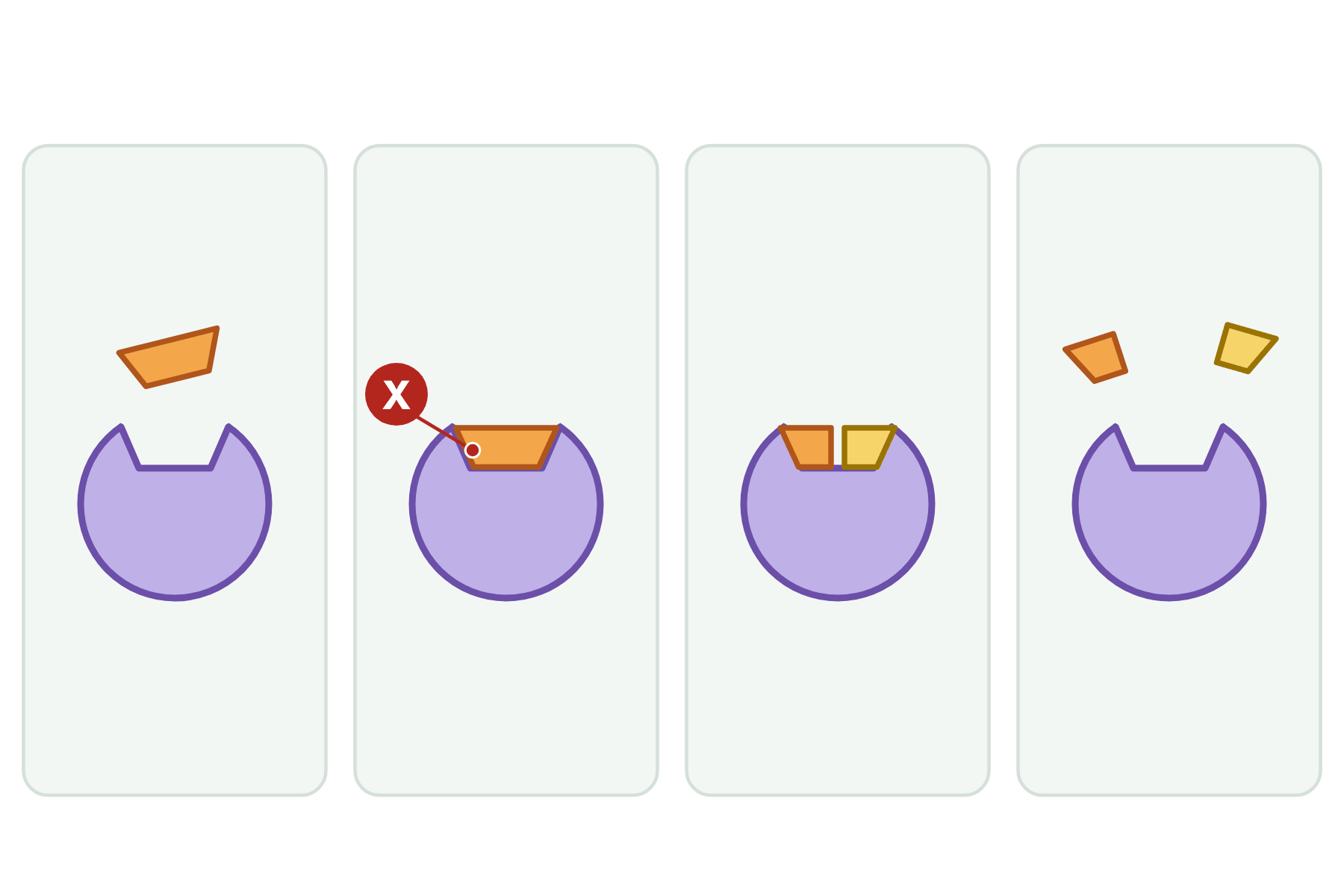
Figure 1 shows an enzyme and its substrate. (a) Name the region of the enzyme marked X. (b) Name the model of enzyme action shown in Figure 1.
Show answerHide answer
Model answer
(a) The active site. (b) The lock and key model.
Mark scheme
- (a) Active site — 1 mark
- (b) Lock and key (model) — 1 mark
-
4 Describe [3 marks]
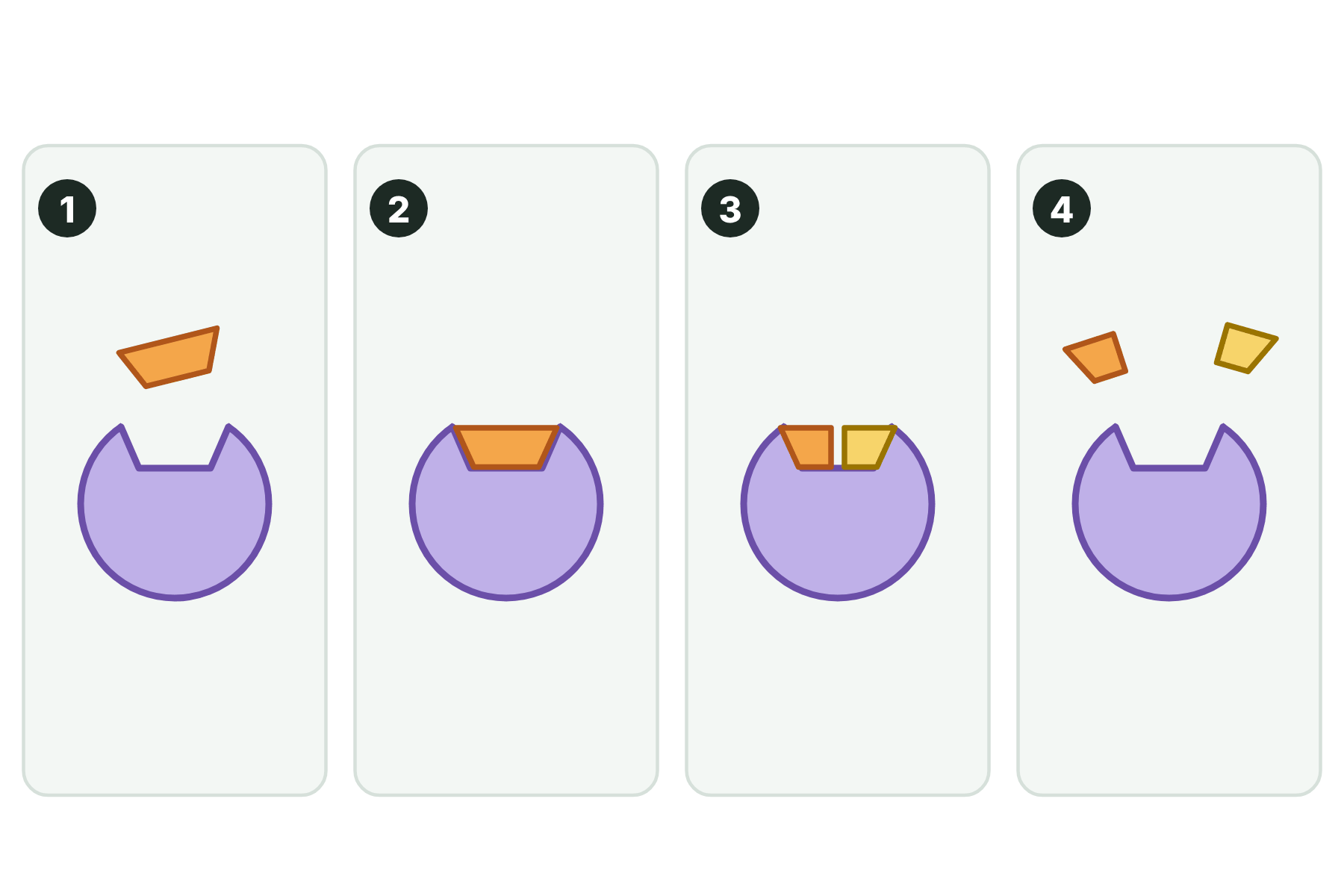
Figure 2 shows the stages of an enzyme-controlled reaction. Describe what happens at stages 2, 3 and 4.
Show answerHide answer
Model answer
At stage 2 the substrate fits into the active site and forms an enzyme-substrate complex. At stage 3 the enzyme catalyses the reaction and the substrate splits. At stage 4 the products leave and the enzyme is unchanged.
Mark scheme
- 2: substrate fits the active site / complex forms — 1 mark
- 3: the reaction takes place / substrate splits into products — 1 mark
- 4: products released and the enzyme is unchanged — 1 mark
-
5 Explain [2 marks]
An enzyme that breaks down starch does not break down protein. Explain why.
Show answerHide answer
Model answer
The active site of the enzyme has a shape that fits starch only. Protein molecules have a different shape, so they do not fit.
Mark scheme
- Active site has a specific shape / fits starch — 1 mark
- Protein has a different shape and does not fit — 1 mark
-
6 Explain [3 marks]
A student boils a solution of an enzyme and then adds it to its substrate. The reaction does not happen. Explain why.
Show answerHide answer
Model answer
The high temperature denatured the enzyme. Its shape, including the active site, changed. The substrate no longer fits the active site, so the enzyme cannot catalyse the reaction.
Mark scheme
- Enzyme was denatured by the high temperature — 1 mark
- Active site changed shape — 1 mark
- Substrate no longer fits — 1 mark
-
7 Describe [3 marks]
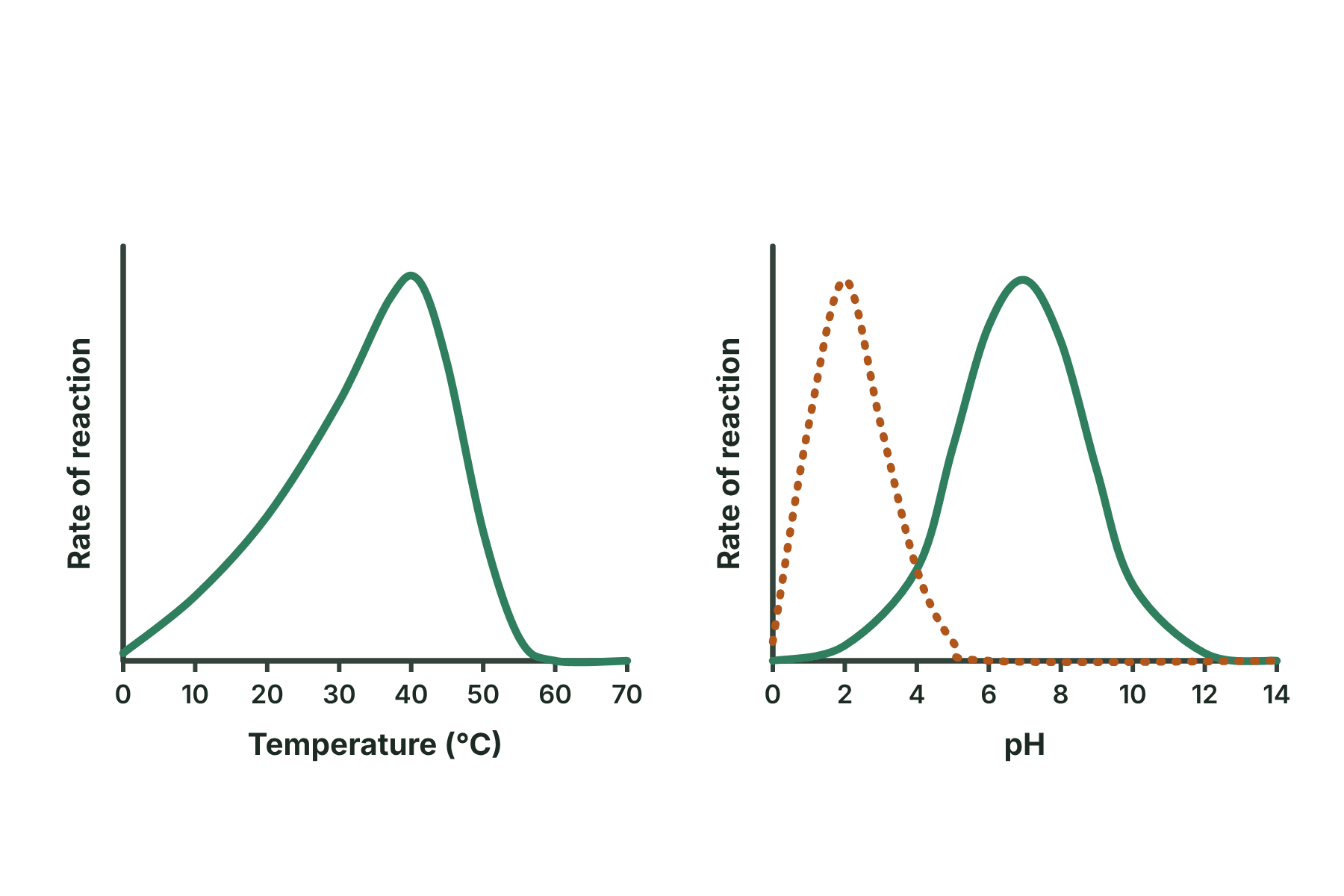
Figure 3 shows the effect of temperature on the rate of an enzyme-controlled reaction. Describe the effect of increasing the temperature from 0 °C to 70 °C.
Show answerHide answer
Model answer
The rate increases as the temperature rises to a maximum at about 40 °C. Above this temperature the rate falls quickly, and it reaches zero at about 60 °C.
Mark scheme
- Rate increases up to about 40 °C — 1 mark
- Rate falls above the maximum / optimum — 1 mark
- Reaches zero at about 55 to 60 °C — 1 mark
-
8 Calculate [3 marks]
In an investigation, an enzyme reaction took 50 seconds to finish at 25 °C and 20 seconds to finish at 35 °C. Use the equation rate = 1000 ÷ time to calculate the rate at each temperature, and calculate how many times faster the reaction was at 35 °C.
Show answerHide answer
Model answer
At 25 °C: 1000 ÷ 50 = 20. At 35 °C: 1000 ÷ 20 = 50. 50 ÷ 20 = 2.5 times faster.
Mark scheme
- 1000 ÷ 50 = 20 — 1 mark
- 1000 ÷ 20 = 50 — 1 mark
- 2.5 times faster — 1 mark
-
9 Explain [3 marks]
Pepsin is an enzyme in the stomach with an optimum pH of about 2. Explain what would happen to the rate of reaction if pepsin were put into a solution at pH 7.
Show answerHide answer
Model answer
The rate would fall, because pH 7 is not the optimum for pepsin. The bonds holding the enzyme in shape would be affected, so the active site would change shape and the substrate would no longer fit. The enzyme would be denatured.
Mark scheme
- Rate would fall / the reaction would slow or stop — 1 mark
- Active site changes shape / the enzyme is denatured — 1 mark
- Substrate no longer fits — 1 mark
-
10 Explain [6 marks]
Explain why the rate of an enzyme-controlled reaction increases as the temperature rises to about 40 °C, but decreases at higher temperatures.
Show answerHide answer
Model answer
As the temperature rises, the particles have more energy and move faster. The enzyme and substrate collide more often, and with more energy, so the rate increases. At about 40 °C the enzyme works fastest, which is the optimum temperature. Above this temperature the bonds holding the enzyme in shape break. The active site changes shape and the enzyme is denatured, so the substrate no longer fits and the rate falls.
Mark scheme
- Particles have more energy / move faster — 1 mark
- More frequent collisions between enzyme and substrate — 1 mark
- So the rate increases up to the optimum — 1 mark
- Above the optimum, bonds in the enzyme break — 1 mark
- Active site changes shape / enzyme is denatured — 1 mark
- Substrate no longer fits, so the rate falls — 1 mark
Quick check
-
1
What is an enzyme?
Show answerHide answer
C: A biological catalyst
An enzyme is a biological catalyst, made of protein, which speeds up reactions in living things.
-
2
What is the substrate?
Show answerHide answer
A: The substance an enzyme acts on
The substrate is the substance that the enzyme acts on, and it fits into the active site.
-
3
Why is each enzyme specific to one substrate?
Show answerHide answer
D: Its active site has a shape that fits only that substrate
Only a substrate with a shape that matches the active site can fit into it.
-
4
What happens to an enzyme that is denatured?
Show answerHide answer
B: It changes shape and cannot bind its substrate
Its shape changes, including the active site, so the substrate no longer fits.
-
5
What is the effect on an enzyme of cooling it in a fridge?
Show answerHide answer
A: It slows down but is not denatured
Cold slows the reaction because the particles move more slowly, but it does not denature the enzyme.
-
6
Between 0 °C and the optimum temperature, what happens to the rate of an enzyme reaction as the temperature rises?
Show answerHide answer
C: It rises
The particles have more energy and collide more often, so the rate increases.
-
7
Which enzyme has an optimum pH of about 2?
Show answerHide answer
B: Pepsin in the stomach
Pepsin works in the acid conditions of the stomach, and it works best at about pH 2.
-
8
An enzyme reaction takes 25 s. What is the rate, using rate = 1000 ÷ time?
Show answerHide answer
D: 40
1000 ÷ 25 = 40.
-
9
A reaction makes 60 cm³ of product in 5 minutes. What is the mean rate?
Show answerHide answer
A: 12 cm³ per minute
Rate = amount of product ÷ time = 60 ÷ 5 = 12 cm³ per minute.
-
10
A student says that heating an enzyme above its optimum temperature kills it. What is the best correction?
Show answerHide answer
C: Enzymes are not alive; they are denatured when their shape changes
An enzyme is a molecule, not a living thing, so it cannot be killed. It is denatured: its shape, including the active site, changes.