Flashcards · Biology · Enzymes and Digestion
Enzymes
-
What is an enzyme?
A biological catalyst that speeds up a reaction in a living thing.
-
What is a catalyst?
A substance that speeds up a chemical reaction without being used up.
-
What are enzymes made of?
Protein.
-
Is an enzyme used up in a reaction?
No. It is unchanged at the end and can be used again.
-
What is the substrate?
The substance that an enzyme acts on.
-
What are the products?
The substances that are made in the reaction.
-
What is the active site?
The region of the enzyme into which the substrate fits.
-
What is an enzyme-substrate complex?
The enzyme and its substrate joined together while the reaction happens.
-
Why is an enzyme specific?
The shape of its active site fits only one substrate.
-
What is the lock and key model?
A model in which the substrate (key) fits the active site (lock) exactly.
-
Why is the lock and key model called simplified?
Real enzymes can change shape slightly, but the model treats the active site as rigid.
-
Why does a reaction speed up when it gets warmer?
The particles have more energy and collide more often.
-
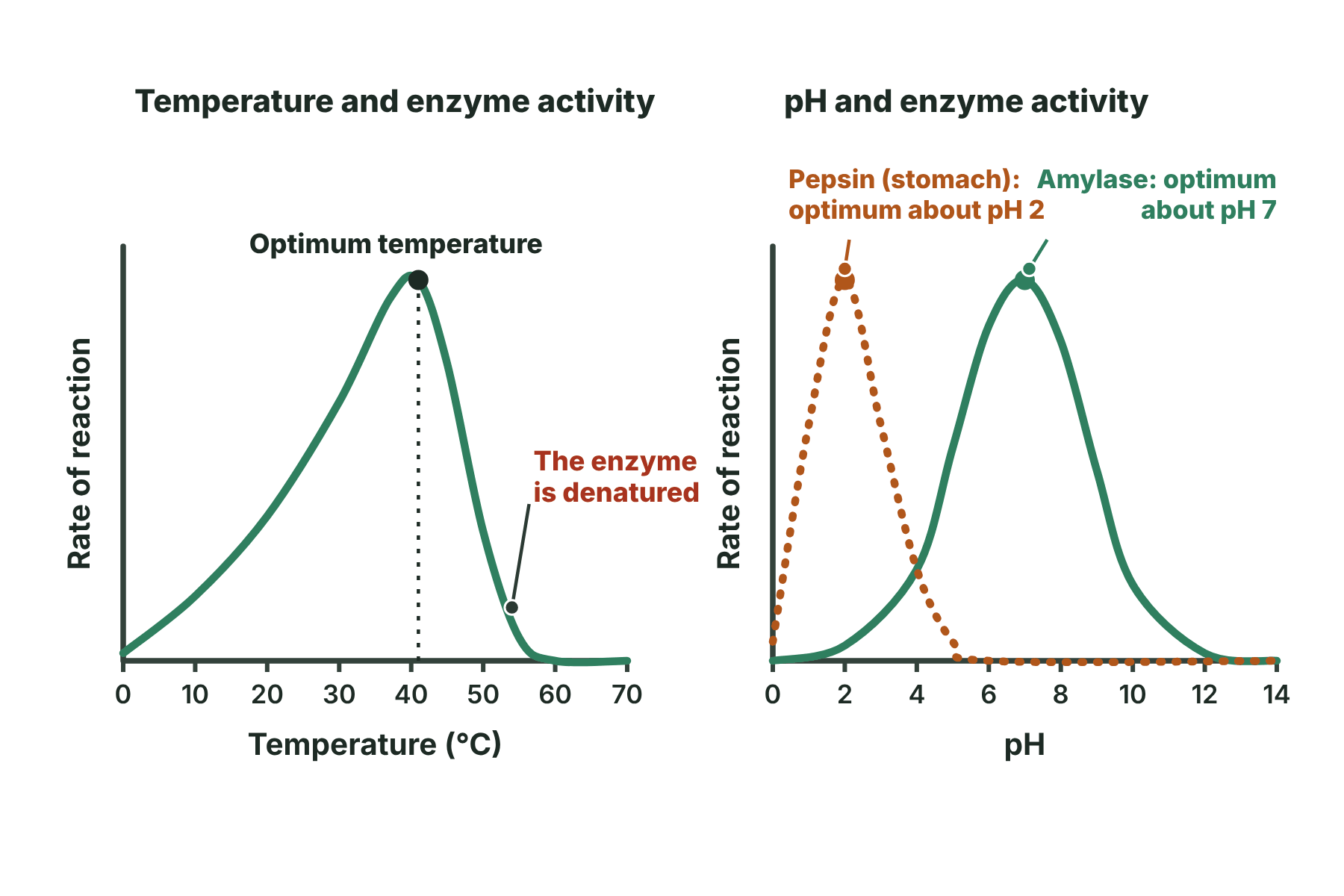
What is the optimum temperature?
The temperature at which an enzyme works fastest.
-
What is the optimum temperature for many human enzymes?
About 37 to 40 °C.
-
What does denatured mean?
The enzyme has lost its shape, so the active site no longer fits the substrate.
-
What causes an enzyme to be denatured?
A temperature that is too high, or a pH that is too acidic or too alkaline.
-
Can a denatured enzyme be restored by cooling it?
No. The change in shape is permanent.
-
Does cold denature an enzyme?
No. The enzyme just works slowly, and speeds up again when warmed.
-
What is the optimum pH of pepsin?
About pH 2.
-
What is the optimum pH of amylase?
About pH 7.
-
How do you work out rate from the amount of product?
Rate = amount of product formed ÷ time taken.
-
How do you work out rate from the time taken?
Rate = 1 ÷ time. Using 1000 ÷ time gives easier numbers.
-
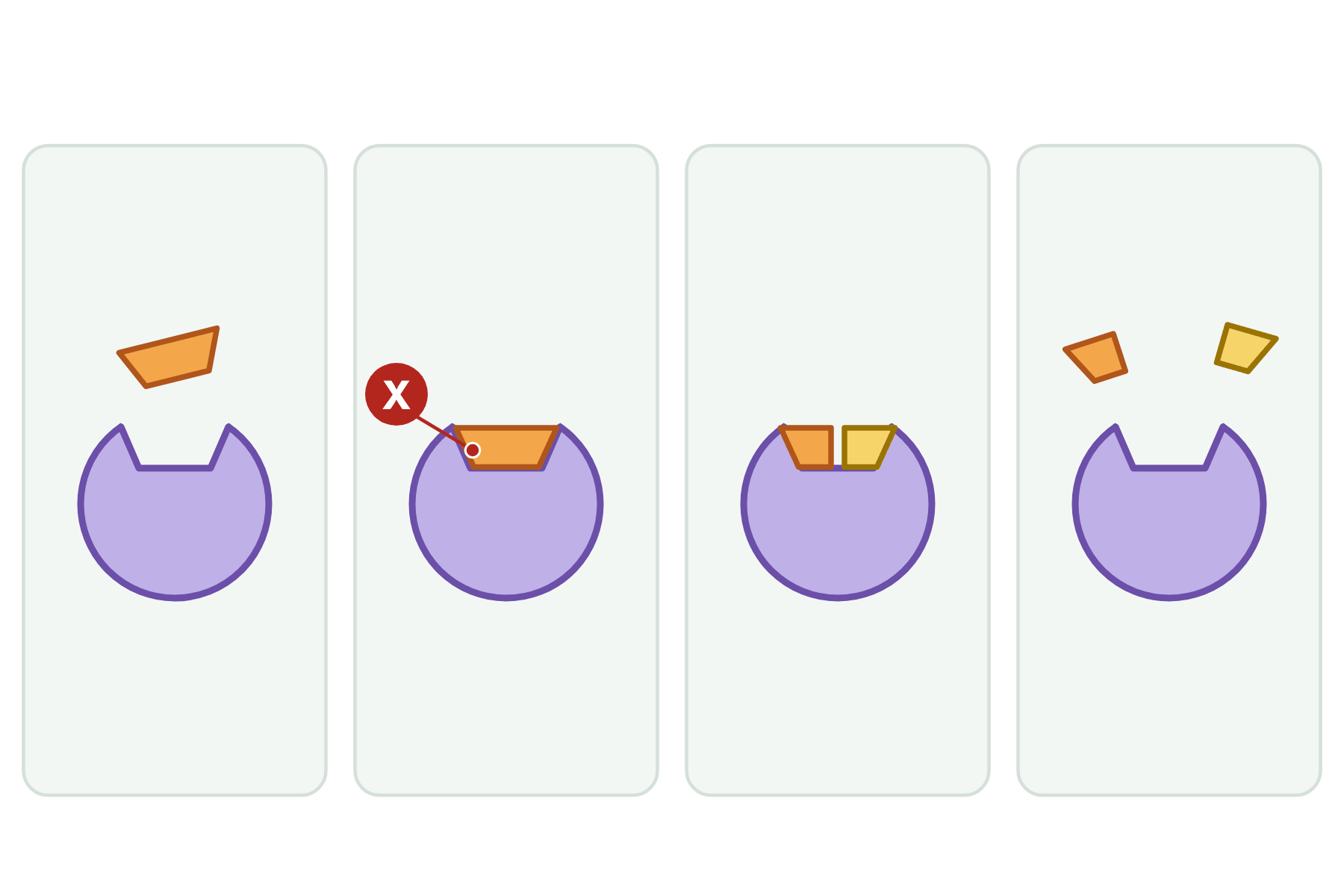 What is the region of the enzyme marked X, and why is it important?
 The active site. Its shape fits the substrate exactly, so only that substrate can bind and be changed.
-
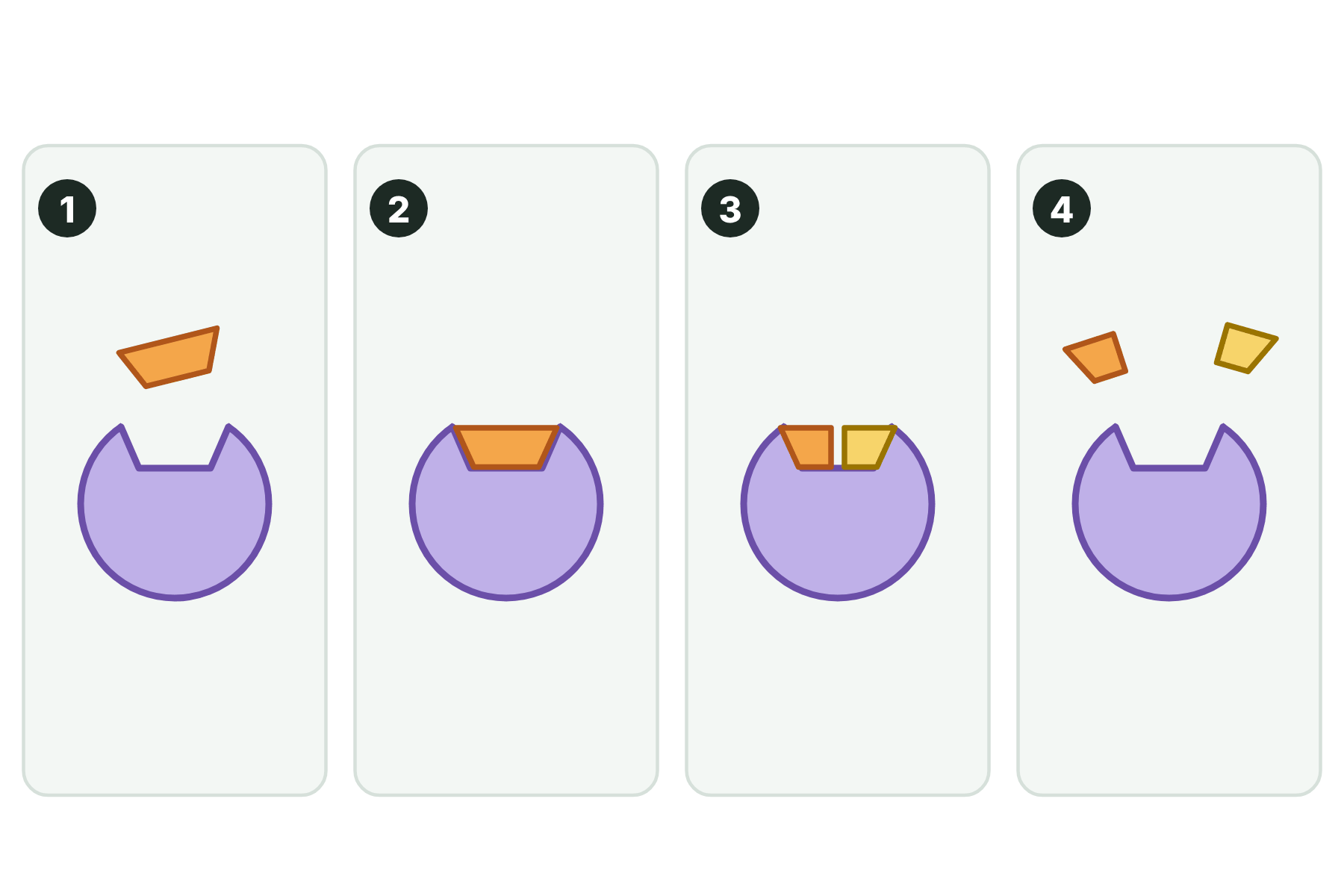 Describe what happens at each of the four stages.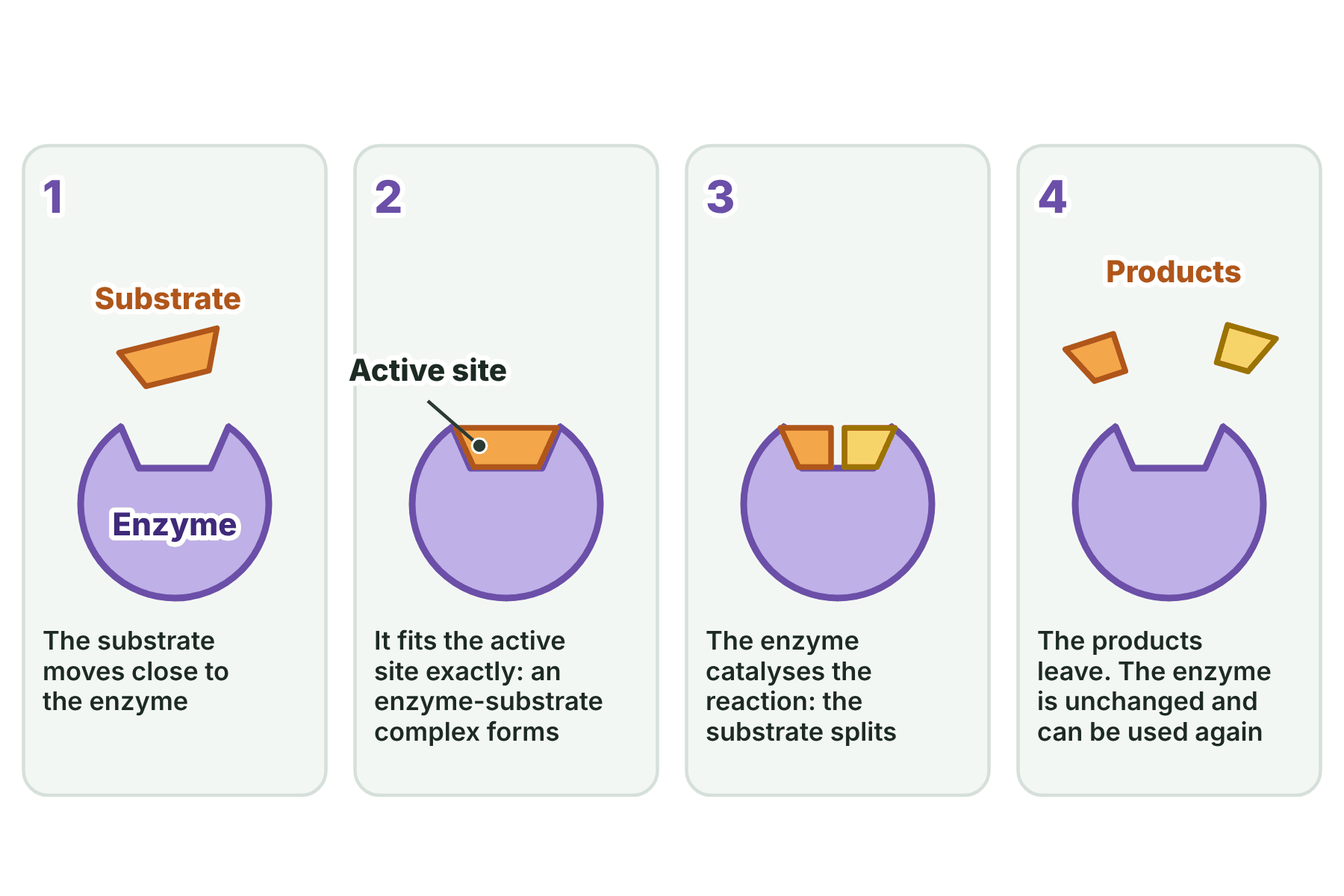
-
What happens to an enzyme when the temperature gets too high, and why does the reaction stop?
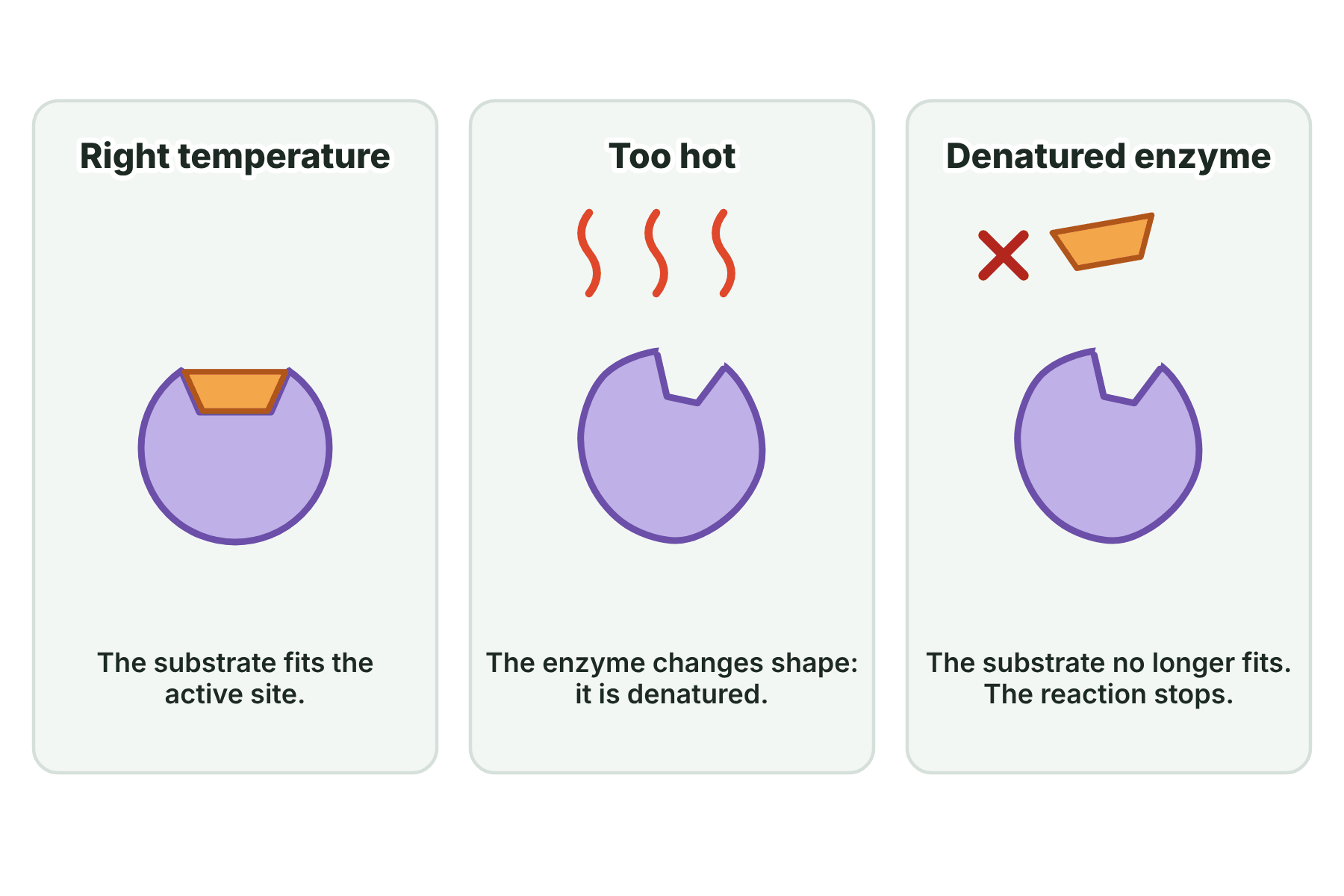
The enzyme is denatured: its bonds break and its shape changes, including the active site. The substrate no longer fits, so the reaction stops.
-
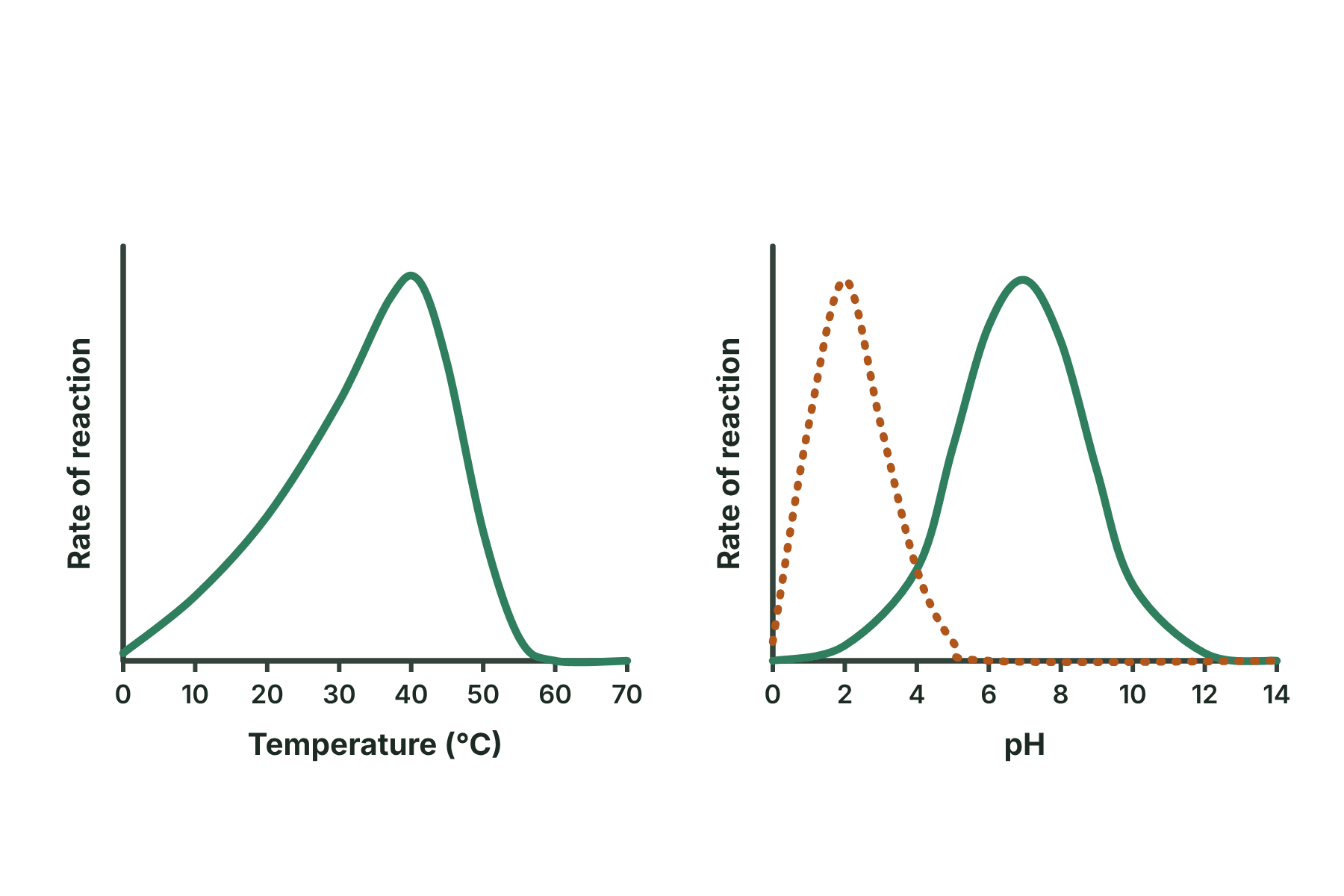 Sketch the shape of the temperature graph and the pH graph for an enzyme. Where is each optimum?