Exam questions · Biology · Enzymes and Digestion
Investigating the Effect of pH on Amylase
- 10 exam questions
- 29 marks
- 10 quick checks
-
1 Name [1 mark]
Name the solution used to show when all of the starch has been digested.
Show answerHide answer
Model answer
Iodine solution.
Mark scheme
- Iodine (solution) — 1 mark
-
2 Explain [2 marks]
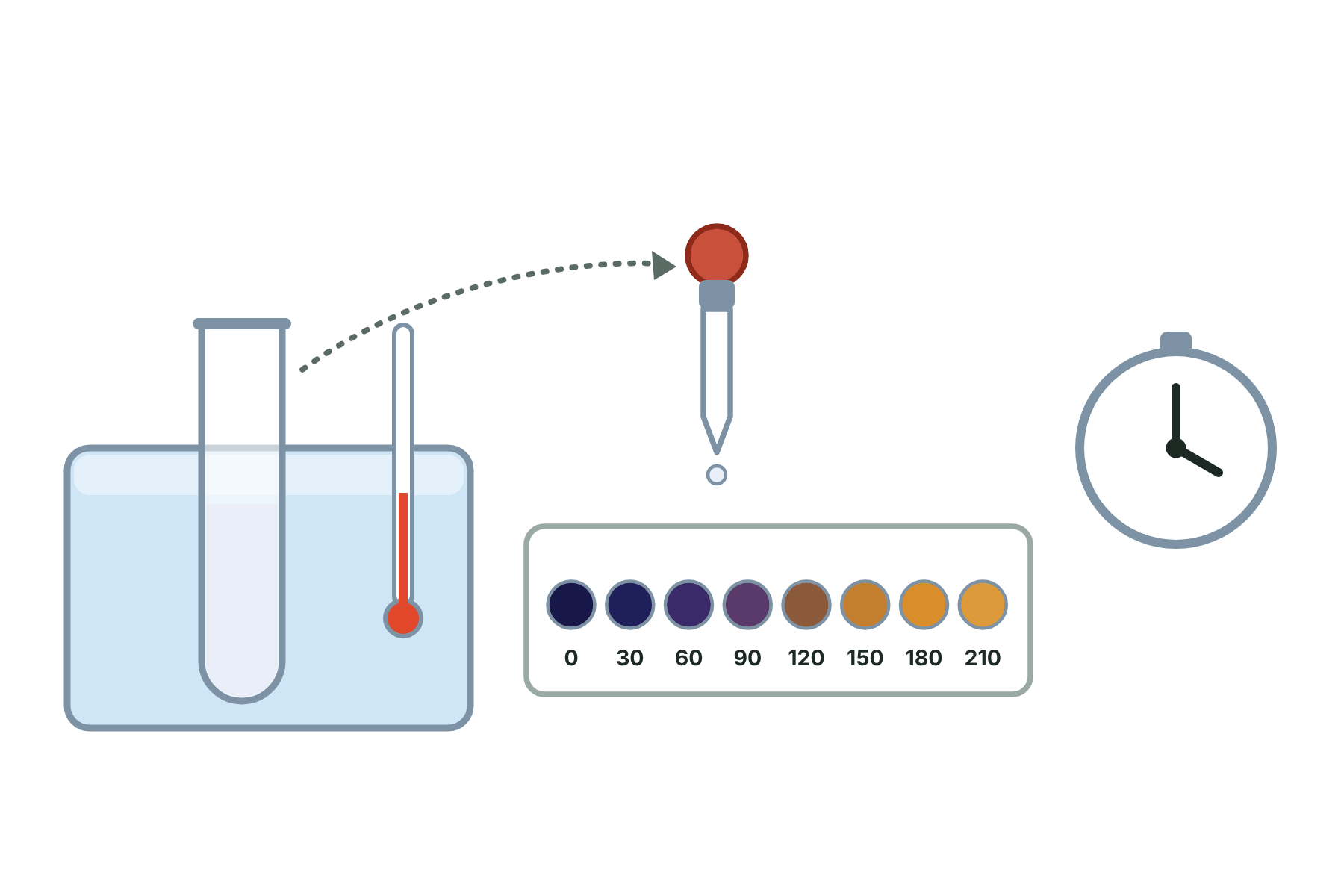
Figure 1 shows the apparatus used to investigate amylase. Explain the purpose of the water bath and of the spotting tile.
Show answerHide answer
Model answer
The water bath keeps the temperature constant, so that temperature does not affect the rate. The spotting tile holds drops of iodine, so that samples of the mixture can be tested.
Mark scheme
- Water bath keeps the temperature constant — 1 mark
- Spotting tile holds drops of iodine for testing samples — 1 mark
-
3 Explain [2 marks]
A buffer solution is added to the mixture of starch and amylase. Explain why.
Show answerHide answer
Model answer
The buffer keeps the pH constant. This means that the pH stays at the value being tested, so only the pH changes.
Mark scheme
- Keeps the pH constant — 1 mark
- At the value being tested / so pH is the only variable — 1 mark
-
4 State [3 marks]
In an investigation into the effect of pH on the rate of reaction of amylase, state the independent variable, the dependent variable and one control variable.
Show answerHide answer
Model answer
The independent variable is the pH. The dependent variable is the time taken for the starch to be digested. A control variable is the temperature (or the volume or concentration of the amylase or starch).
Mark scheme
- Independent variable: pH — 1 mark
- Dependent variable: time for the starch to be digested / rate — 1 mark
- Control variable: e.g. temperature, volume or concentration — 1 mark
-
5 Calculate [2 marks]
At pH 7 the mean time taken for the starch to be digested was 60 seconds. Use rate = 1000 ÷ time to calculate the rate. Give your answer to one decimal place.
Show answerHide answer
Model answer
1000 ÷ 60 = 16.7.
Mark scheme
- 1000 ÷ 60 — 1 mark
- 16.7 — 1 mark
-
6 Calculate [3 marks]
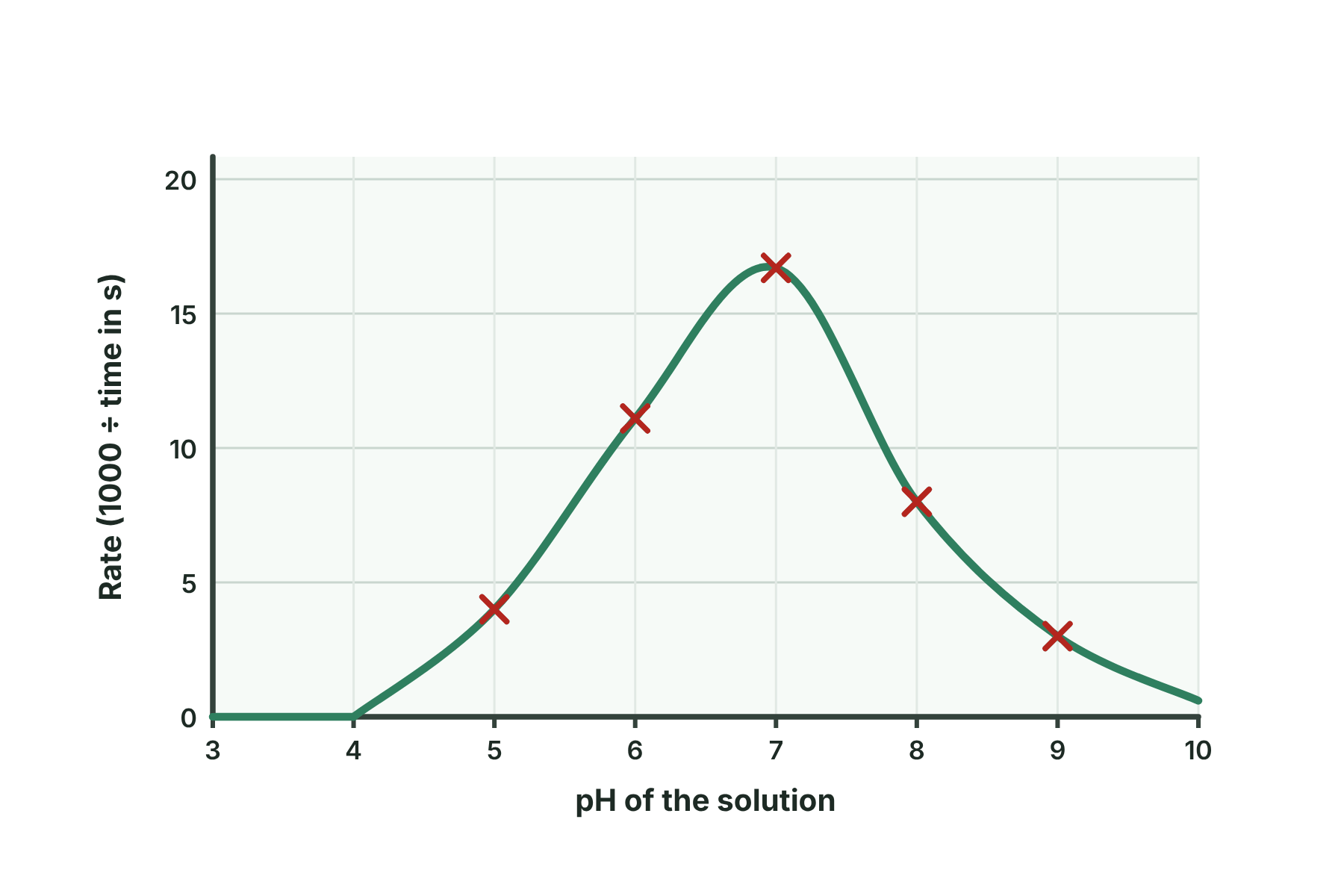
Figure 2 shows the results of the investigation. (a) Use Figure 2 to give the optimum pH. (b) The rate at pH 8 was 8.0. Use rate = 1000 ÷ time to calculate the time taken at pH 8.
Show answerHide answer
Model answer
(a) pH 7. (b) Time = 1000 ÷ 8.0 = 125 seconds.
Mark scheme
- (a) pH 7 — 1 mark
- (b) 1000 ÷ 8.0 — 1 mark
- 125 seconds — 1 mark
-
7 Describe [3 marks]
Describe the effect of pH on the rate of reaction shown in Figure 2.
Show answerHide answer
Model answer
The rate increases as the pH rises from 5 to 7. The rate is highest at pH 7, at about 16.7. Above pH 7 the rate decreases.
Mark scheme
- Rate increases from pH 5 to 7 — 1 mark
- Highest at pH 7 (about 16.7) — 1 mark
- Decreases above pH 7 — 1 mark
-
8 Explain [3 marks]
Explain why the rate of reaction is lower at pH 9 than at pH 7.
Show answerHide answer
Model answer
pH 9 is not the optimum pH for amylase. The shape of the active site changes and the enzyme is denatured. The starch no longer fits the active site, so fewer enzyme-substrate complexes form.
Mark scheme
- pH 9 is away from the optimum — 1 mark
- The active site changes shape / the enzyme is denatured — 1 mark
- The starch no longer fits / fewer complexes form — 1 mark
-
9 Suggest [4 marks]
The investigation only used whole pH values from 5 to 9, and judged the colour of the iodine by eye. Suggest two improvements to the method, and explain why each would help.
Show answerHide answer
Model answer
Test more pH values near the optimum, such as 6.5, 7 and 7.5, to find the optimum pH more precisely. Use a colorimeter to measure the colour of the iodine, so that the end point is not decided by eye.
Mark scheme
- Test pH values in smaller steps near pH 7 — 1 mark
- To find the optimum more precisely — 1 mark
- Use a colorimeter / colour standards — 1 mark
- So that the end point is not subjective — 1 mark
-
10 Describe [6 marks]
Describe how you would investigate the effect of pH on the rate of reaction of amylase.
Show answerHide answer
Model answer
Put starch, amylase and a buffer of a certain pH into a test tube in a water bath at a set temperature. Start a stopwatch. Every 30 seconds, take a drop of the mixture and add it to a drop of iodine on a spotting tile. When the iodine stays orange-brown, all the starch has been digested, so record the time. Repeat with buffers of different pH, keeping the temperature, volumes and concentrations the same. Calculate the rate as 1000 ÷ time and repeat each pH to find a mean.
Mark scheme
- Mix starch, amylase and a buffer — 1 mark
- In a water bath at a constant temperature — 1 mark
- Take drops every 30 seconds and add them to iodine — 1 mark
- Time taken for the iodine to stay orange-brown — 1 mark
- Repeat with different pH buffers, keeping other variables the same — 1 mark
- Calculate the rate / repeat to find a mean — 1 mark
Quick check
-
1
What does the colour of iodine solution tell you in this investigation?
Show answerHide answer
B: Whether starch is still present
Iodine is blue-black when starch is present and orange-brown when the starch has all been digested.
-
2
What is the independent variable?
Show answerHide answer
D: The pH of the buffer
The pH is the variable that you change deliberately.
-
3
What is the dependent variable?
Show answerHide answer
A: The time taken for the starch to be digested
The time taken for the starch to be digested is what you measure.
-
4
Why is a water bath used in this investigation?
Show answerHide answer
C: To keep the temperature constant
It keeps the temperature the same in every test, so that only the pH changes.
-
5
What is the purpose of a buffer?
Show answerHide answer
B: To keep the pH constant
A buffer keeps the pH constant at the value being tested.
-
6
The time taken at one pH is 50 s. What is the rate, using rate = 1000 ÷ time?
Show answerHide answer
D: 20
1000 ÷ 50 = 20.
-
7
At which pH was amylase fastest in the example investigation?
Show answerHide answer
A: pH 7
The rate was highest at pH 7, at about 16.7.
-
8
Why does the rate fall at a pH far from the optimum?
Show answerHide answer
C: The enzyme is denatured
The active site changes shape and the enzyme is denatured, so fewer substrate molecules fit.
-
9
Which change would make the results more precise?
Show answerHide answer
B: Sampling every 10 seconds
Sampling every 10 seconds, instead of every 30 seconds, gives a more precise value for the time.
-
10
A student says the rate at pH 9 is lower than at pH 7 because the enzyme is used up. What is the best response?
Show answerHide answer
A: Enzymes are not used up; the enzyme is denatured, so the starch does not fit
Enzymes are not used up. At pH 9 the enzyme is being denatured, so the active site no longer fits the starch.