Flashcards · Biology · Enzymes and Digestion
Investigating the Effect of pH on Amylase
-
What is the aim of the amylase and pH investigation?
To find out how pH affects the rate at which amylase digests starch.
-
What is the independent variable?
The pH of the buffer.
-
What is the dependent variable?
The time taken for all the starch to be digested.
-
Name two control variables.
Any two of: temperature, volume of amylase, volume of starch, concentration of amylase, concentration of starch, volume of buffer.
-
Why is a buffer used?
It keeps the pH constant at the value being tested.
-
Why is a water bath used?
To keep the temperature the same in every test.
-
What temperature was the water bath in the method?
35 °C.
-
Why is iodine solution used?
It shows whether starch is still present: blue-black if it is, orange-brown if it is not.
-
What does a blue-black colour on the tile show?
Starch is still present.
-
What does an orange-brown colour show?
All the starch has been digested.
-
What is continuous sampling?
Taking a small sample at regular intervals while the reaction is happening.
-
How often is a sample taken in this method?
Every 30 seconds.
-
What is the spotting tile used for?
To hold drops of iodine, so that each sample can be tested.
-
Why are the starch and the amylase warmed in the water bath before mixing?
So they reach the same temperature before the reaction starts.
-
How do you work out the rate from the time taken?
Rate = 1000 ÷ time.
-
Does a shorter time mean a faster or a slower rate?
A faster rate.
-
At what pH is amylase fastest?
About pH 7.
-
Why does the rate fall at a high or low pH?
The active site changes shape and the enzyme is denatured, so the substrate no longer fits.
-
Why is each pH repeated at least three times?
To calculate a mean, spot anomalies and make the results more reliable.
-
Why is judging the colour by eye a weakness?
It is subjective. A colorimeter would be more reliable.
-
How could you find the optimum pH more precisely?
Test more values close to the optimum, such as 6.5, 7 and 7.5.
-
Why is amylase denatured in the stomach?
The stomach is very acidic, at about pH 2.
-
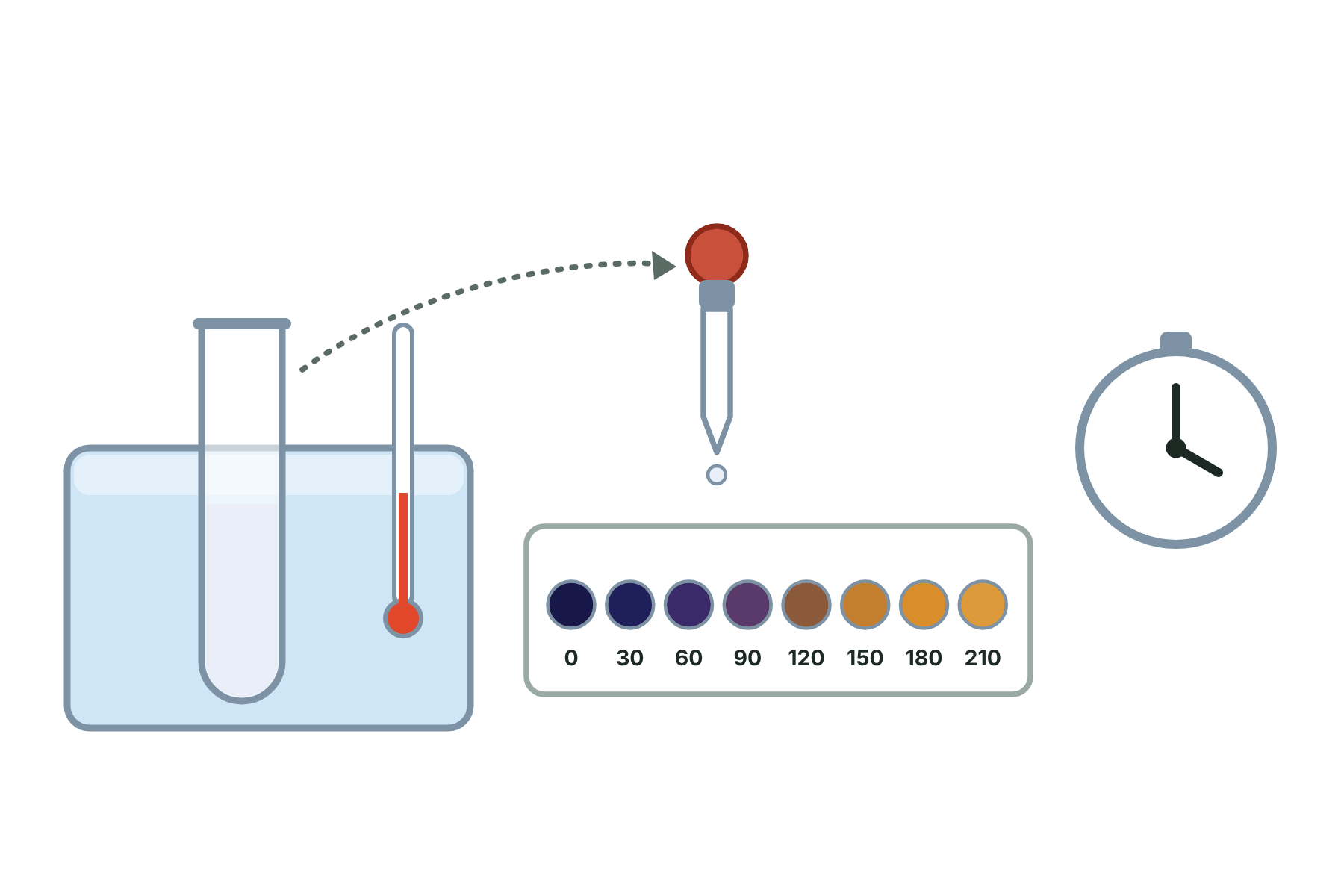 Name each piece of apparatus and say what it is used for.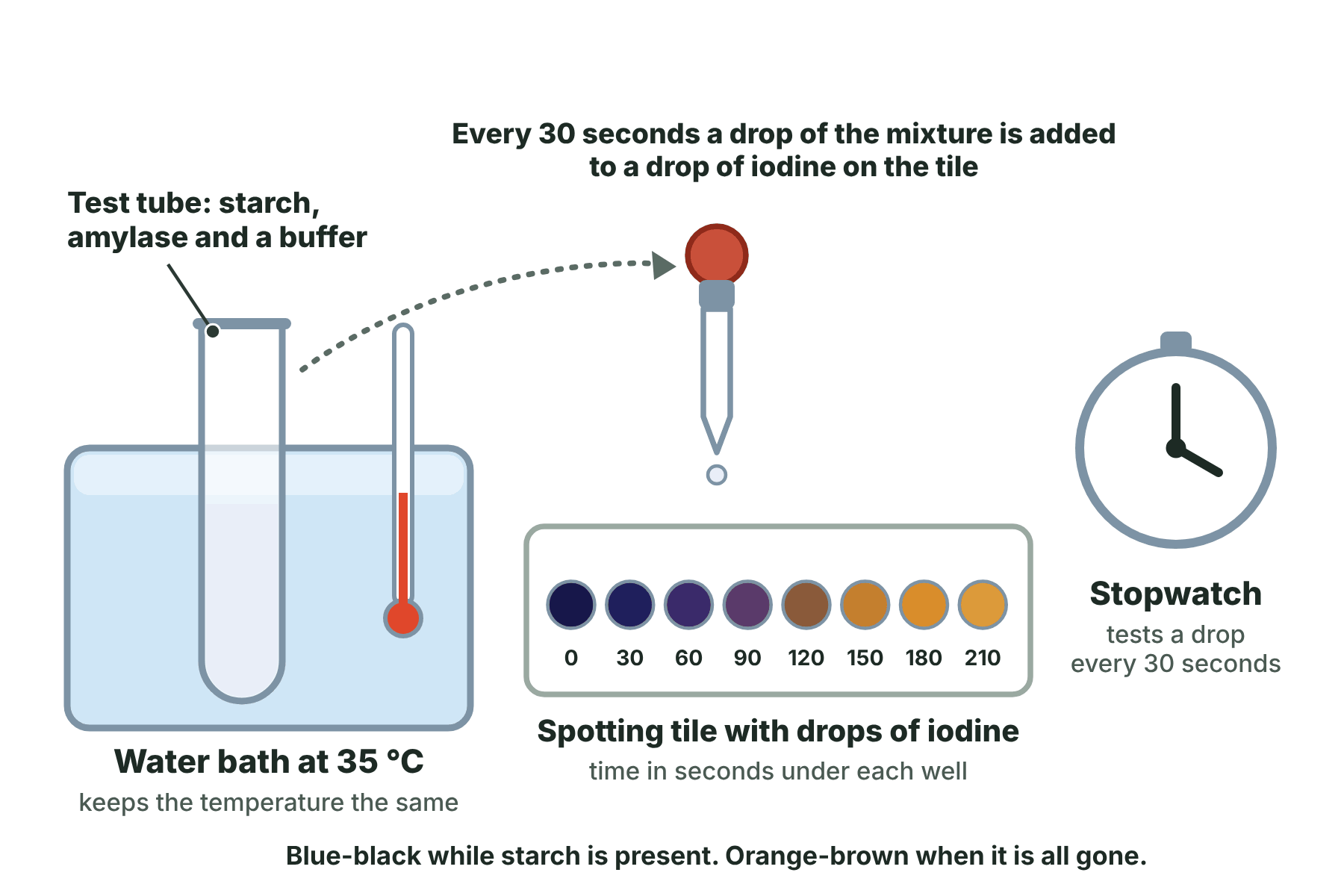
-
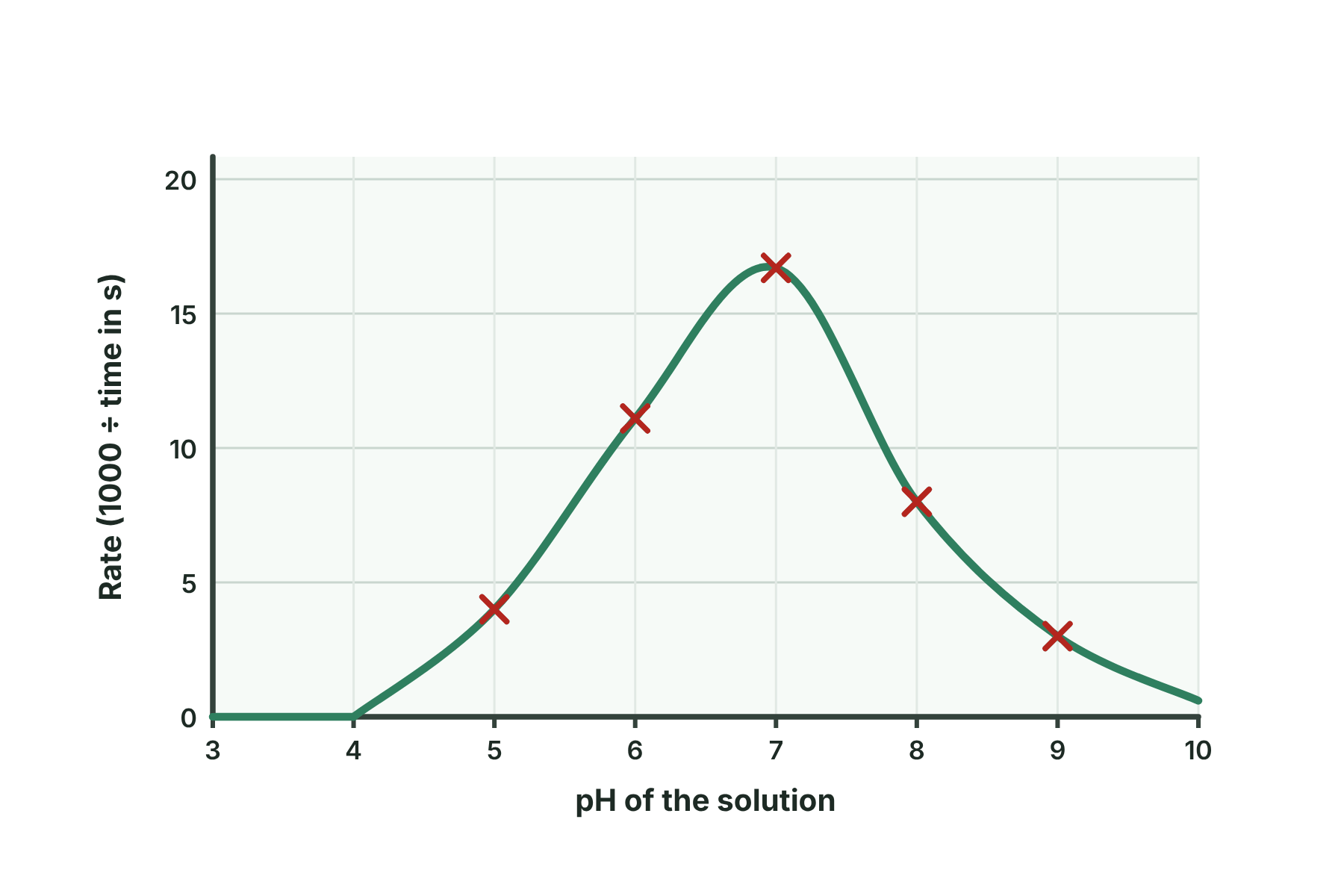 Describe the pattern shown in the graph, and give the optimum pH.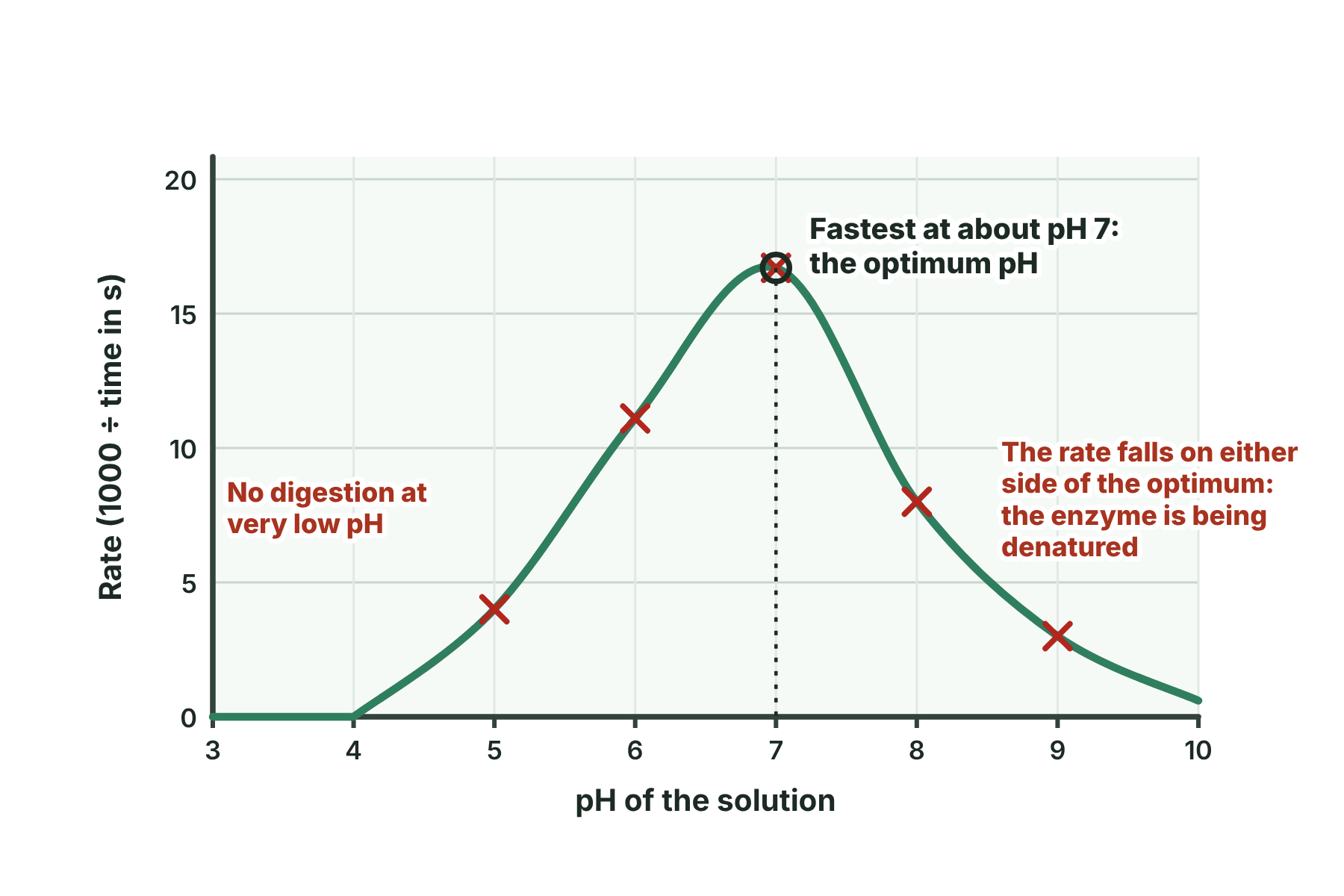
The rate increases as the pH rises from 5 to 7, is highest at about pH 7, and then falls at pH 8 and 9. The optimum pH is about 7.
-
At pH 8 the rate is 8.0. How long did the starch take to be digested?
Time = 1000 ÷ rate = 1000 ÷ 8.0 = 125 seconds.
-
Why is a drop of the mixture added to iodine every 30 seconds, and what do the colours tell you?
Each drop shows whether starch is still present. Blue-black means starch is still there. Orange-brown means all the starch has been digested, and the time is recorded.