Slides · PPTX · 483 KB · 22 slides
Crime and Punishment in Norman England - Teacher Slides.pptx
The lesson slides with the teacher's notes on each slide, and every question and mark scheme built in. Built from the lesson script on 23 September 2026.
EDEXCEL GCSE HISTORY · PAPER 1 · CRIME & PUNISHMENT

Crime and Punishment in Norman England
1066-c1200
Chapter 1: Crime and punishment in medieval England, 1066-c1200
Lesson 2 of 4
openrevise.com
EDEXCEL GCSE HISTORY · PAPER 1 · CRIME & PUNISHMENT

Starter: Anglo-Saxon Recap
Chapter 1: Crime and punishment in medieval England, 1066-c1200
Lesson 2 of 4
Pair each term with its meaning.
Term
Meaning
Tithing
A
Neighbours who swore to your character
1
Hue and cry
B
Letting God decide guilt
2
Wergild
C
Ten men responsible for each other
3
Oath-helpers
D
The village chases the suspect
4
Ordeal
E
Compensation paid to the victim's family
5
openrevise.com
EDEXCEL GCSE HISTORY · PAPER 1 · CRIME & PUNISHMENT

Learning Objectives
Chapter 1: Crime and punishment in medieval England, 1066-c1200
Lesson 2 of 4
1
Explain why William I needed to control a hostile Anglo-Saxon population.
2
Describe the new crimes and punishments the Normans introduced, including the Forest Laws and the murdrum fine.
3
Explain the continuity in Norman law enforcement, and assess how much changed after 1066.
openrevise.com
EDEXCEL GCSE HISTORY · PAPER 1 · CRIME & PUNISHMENT

Setting the Scene
Chapter 1: Crime and punishment in medieval England, 1066-c1200
Lesson 2 of 4
In 1066 William of Normandy won the Battle of Hastings, but around 10,000 Normans now had to rule about two million English people who resented them. Rebellions followed, and William crushed them brutally in the Harrying of the North (1069-70). His laws were designed to protect his power and his followers.
1066
Battle of Hastings: William becomes king.
1069-70
Harrying of the North: rebellion crushed by laying waste to the land.
1079
The New Forest is created as a royal hunting forest.
1086
The Domesday Book records who holds the land - and owes the king service.
1166
Henry II's Assize of Clarendon strengthens royal justice.
openrevise.com
EDEXCEL GCSE HISTORY · PAPER 1 · CRIME & PUNISHMENT

The Feudal System
Chapter 1: Crime and punishment in medieval England, 1066-c1200
Lesson 2 of 4
Crime against your lord was now a crime against the whole structure of power.
The king
Owned all the land; granted it in return for loyalty
Barons and bishops
Held land from the king; supplied knights
Knights
Held land from barons; fought when called
Peasants
Worked the land; owed labour and obedience to their lord
openrevise.com
EDEXCEL GCSE HISTORY · PAPER 1 · CRIME & PUNISHMENT

What Changed and What Stayed the Same
Chapter 1: Crime and punishment in medieval England, 1066-c1200
Lesson 2 of 4
CONTINUITY FROM THE ANGLO-SAXONS
• Tithings and the hue and cry still made communities police themselves.
• Hundred and shire courts still heard most cases.
• Trial by ordeal continued, run by the Church.
• Stocks, pillory, fines and execution were all still used.
NORMAN CHANGES
• The Forest Laws created new crimes on royal land.
• The murdrum fine punished a hundred for a Norman's murder.
• Trial by combat was introduced.
• Wergild ended: fines went to the king, not the victim's family.
openrevise.com
EDEXCEL GCSE HISTORY · PAPER 1 · CRIME & PUNISHMENT

The Forest Laws
Chapter 1: Crime and punishment in medieval England, 1066-c1200
Lesson 2 of 4
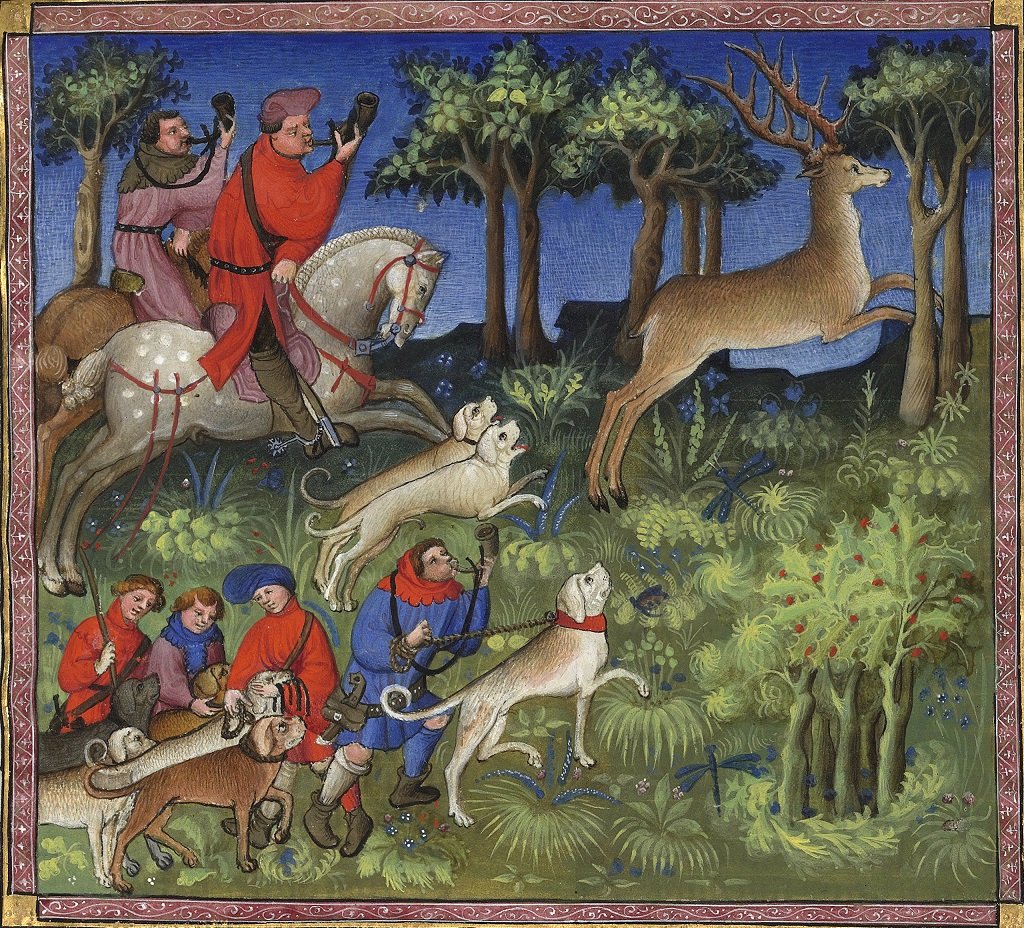
Royal forests covered a large part of England by 1200.
Medieval manuscript illustration; public domain copies on Wikimedia Commons.
William declared large areas of England, including the New Forest, to be royal forest. People who had lived there for generations were suddenly criminals for doing what they had always done.
WHAT BECAME A CRIME
Hunting
Killing deer or boar on royal land - poaching.
Everyday life
Cutting wood, grazing animals or carrying a bow in the forest.
Harsh penalties
Poaching a deer could be punished by blinding or mutilation.
A social crime
Most people did not see poaching as really wrong, so many helped poachers.
openrevise.com
EDEXCEL GCSE HISTORY · PAPER 1 · CRIME & PUNISHMENT
Chapter 1: Crime and punishment in medieval England, 1066-c1200
Lesson 2 of 4
CASE STUDY

The Murdrum Fine
Normans were being killed by resentful English people, and the killers were hard to find because locals protected each other. William's answer was the murdrum fine: if a Norman was found murdered and the killer was not handed over, the whole hundred where the body lay had to pay a very large fine. It used the Anglo-Saxon idea of collective responsibility, but turned it into a way of protecting the conquerors.
Hundred
The area that paid if the killer was not produced
1066-1340
The murdrum fine stayed in use for nearly 300 years
openrevise.com
EDEXCEL GCSE HISTORY · PAPER 1 · CRIME & PUNISHMENT

Punishment Under the Normans
Chapter 1: Crime and punishment in medieval England, 1066-c1200
Lesson 2 of 4
The Normans made punishment serve the king.
Wergild ends
Fines were now paid to the king rather than to the victim's family, so crime became an offence against royal authority.
More capital crimes
Execution was used more, especially for crimes against the king such as rebellion.
Mutilation
William preferred mutilation to execution for many crimes: blinding and castration were used, partly to show that offenders still had time to repent.
Trial by combat
The accuser and accused fought, often to the death, until one gave in. The loser was hanged if he survived.
openrevise.com
EDEXCEL GCSE HISTORY · PAPER 1 · CRIME & PUNISHMENT

Law Enforcement and Courts
Chapter 1: Crime and punishment in medieval England, 1066-c1200
Lesson 2 of 4
The machinery barely changed, but the authority behind it did.
Sheriffs
The sheriff became more powerful, collecting fines and taxes and bringing criminals to court for the king.
Church courts
William created separate Church courts, which dealt with clergy and moral crimes.
Henry II
The Assize of Clarendon (1166) sent royal judges round the country and used juries of local men to report suspects, and ordered new gaols to be built.
Castles
Around 500 castles built by 1100 were a constant reminder of Norman power.
openrevise.com
EDEXCEL GCSE HISTORY · PAPER 1 · CRIME & PUNISHMENT

How Much Did 1066 Change?
Chapter 1: Crime and punishment in medieval England, 1066-c1200
Lesson 2 of 4
Place each development on the line.
CONTINUITY
CHANGE
Tithings and hue and cry
Unchanged: communities still policed themselves
Trial by ordeal
Unchanged, though now alongside combat
Courts and sheriffs
Same system, more royal control
Punishments
Wergild gone; fines to the king
Forest Laws and murdrum
Brand new crimes to protect Norman power
openrevise.com
EDEXCEL GCSE HISTORY · PAPER 1 · CRIME & PUNISHMENT
Chapter 1: Crime and punishment in medieval England, 1066-c1200
Lesson 2 of 4

THE BIG IDEA
The Normans changed who justice served more than how it worked.
The tithing, the hue and cry and the ordeal all survived - but now they protected the king and the conquerors.
openrevise.com
EDEXCEL GCSE HISTORY · PAPER 1 · CRIME & PUNISHMENT

Key Terms
Chapter 1: Crime and punishment in medieval England, 1066-c1200
Lesson 2 of 4
Forest Laws
Laws making hunting and gathering wood on royal land a crime.
Poaching
Illegally hunting animals on land that belonged to someone else.
Social crime
A crime most people do not think is really wrong, such as poaching.
Murdrum fine
A fine on a whole hundred if a Norman was murdered and the killer not found.
Trial by combat
The accuser and accused fought to decide guilt.
Feudal system
Land held from the king in return for loyalty and service.
Assize of Clarendon
Henry II's law of 1166 that strengthened royal justice.
openrevise.com
EDEXCEL GCSE HISTORY · PAPER 1 · CRIME & PUNISHMENT
Summary & Exam Focus
William needed to control a hostile population, so his laws protected Norman power.
New crimes: the Forest Laws and the murdrum fine.
Tithings, the hue and cry and trial by ordeal continued.
Wergild ended - fines now went to the king.
EXAM FOCUS
"The Norman Conquest brought major changes to crime and punishment in England." How far do you agree? (16 marks)
Argue both sides with specific examples, then judge: continuity in methods, change in whose authority they served.
openrevise.com
EDEXCEL GCSE HISTORY · PAPER 1 · CRIME & PUNISHMENT

Exam Practice - Norman England
Chapter 1: Crime and punishment in medieval England, 1066-c1200
Lesson 2 of 4
Answer all questions. Use specific names, dates and examples in every answer. · 35 minutes
Question 1 · 4 marks · Explain one way
Explain one way in which punishments in Anglo-Saxon England were similar to punishments in Norman England.
Question 2 · 12 marks · Explain why
Explain why the Normans introduced new laws after 1066. You may use the following in your answer: the Forest Laws; the murdrum fine. You…
Question 3 · 16 marks · How far do you agree?
"The Norman Conquest brought major changes to crime and punishment in England." How far do you agree? Explain your answer. You may use the…
openrevise.com
EDEXCEL GCSE HISTORY · PAPER 1 · CRIME & PUNISHMENT

Question 1 · 4 marks · Explain one way
Chapter 1: Crime and punishment in medieval England, 1066-c1200
Lesson 2 of 4
“
Explain one way in which punishments in Anglo-Saxon England were similar to punishments in Norman England.
HOW TO ANSWER IT
Command word: Explain one way. Worth 4 marks, so plan before writing.
openrevise.com
EDEXCEL GCSE HISTORY · PAPER 1 · CRIME & PUNISHMENT

Question 1 · mark scheme
Chapter 1: Crime and punishment in medieval England, 1066-c1200
Lesson 2 of 4
4 marks available. Award a mark for each point made.
A valid similarity identified
1-2 marks
Supported with specific knowledge of both periods
3-4 marks
openrevise.com
EDEXCEL GCSE HISTORY · PAPER 1 · CRIME & PUNISHMENT

Question 2 · 12 marks · Explain why
Chapter 1: Crime and punishment in medieval England, 1066-c1200
Lesson 2 of 4
“
Explain why the Normans introduced new laws after 1066. You may use the following in your answer: the Forest Laws; the murdrum fine. You must also use information of your own.
HOW TO ANSWER IT
Command word: Explain why. Worth 12 marks, so plan before writing.
openrevise.com
EDEXCEL GCSE HISTORY · PAPER 1 · CRIME & PUNISHMENT

Question 2 · mark scheme
Chapter 1: Crime and punishment in medieval England, 1066-c1200
Lesson 2 of 4
12 marks available. Award a mark for each point made.
Level 1 (1-3)
A simple or general answer
Level 2 (4-6)
Some explanation of one or more reasons, with some knowledge
Level 3 (7-9)
A developed explanation linked to the question, with accurate knowledge
Level 4 (10-12)
An analytical explanation of several reasons, with knowledge that goes beyond the stimulus points
openrevise.com
EDEXCEL GCSE HISTORY · PAPER 1 · CRIME & PUNISHMENT

Question 3 · 16 marks · How far do you agree?
Chapter 1: Crime and punishment in medieval England, 1066-c1200
Lesson 2 of 4
“
"The Norman Conquest brought major changes to crime and punishment in England." How far do you agree? Explain your answer. You may use the following in your answer: trial by ordeal; the Forest Laws. You must also use information of your own. (16 marks, plus 4 for spelling, punctuation, grammar and…
HOW TO ANSWER IT
Command word: How far do you agree?. Worth 16 marks, so plan before writing.
openrevise.com
EDEXCEL GCSE HISTORY · PAPER 1 · CRIME & PUNISHMENT

Question 3 · mark scheme
Chapter 1: Crime and punishment in medieval England, 1066-c1200
Lesson 2 of 4
16 marks available. Award a mark for each point made.
Level 1 (1-4)
A simple or generalised answer
Level 2 (5-8)
Some analysis, with a judgement that is asserted
Level 3 (9-12)
Analysis of both sides with accurate knowledge and a supported judgement
openrevise.com
EDEXCEL GCSE HISTORY · PAPER 1 · CRIME & PUNISHMENT

Question 3 · mark scheme (cont.)
Chapter 1: Crime and punishment in medieval England, 1066-c1200
Lesson 2 of 4
Level 4 (13-16)
Sustained analysis, knowledge beyond the stimulus, and a clear, justified judgement
SPaG (4)
Accurate spelling, punctuation and grammar, with specialist terms such as murdrum and feudal
openrevise.com
← → to move, F to present full screen, G for every slide at once.