Slides · PPTX · 949 KB · 19 slides
Prisons and Reforms - Teacher Slides.pptx
The lesson slides with the teacher's notes on each slide, and every question and mark scheme built in. Built from the lesson script on 23 September 2026.
EDEXCEL GCSE HISTORY · PAPER 1 · CRIME & PUNISHMENT

Prisons and Reforms
c1900-present
Chapter 4: Crime, punishment and law enforcement in recent times, c1900-present
Lesson 3 of 4
openrevise.com
EDEXCEL GCSE HISTORY · PAPER 1 · CRIME & PUNISHMENT

Learning Objectives
Chapter 4: Crime, punishment and law enforcement in recent times, c1900-present
Lesson 3 of 4
1
Describe how prisons and punishment changed after 1900.
2
Explain the changes in how young offenders were treated.
3
Evaluate alternatives to prison, such as community sentences and restorative justice.
openrevise.com
EDEXCEL GCSE HISTORY · PAPER 1 · CRIME & PUNISHMENT

Setting the Scene
Chapter 4: Crime, punishment and law enforcement in recent times, c1900-present
Lesson 3 of 4
By 1900 prison was the main punishment for serious crime. Over the twentieth century the aim of punishment shifted further towards rehabilitation - helping offenders change so they would not reoffend - and towards keeping young people and first-time offenders out of prison altogether.
1907
The Probation of Offenders Act lets offenders serve their sentence in the community.
1908
The Children Act sets up juvenile courts; the first borstals open for young offenders.
1936
New Hall, the first open prison, opens.
1948
The Criminal Justice Act abolishes hard labour, penal servitude and flogging.
openrevise.com
EDEXCEL GCSE HISTORY · PAPER 1 · CRIME & PUNISHMENT

Setting the Scene (cont.)
Chapter 4: Crime, punishment and law enforcement in recent times, c1900-present
Lesson 3 of 4
1972
Community service orders are introduced.
1982
Borstals are replaced by youth custody centres.
openrevise.com
EDEXCEL GCSE HISTORY · PAPER 1 · CRIME & PUNISHMENT

Changes in Prison
Chapter 4: Crime, punishment and law enforcement in recent times, c1900-present
Lesson 3 of 4
Prisons became less harsh, and focused more on changing offenders.
Harsh methods end
The Criminal Justice Act of 1948 abolished hard labour, penal servitude and flogging.
Education and work
Prisoners were given the chance to learn skills and gain qualifications.
Open prisons
From 1936 low-risk prisoners could serve time in open prisons with few locks, preparing them for release.
Numbers
Despite reforms, the prison population has grown, to over 80,000 in recent years.
openrevise.com
EDEXCEL GCSE HISTORY · PAPER 1 · CRIME & PUNISHMENT

Young Offenders
Chapter 4: Crime, punishment and law enforcement in recent times, c1900-present
Lesson 3 of 4
Young people came to be treated differently from adults.
Juvenile courts
The Children Act of 1908 created separate courts for under-16s.
Borstals
From 1908, borstals held young offenders aged 16-21, with strict discipline, education and training.
Replacement
Borstals were replaced by youth custody centres in 1982, and later by young offender institutions.
Aim
To stop young people becoming hardened criminals by keeping them apart from adult prisoners.
openrevise.com
EDEXCEL GCSE HISTORY · PAPER 1 · CRIME & PUNISHMENT

A Borstal Institution
Chapter 4: Crime, punishment and law enforcement in recent times, c1900-present
Lesson 3 of 4
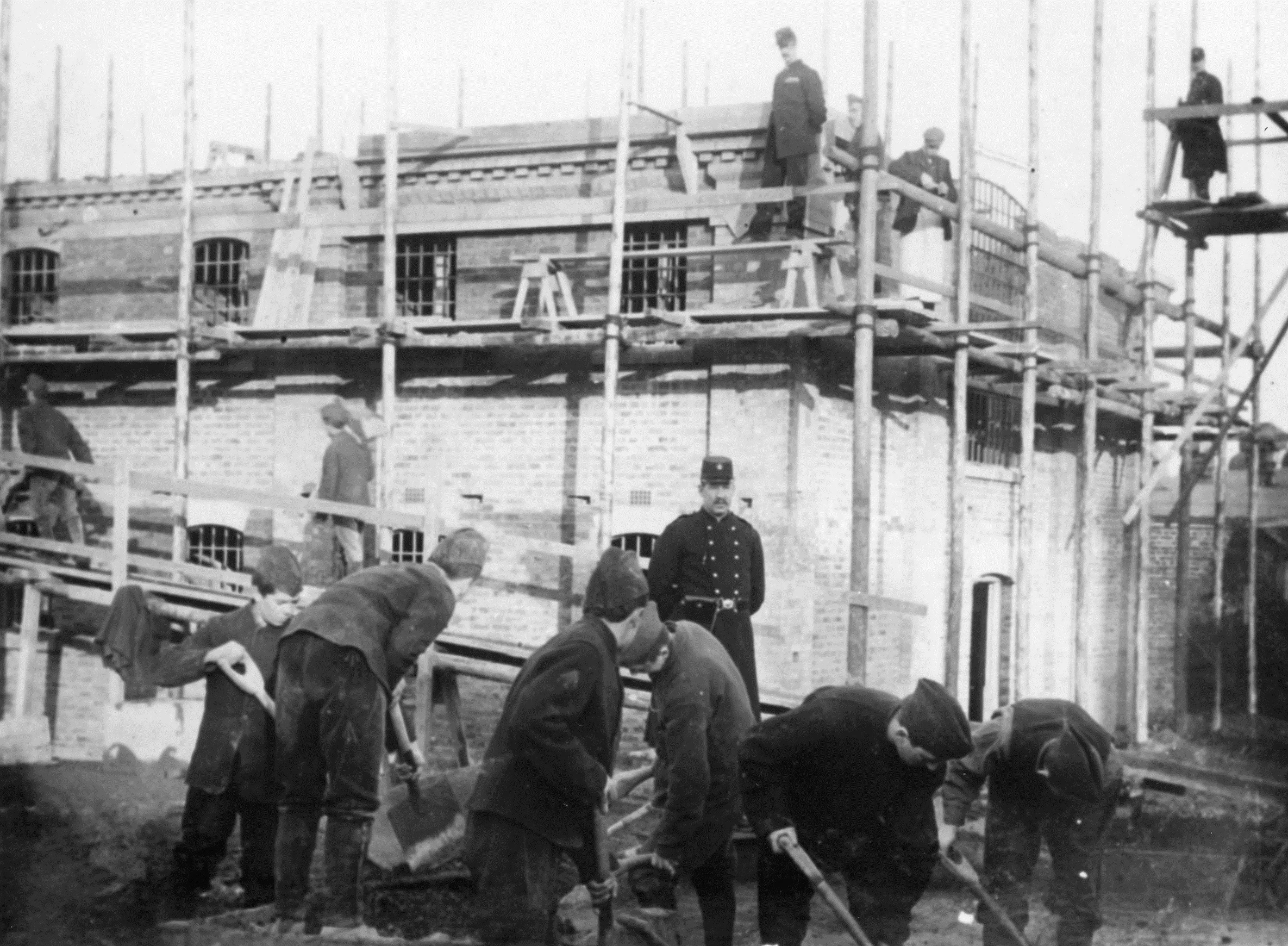
Young offenders at a borstal, early twentieth century.
Early twentieth-century photograph; public domain copies on Wikimedia Commons or a prison history archive.
The first borstal institution opened at Borstal in Kent, and the Prevention of Crime Act of 1908 set up a national system. The aim was to train young offenders so they could lead honest lives.
BORSTAL LIFE
Discipline
Strict routines and physical exercise.
Training
Trades such as carpentry and farming.
Education
Lessons to improve reading and writing.
openrevise.com
EDEXCEL GCSE HISTORY · PAPER 1 · CRIME & PUNISHMENT

Alternatives to Prison
Chapter 4: Crime, punishment and law enforcement in recent times, c1900-present
Lesson 3 of 4
Punishments that keep offenders in the community.
Probation
From 1907 offenders could be supervised by a probation officer instead of going to prison.
Community service
From 1972 offenders could be ordered to do unpaid work in the community.
Electronic tagging
Offenders wear a tag that tracks where they are, allowing a curfew at home.
Restorative justice
Offenders meet their victims, hear the harm they caused and try to make amends.
openrevise.com
EDEXCEL GCSE HISTORY · PAPER 1 · CRIME & PUNISHMENT

Does Prison Work?
Chapter 4: Crime, punishment and law enforcement in recent times, c1900-present
Lesson 3 of 4
ARGUMENTS FOR PRISON
• Protects the public from dangerous criminals.
• Punishes offenders - retribution.
• Deters others from committing crime.
ARGUMENTS AGAINST PRISON
• High rates of reoffending after release.
• Expensive to run.
• Can make offenders more criminal.
• Community sentences can be cheaper and more effective.
openrevise.com
EDEXCEL GCSE HISTORY · PAPER 1 · CRIME & PUNISHMENT

Key Terms
Chapter 4: Crime, punishment and law enforcement in recent times, c1900-present
Lesson 3 of 4
Rehabilitation
Helping an offender change so they do not reoffend.
Probation
Supervision of an offender in the community instead of prison.
Borstal
An institution for young offenders, 1908-1982.
Open prison
A prison with few locks for low-risk prisoners.
Community service
Unpaid work in the community as a punishment.
Restorative justice
Offenders meet victims to understand the harm and make amends.
Electronic tagging
A device worn by offenders to track their location.
openrevise.com
EDEXCEL GCSE HISTORY · PAPER 1 · CRIME & PUNISHMENT
Summary & Exam Focus
Punishment moved towards rehabilitation after 1900.
Young offenders were treated separately, in juvenile courts and borstals.
Hard labour and flogging were abolished in 1948.
Alternatives such as probation, community service and restorative justice keep offenders out of prison.
EXAM FOCUS
Explain why there were changes in the treatment of young offenders in the period c1900-present. (12 marks)
Explain the reasons for change - the idea of rehabilitation, protecting young people from hardened criminals - and support each with specific examples.
openrevise.com
EDEXCEL GCSE HISTORY · PAPER 1 · CRIME & PUNISHMENT

Exam Practice - Prisons and Reforms
Chapter 4: Crime, punishment and law enforcement in recent times, c1900-present
Lesson 3 of 4
Answer all questions. Use specific names, dates and examples in every answer. · 35 minutes
Question 1 · 4 marks · Explain one way
Explain one way in which the treatment of young offenders in the early twentieth century was similar to the treatment of young offenders in…
Question 2 · 12 marks · Explain why
Explain why there were changes in the treatment of young offenders in the period c1900-present. You may use the following in your answer…
Question 3 · 16 marks · How far do you agree?
"The main aim of punishment in the period c1900-present has been to rehabilitate offenders." How far do you agree? Explain your answer. You…
openrevise.com
EDEXCEL GCSE HISTORY · PAPER 1 · CRIME & PUNISHMENT

Question 1 · 4 marks · Explain one way
Chapter 4: Crime, punishment and law enforcement in recent times, c1900-present
Lesson 3 of 4
“
Explain one way in which the treatment of young offenders in the early twentieth century was similar to the treatment of young offenders in the late twentieth century.
HOW TO ANSWER IT
Command word: Explain one way. Worth 4 marks, so plan before writing.
openrevise.com
EDEXCEL GCSE HISTORY · PAPER 1 · CRIME & PUNISHMENT

Question 1 · mark scheme
Chapter 4: Crime, punishment and law enforcement in recent times, c1900-present
Lesson 3 of 4
4 marks available. Award a mark for each point made.
A valid similarity identified
1-2 marks
Supported with specific knowledge of both periods
3-4 marks
openrevise.com
EDEXCEL GCSE HISTORY · PAPER 1 · CRIME & PUNISHMENT

Question 2 · 12 marks · Explain why
Chapter 4: Crime, punishment and law enforcement in recent times, c1900-present
Lesson 3 of 4
“
Explain why there were changes in the treatment of young offenders in the period c1900-present. You may use the following in your answer: borstals; the Children Act (1908). You must also use information of your own.
HOW TO ANSWER IT
Command word: Explain why. Worth 12 marks, so plan before writing.
openrevise.com
EDEXCEL GCSE HISTORY · PAPER 1 · CRIME & PUNISHMENT

Question 2 · mark scheme
Chapter 4: Crime, punishment and law enforcement in recent times, c1900-present
Lesson 3 of 4
12 marks available. Award a mark for each point made.
Level 1 (1-3)
A simple or general answer
Level 2 (4-6)
Some explanation of one or more reasons, with some knowledge
Level 3 (7-9)
A developed explanation linked to the question, with accurate knowledge
Level 4 (10-12)
An analytical explanation of several reasons, with knowledge that goes beyond the stimulus points
openrevise.com
EDEXCEL GCSE HISTORY · PAPER 1 · CRIME & PUNISHMENT

Question 3 · 16 marks · How far do you agree?
Chapter 4: Crime, punishment and law enforcement in recent times, c1900-present
Lesson 3 of 4
“
"The main aim of punishment in the period c1900-present has been to rehabilitate offenders." How far do you agree? Explain your answer. You may use the following in your answer: open prisons; the prison population. You must also use information of your own. (16 marks, plus 4 for spelling…
HOW TO ANSWER IT
Command word: How far do you agree?. Worth 16 marks, so plan before writing.
openrevise.com
EDEXCEL GCSE HISTORY · PAPER 1 · CRIME & PUNISHMENT

Question 3 · mark scheme
Chapter 4: Crime, punishment and law enforcement in recent times, c1900-present
Lesson 3 of 4
16 marks available. Award a mark for each point made.
Level 1 (1-4)
A simple or generalised answer
Level 2 (5-8)
Some analysis, with a judgement that is asserted
Level 3 (9-12)
Analysis of both sides with accurate knowledge and a supported judgement
openrevise.com
EDEXCEL GCSE HISTORY · PAPER 1 · CRIME & PUNISHMENT

Question 3 · mark scheme (cont.)
Chapter 4: Crime, punishment and law enforcement in recent times, c1900-present
Lesson 3 of 4
Level 4 (13-16)
Sustained analysis, knowledge beyond the stimulus, and a clear, justified judgement
SPaG (4)
Accurate spelling, punctuation and grammar, with specialist terms such as rehabilitation and retribution
openrevise.com
← → to move, F to present full screen, G for every slide at once.