Flashcards · Biology · Cell Structure
Animal and Plant Cells
-
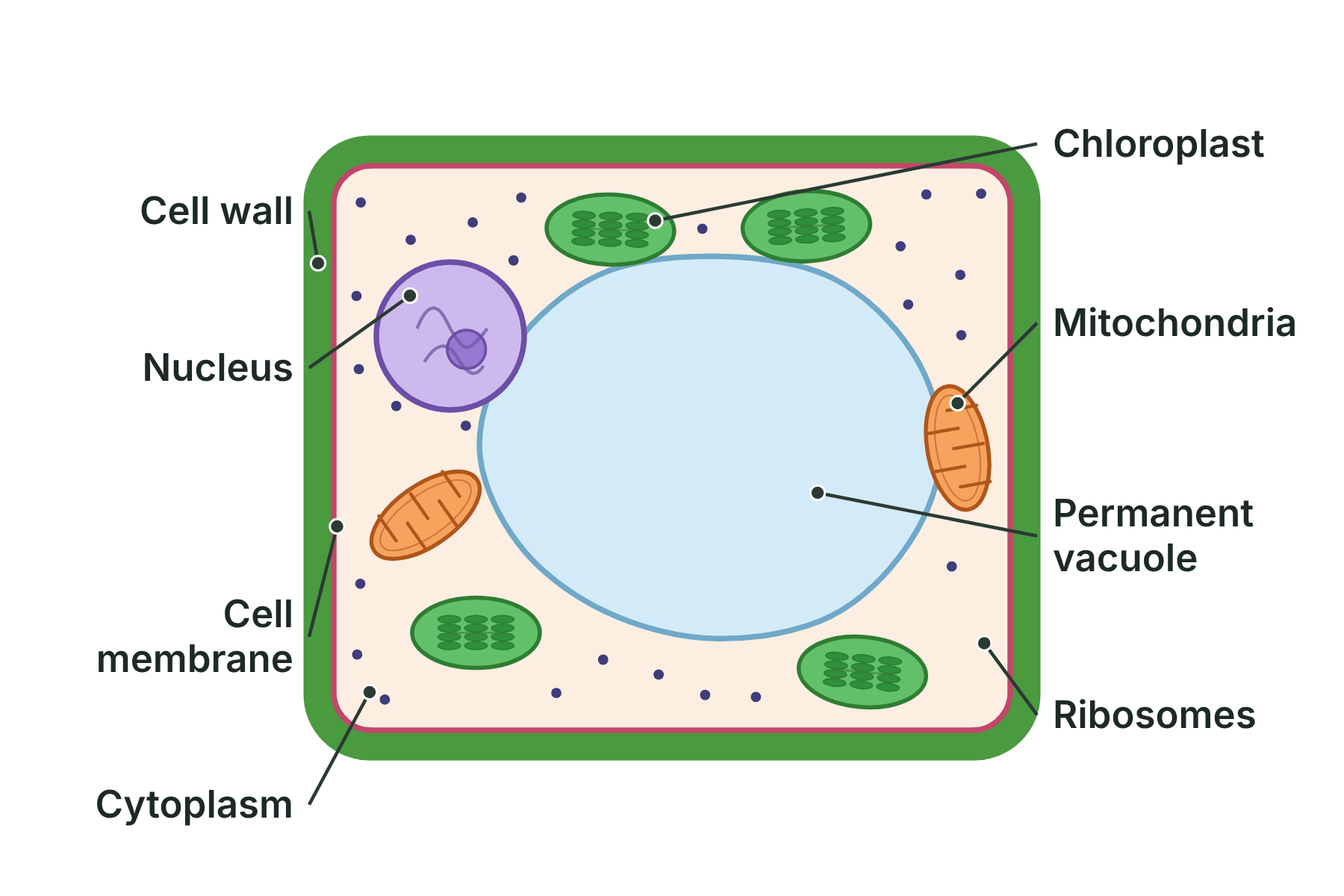
What does the nucleus do?
It contains the genetic material (DNA) and controls the activities of the cell.
-
What happens in the cytoplasm?
Most of the cell's chemical reactions.
-
What does the cell membrane do?
It controls which substances pass into and out of the cell.
-
What is the function of mitochondria?
They are where aerobic respiration takes place, releasing energy for the cell.
-
What do ribosomes do?
They make proteins.
-
What is the cell wall of a plant cell made from?
Cellulose.
-
What does the cell wall do?
It strengthens the cell and supports the plant.
-
What do chloroplasts contain, and why?
The green pigment chlorophyll, which absorbs light for photosynthesis.
-
What is the permanent vacuole filled with?
Cell sap, a solution of sugars and salts.
-
Name three structures found in plant cells but not in animal cells.
Cell wall, chloroplasts and a permanent vacuole.
-
Why do muscle cells contain many mitochondria?
Contraction needs a lot of energy, which mitochondria release in respiration.
-
Why do root cells have no chloroplasts?
Roots are underground where there is no light, so photosynthesis cannot happen.
-
Do mitochondria make energy?
No. They release energy from glucose in respiration. Energy cannot be made.
-
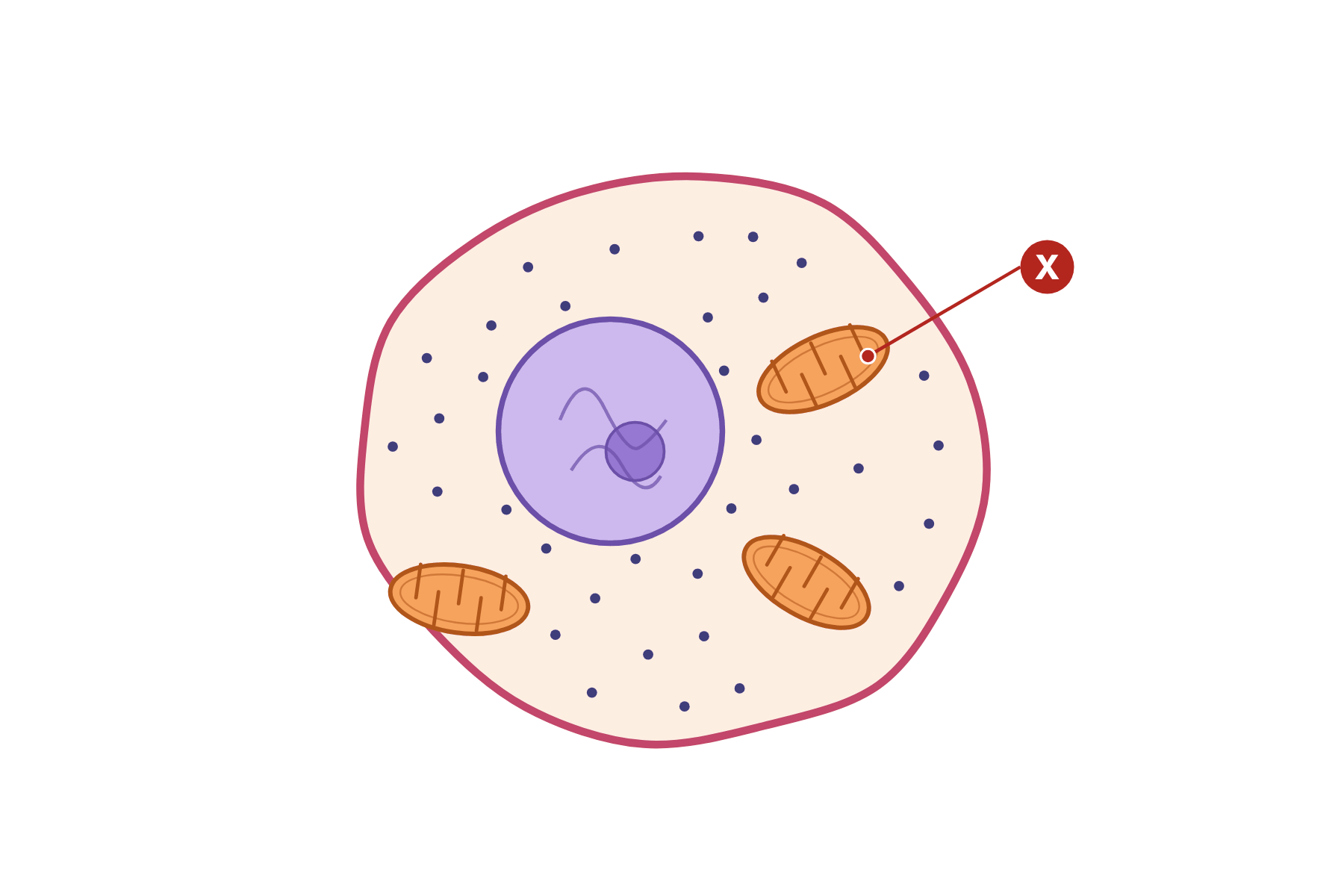 What is the structure marked X, and what does it do?
 A mitochondrion. It is where aerobic respiration takes place, releasing energy for the cell.
-
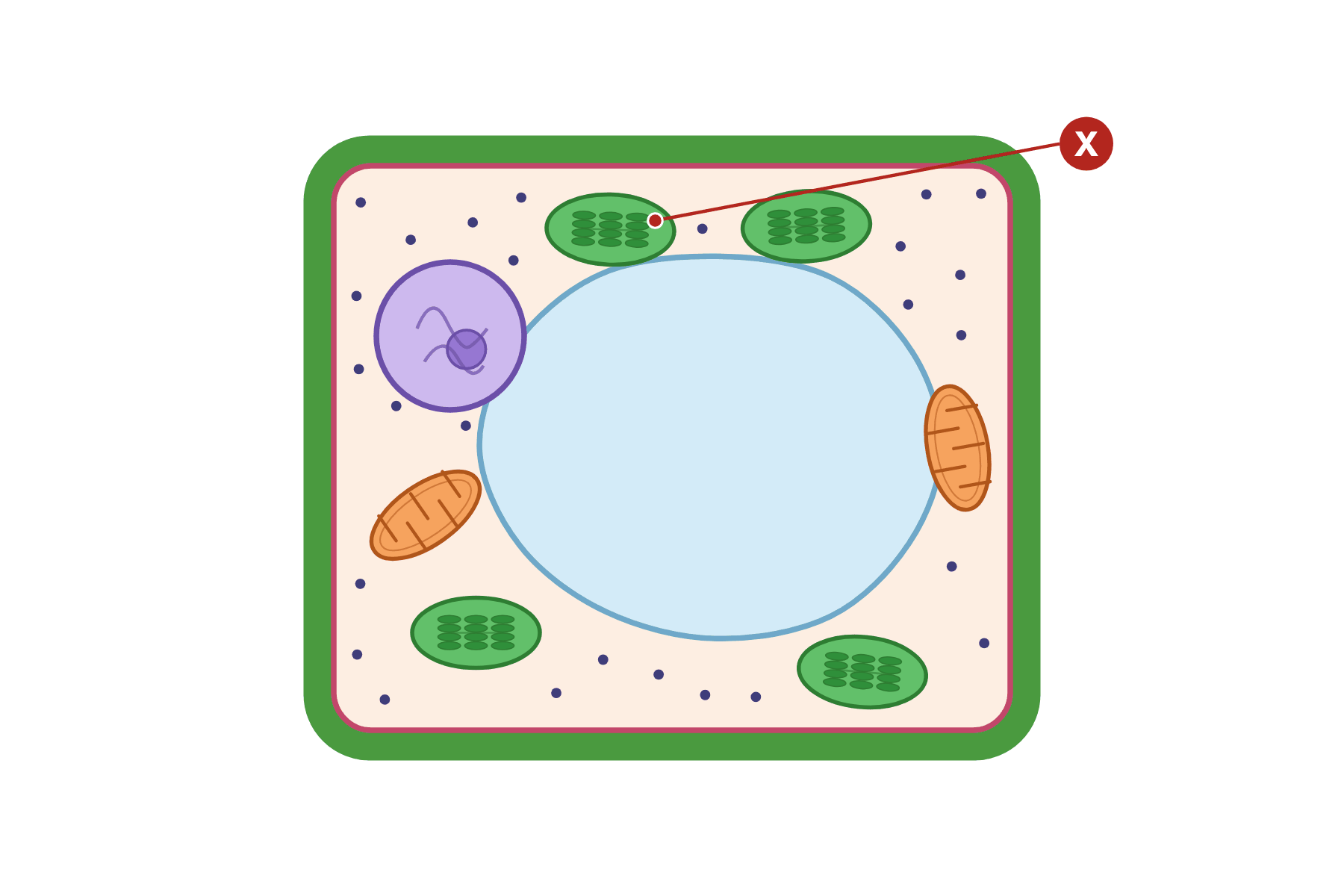 Name the structure marked X, and say what it does.
 A chloroplast. It contains chlorophyll, which absorbs light for photosynthesis.
-
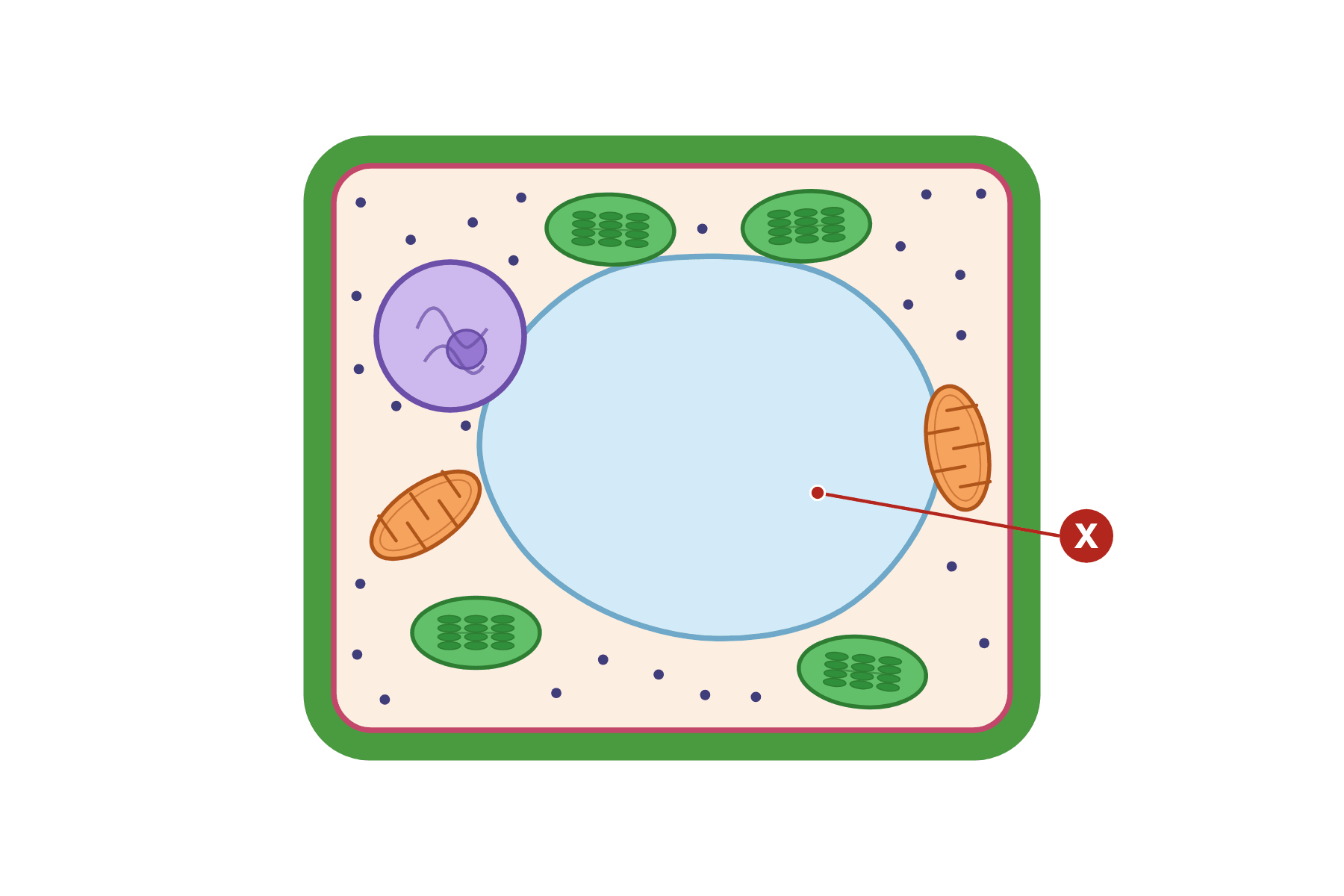 Name the large structure marked X in this plant cell. What does it contain?
 The permanent vacuole. It is filled with cell sap, a solution of sugars and salts.
-
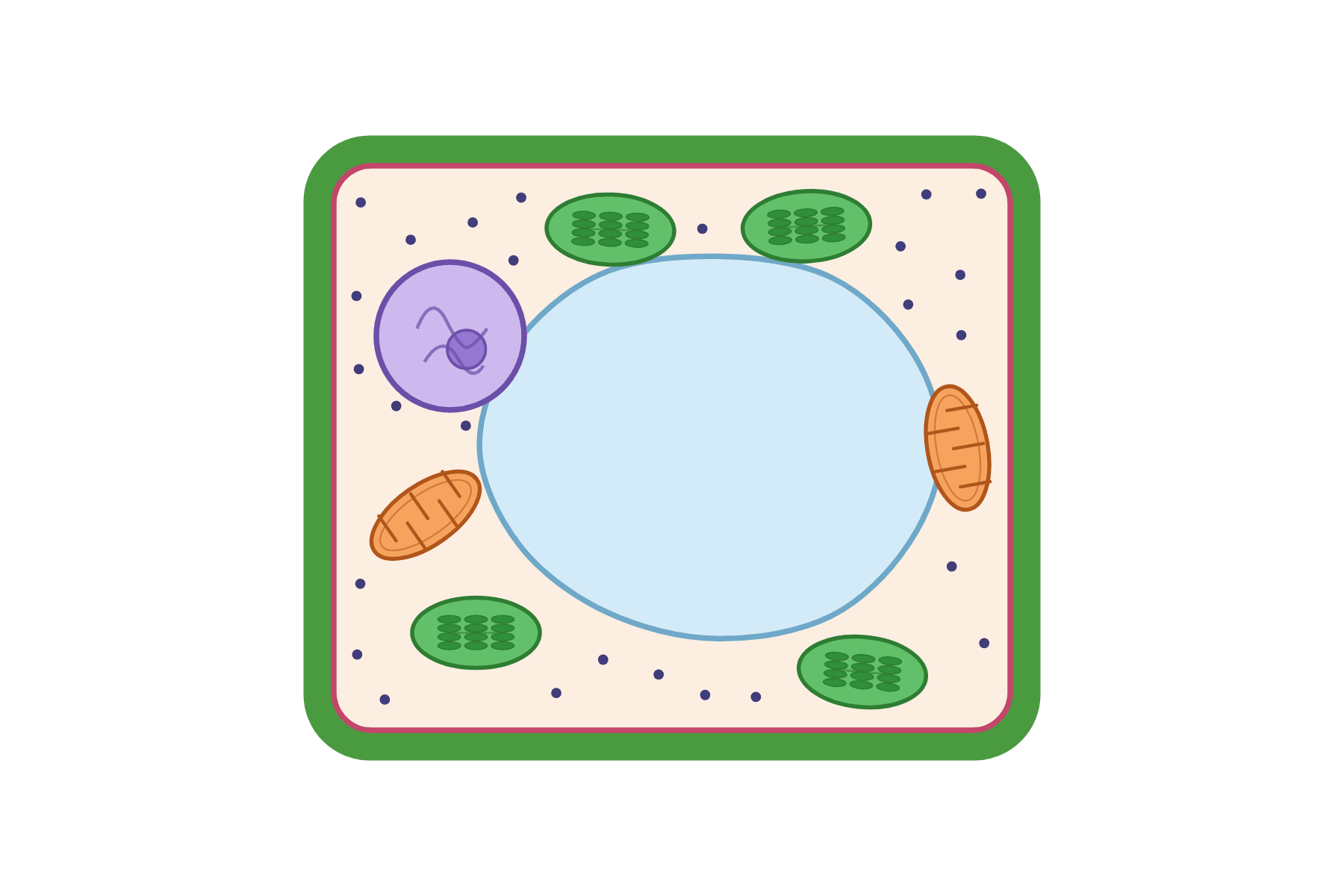 Label every structure of this plant cell.