Flashcards · Biology · Enzymes and Digestion
Digestive Enzymes and Bile
-
What does a carbohydrase break down?
Carbohydrates, into simple sugars.
-
What is amylase?
A carbohydrase that breaks down starch into simple sugars.
-
What does a protease break down?
Proteins, into amino acids.
-
What does a lipase break down?
Lipids (fats and oils), into glycerol and fatty acids.
-
What is starch digested into?
Simple sugars, such as glucose.
-
What are proteins digested into?
Amino acids.
-
What are lipids digested into?
Glycerol and fatty acids.
-
Where is amylase made?
The salivary glands, the pancreas and the small intestine.
-
Where is protease made?
The stomach, the pancreas and the small intestine.
-
Where is lipase made?
The pancreas and the small intestine.
-
Which organ makes all three digestive enzymes and releases them into the small intestine?
The pancreas.
-
Why are different enzymes needed for different foods?
Each enzyme is specific, because its active site fits only one type of molecule.
-
Why must the large molecules be broken down?
They are too big to be absorbed. The small soluble products can pass into the blood.
-
Where is bile made?
The liver.
-
Where is bile stored?
The gall bladder.
-
Where is bile released to?
The small intestine.
-
Is bile an enzyme?
No. It does not break down molecules.
-
Why is bile alkaline?
To neutralise the hydrochloric acid that comes from the stomach, so that the enzymes in the small intestine work well.
-
What does emulsifying fat mean?
Breaking large drops of fat into many tiny droplets.
-
Why does emulsifying fat speed up digestion?
The droplets have a larger surface area, so lipase can work on more of the fat at once.
-
What are the products of digestion used for?
To build new carbohydrates, lipids and proteins, and some glucose is used in respiration.
-
What happens to the products after digestion?
They are absorbed into the blood and carried to the cells.
-
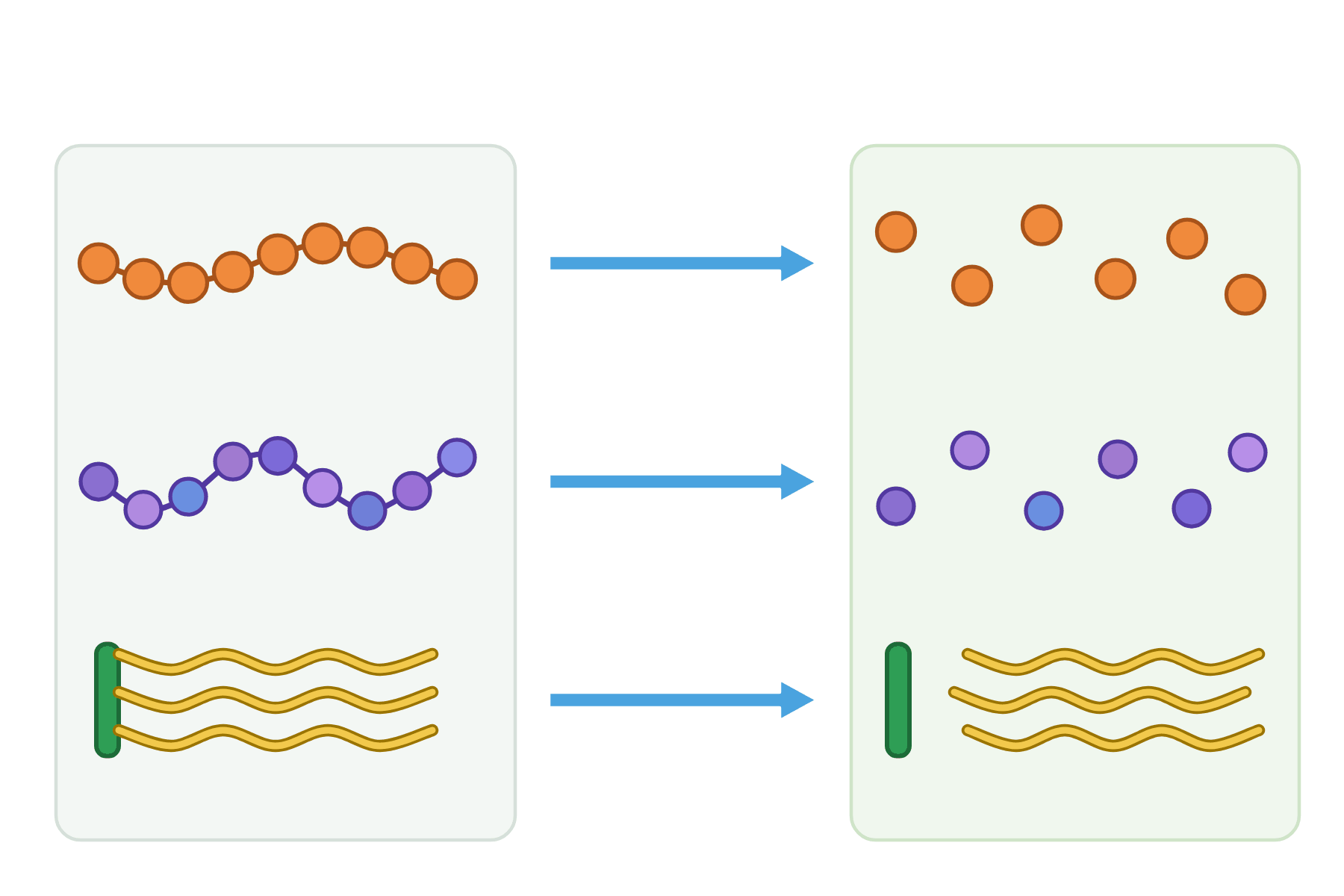 Name the enzyme that digests each large molecule, and the small molecules it makes.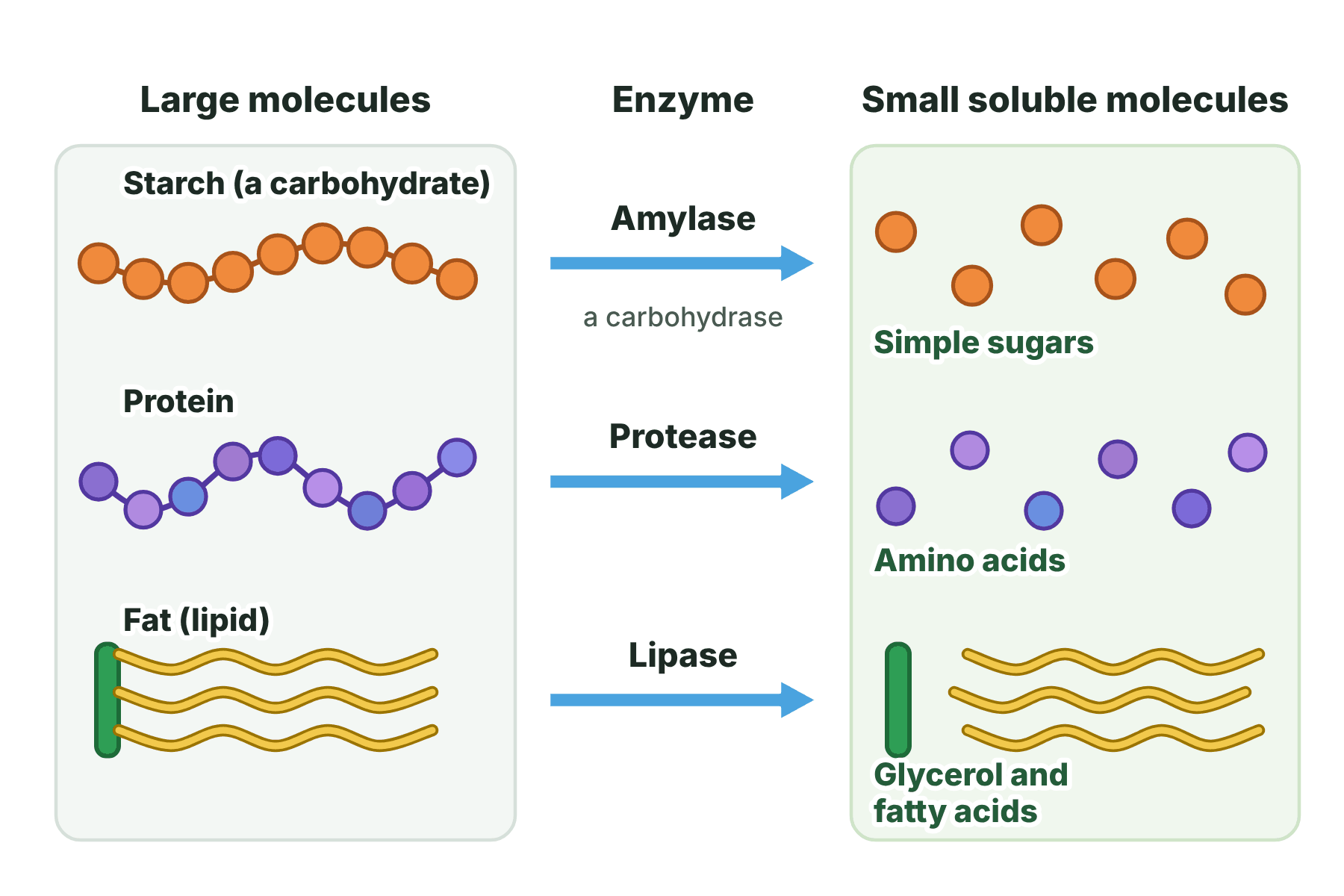
-
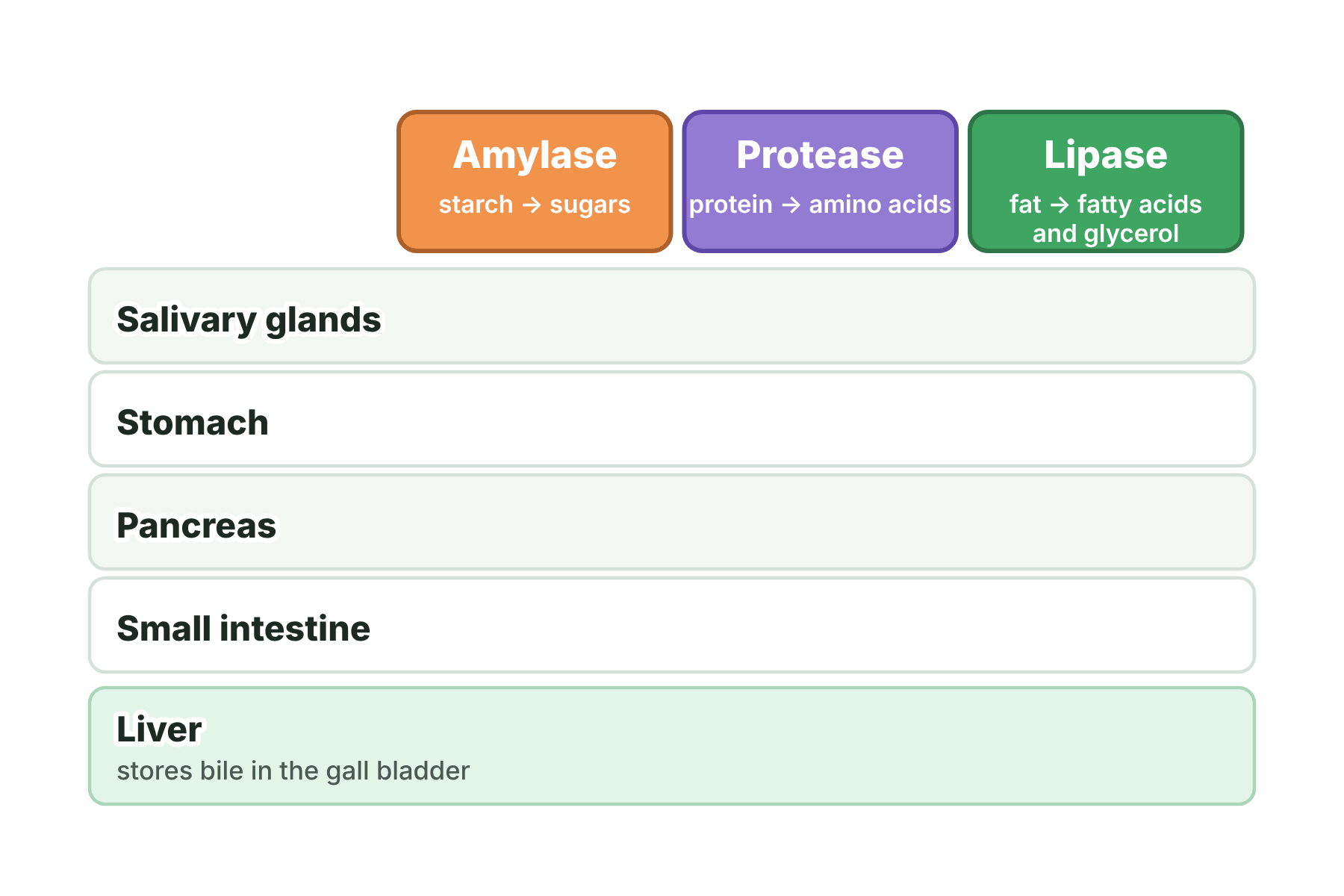 Which organs make amylase, protease and lipase?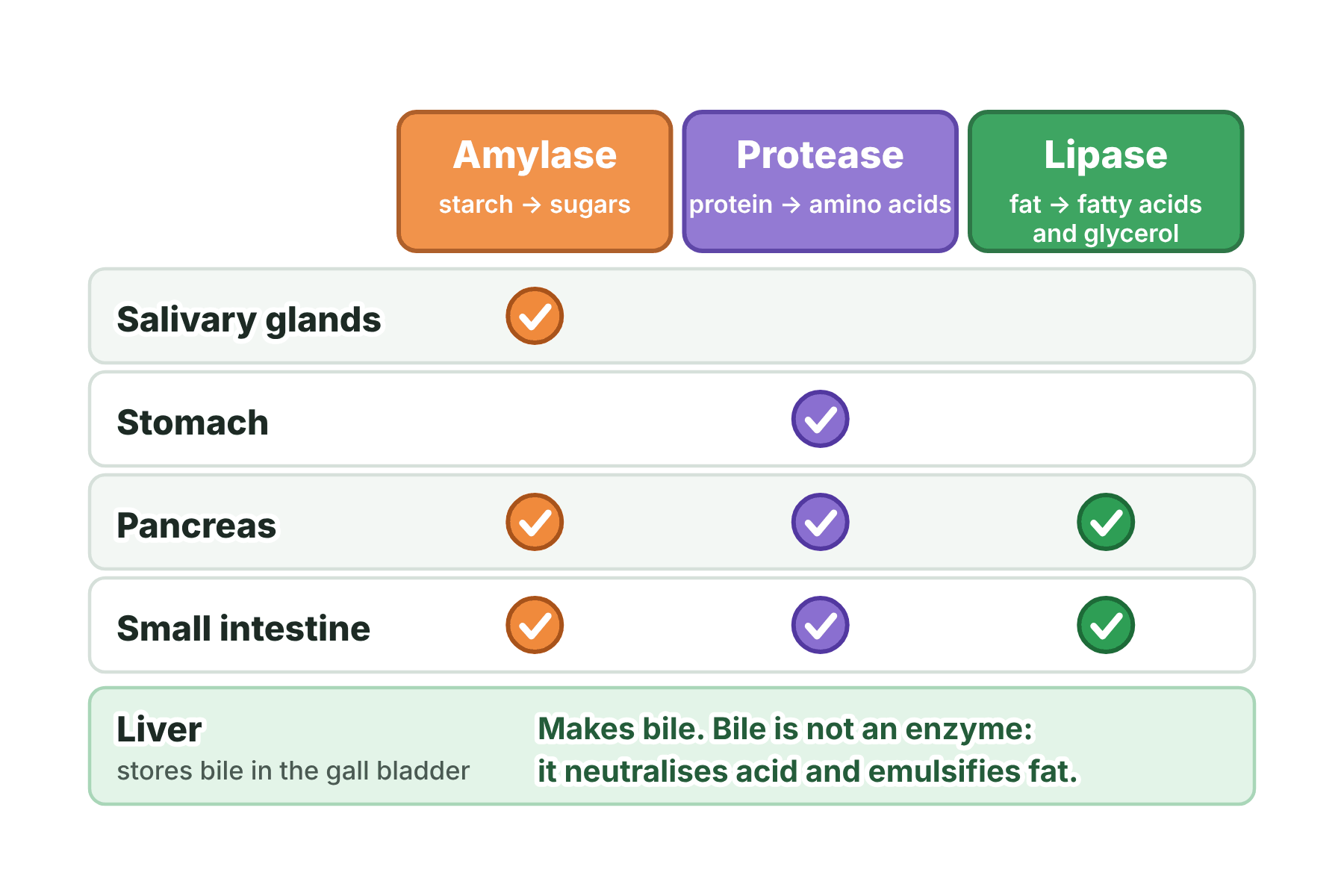
-
Explain how bile helps to digest fat.
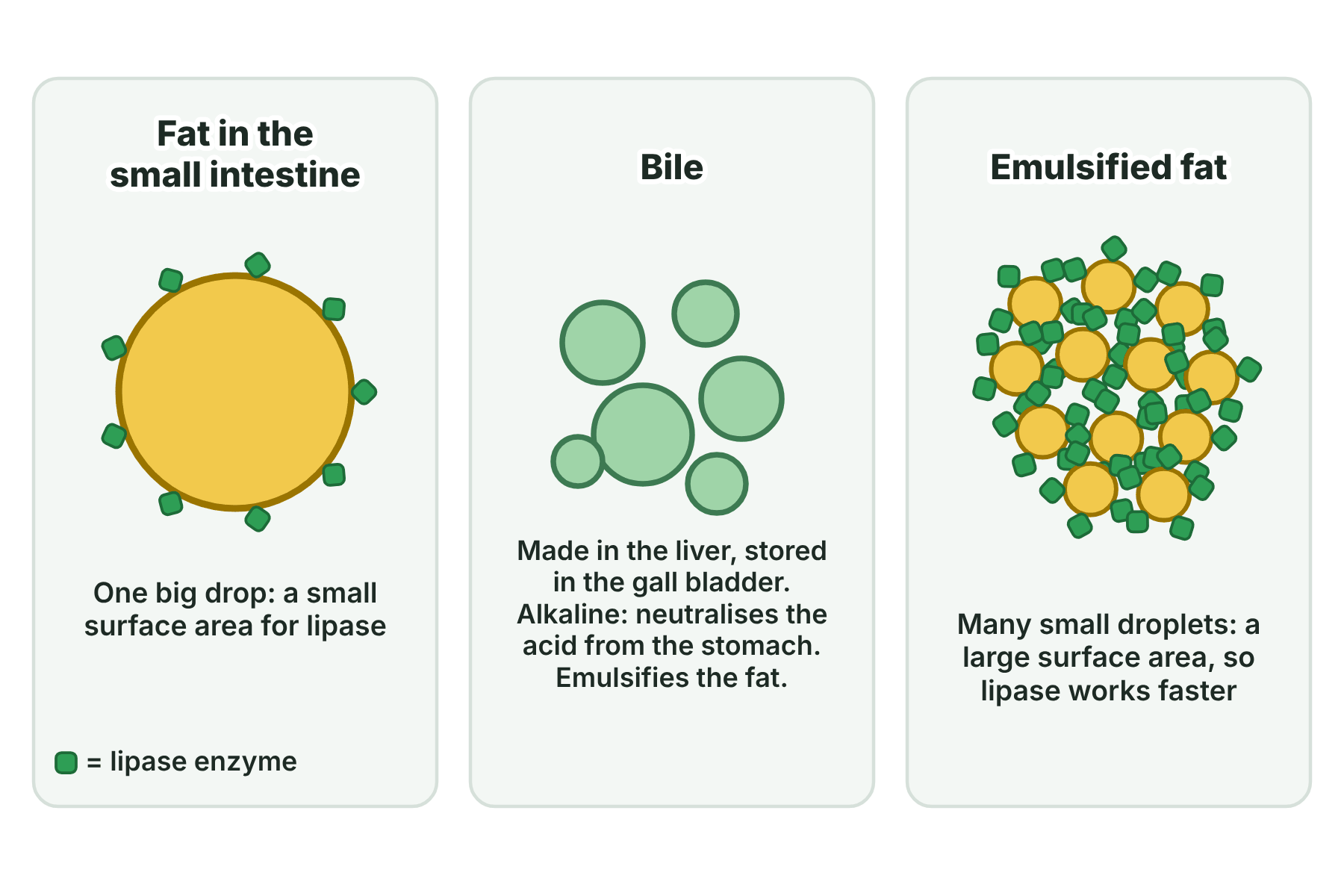
Bile is alkaline, so it neutralises the acid from the stomach and gives the right pH for the enzymes. It emulsifies fat into small droplets. This gives a larger surface area, so lipase works faster.