Flashcards · Biology · Mitosis, Growth and Stem Cells
Chromosomes, Genes and DNA
-
Where are the chromosomes in a human body cell?
In the nucleus.
-
What is a chromosome made of?
A long molecule of DNA, coiled up.
-
What does each chromosome carry?
A large number of genes.
-
What is a gene?
A short section of DNA that contains the instructions for making one protein.
-
What shape is a DNA molecule?
A double helix: two strands twisted around each other.
-
How many chromosomes are there in a human body cell?
46, arranged as 23 pairs.
-
Where does each chromosome in a pair come from?
One from the mother and one from the father.
-
A cell has 12 pairs of chromosomes. How many chromosomes is that?
24.
-
A cell has 20 chromosomes. How many pairs is that?
10.
-
Which is bigger, a gene or a chromosome?
A chromosome. A gene is only a short section of one.
-
Which pair of chromosomes decides whether a person is male or female?
The sex chromosomes: XX in females and XY in males.
-
What is a genome?
All of the genetic material of an organism.
-
Does a bigger number of chromosomes mean a more complex organism?
No. A dog has 78 and a human has 46.
-
True or false: a gene contains several chromosomes.
False. A chromosome carries several genes.
-
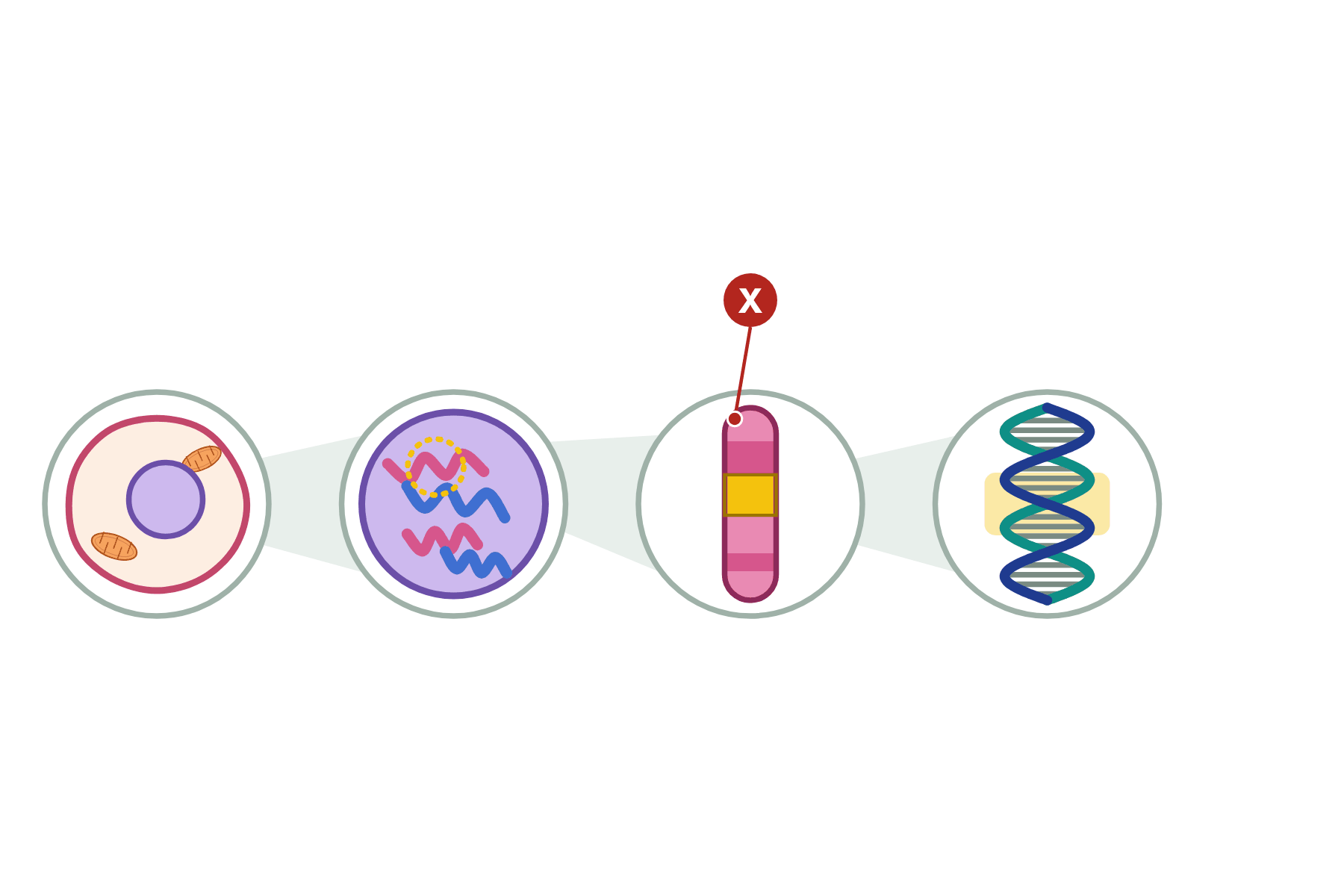 What is the structure marked X in this diagram?
 A chromosome: a long, coiled molecule of DNA that carries a large number of genes.
-
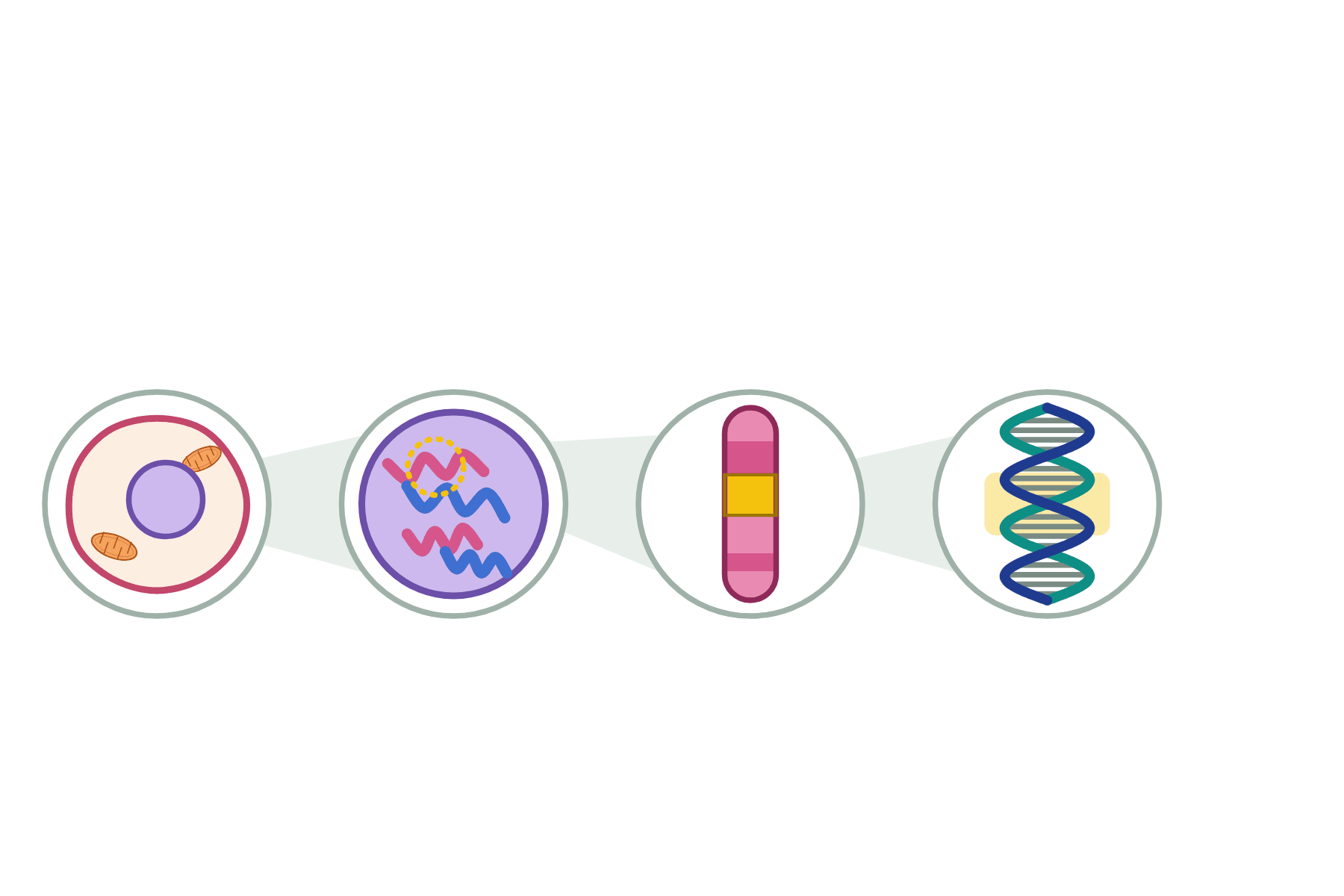 Name each level from the cell down to the gene.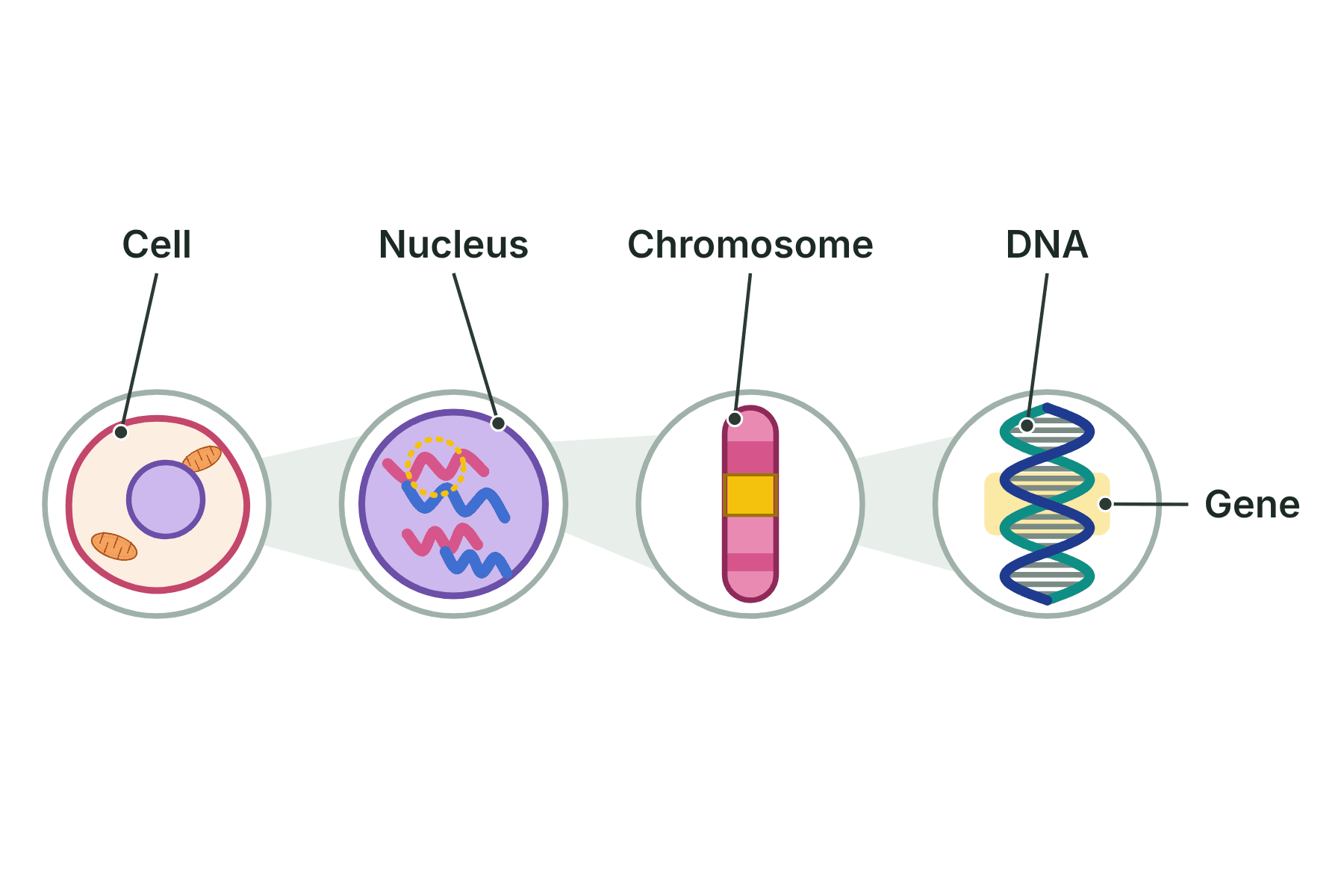
-
How many chromosomes are there in a human body cell, and how are they arranged?
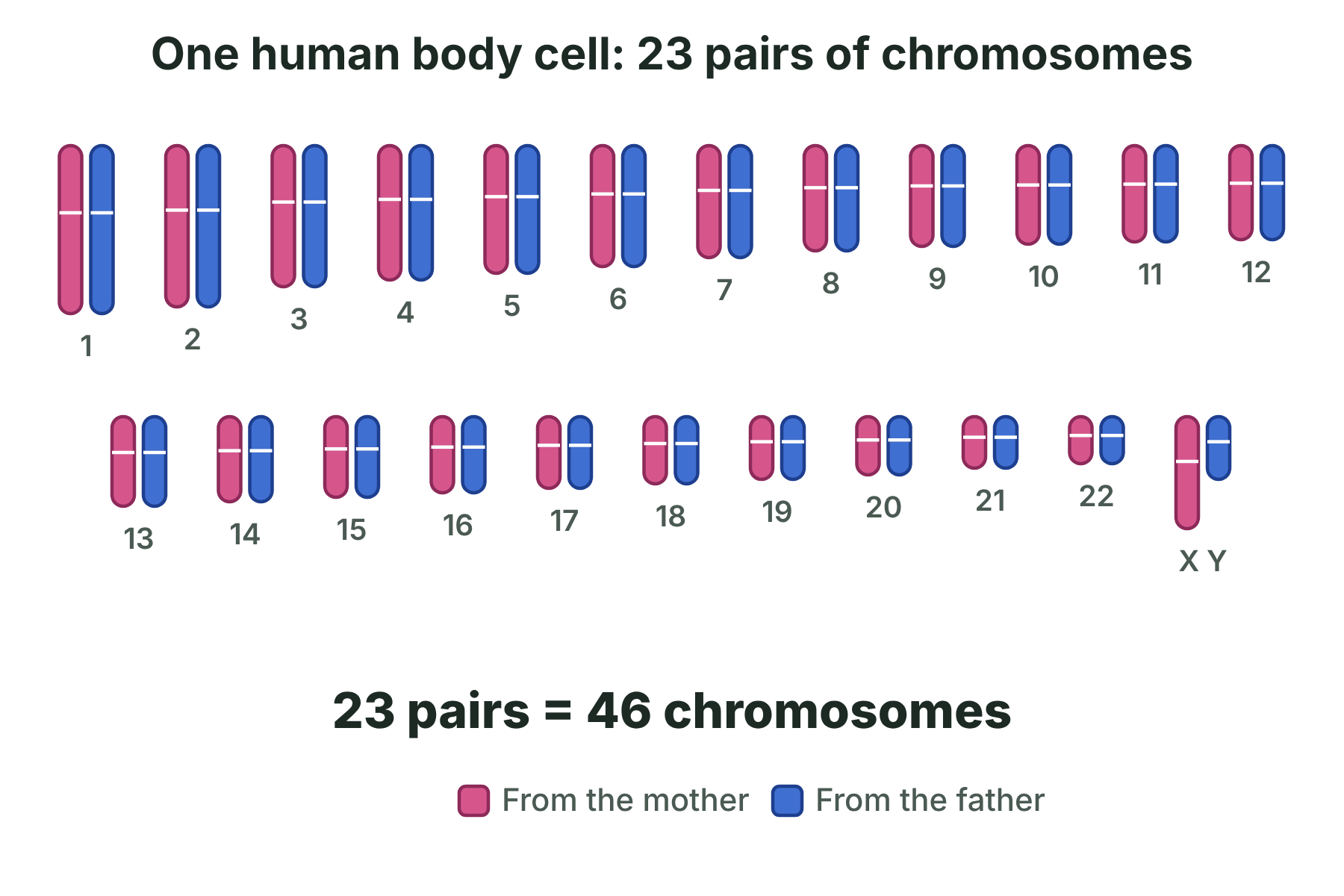
46, arranged as 23 pairs. One chromosome in each pair came from each parent.