1.12 Stem cells
Embryonic stem cells, adult stem cells and plant meristems; how stem cells could treat disease, therapeutic cloning, the risks and ethical issues, and how meristems are used to clone plants.
What are stem cells?
Key terms
- Stem cell: an unspecialised cell that can divide to make more cells of its own type and can also differentiate into specialised cells.
- Embryonic stem cell: a stem cell from an early embryo. It can differentiate into any type of body cell.
- Adult stem cell: a stem cell found in an adult, for example in bone marrow. It can form many types of cell, but not all.
- Meristem: the part of a plant, at the tips of roots and shoots, that contains stem cells.
- Therapeutic cloning: making an embryo with the same genes as a patient, so that stem cells from it can be used in treatment.
Stem cells are unspecialised cells. They can divide by mitosis to make more stem cells, or they can differentiate and become specialised.
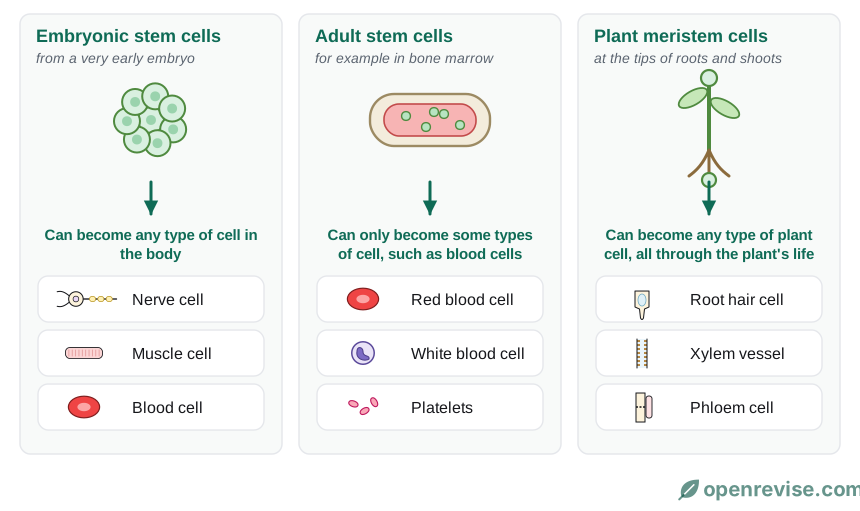
- Embryonic stem cells come from early human embryos. They can differentiate into any type of body cell.
- Adult stem cells are found in some adult tissues, such as bone marrow. They can only form some types of cell. For example, stem cells in bone marrow form the different types of blood cell.
- Meristem cells in plants are found at the tips of the roots and shoots. They can differentiate into any type of plant cell, and they can do so throughout the life of the plant.
Using stem cells in medicine
Doctors can use stem cells to replace cells that are damaged or lost. They may help to treat conditions such as diabetes (by making cells that produce insulin), paralysis (by replacing damaged nerve cells), and diseases of the blood. A bone marrow transplant, which gives a patient healthy stem cells, is already used to treat some blood cancers.
Therapeutic cloning
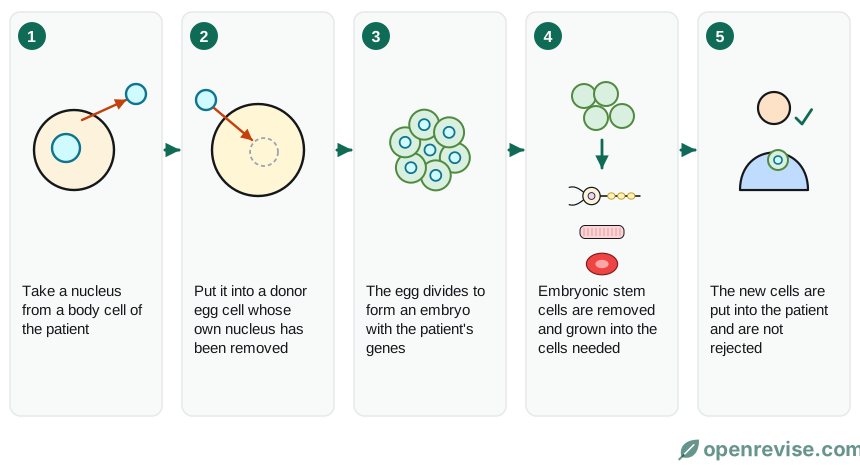
If stem cells from another person are used, the patient's immune system may recognise them as foreign and reject them. In therapeutic cloning, an embryo is made that has the same genes as the patient. Stem cells from this embryo are not rejected by the patient's body, so they can be used in treatment.
Risks and ethical issues
| Benefits | Risks and objections |
|---|---|
| They could treat diseases that cannot be cured now | Stem cells grown in a laboratory can be infected with a virus, which could be passed to the patient and make them ill |
| They can become any type of cell | Stem cells might divide out of control and cause a tumour |
| Cloned stem cells would not be rejected | Embryos are destroyed to get the cells: some people think an embryo has the right to life, or object on religious grounds |
| Many of the embryos come from fertility clinics, where unused embryos would be thrown away anyway | Some people worry about where the research will lead |
Adult stem cells raise fewer ethical concerns, because no embryo is destroyed, but they cannot become as many types of cell. Governments control stem cell research with laws.
Cloning plants with meristems
Cells from a plant's meristem can be grown into many new plants that are genetically identical to the parent. This is quick and cheap. It can be used to:
- save rare plant species from extinction;
- grow large numbers of crop plants with useful features, such as disease resistance, for farmers.
Test yourself on this lesson
7 exam questions · 16 marks · with mark schemes and model answers
Found a mistake?