7.19 Biotechnology and food
How modern biotechnology produces food: mycoprotein from the fungus Fusarium grown in fermenters, and genetically modified crops such as golden rice that provide more nutrients, with their benefits and concerns.
Biotechnology and food
Key terms
- Biotechnology: using living organisms, such as microorganisms, to make useful products.
- Mycoprotein: a protein-rich food made from the fungus Fusarium, suitable for vegetarians.
- Fermenter: a large vessel in which microorganisms are grown in controlled conditions.
As the human population increases, there is a need to produce more food. Modern biotechnology techniques make it possible to produce large quantities of microorganisms that can be used for food.
Mycoprotein
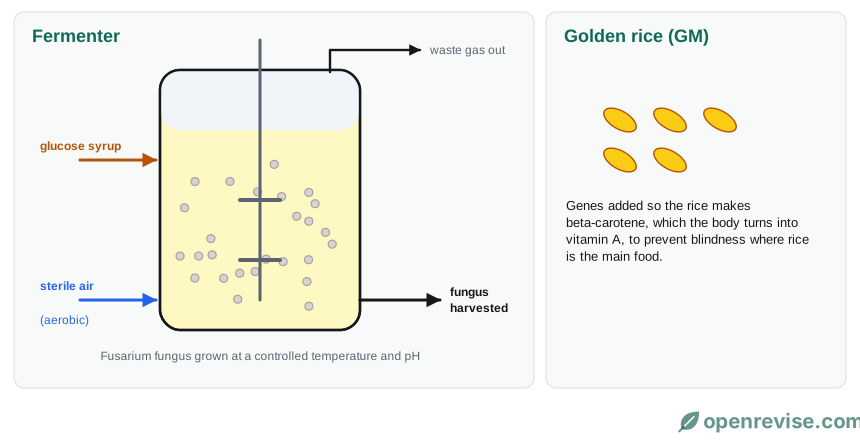
- The fungus Fusarium is grown in large vats called fermenters.
- It is given glucose syrup as food and sterile air (oxygen), because it respires aerobically.
- The temperature and pH are kept at the best levels, and everything is kept sterile so no other microbes grow.
- The fungus is harvested and purified to make mycoprotein, a high-protein, low-fat food used in meat substitutes.
Advantages: it grows fast, it can be produced all year in a small space, and it is a good protein source for vegetarians with less land and fewer greenhouse gases than meat.
Genetically modified crops
Golden rice has been genetically modified to produce beta-carotene, which the body converts to vitamin A. In some countries where rice is the main food, many children lack vitamin A, which can cause blindness. GM crops can also be made with higher yields or resistance to pests and drought.
Concerns
- Some people worry about the long-term effects of eating GM food and about genes spreading to wild plants.
- GM seeds can be expensive for poor farmers.
- Some people prefer foods that have not been processed or modified.
Test yourself on this lesson
5 exam questions · 10 marks · with mark schemes and model answers
Found a mistake?