6.17 Extinction
AQA: what extinction is and its causes, including new predators, new diseases, more successful competitors, catastrophic events and changes to the environment over time, with examples.
AQA
1 min read
What extinction means
Key terms
- Extinction: when there are no remaining individuals of a species still alive.
Extinctions have happened throughout the history of life. The fossil record shows that most species that have ever lived are now extinct.
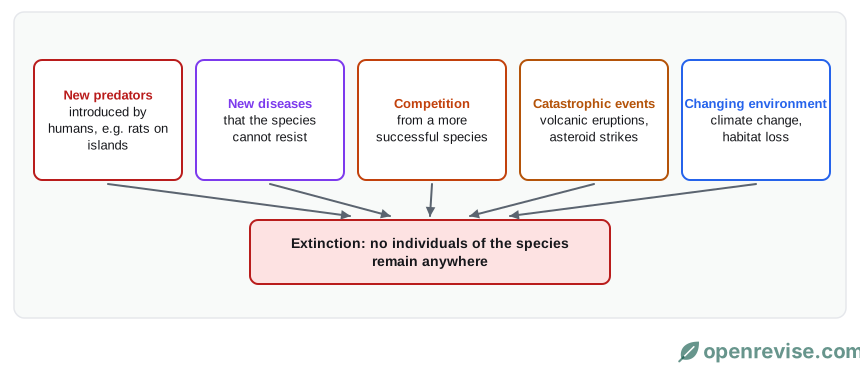
Causes of extinction
- New predators: for example, when humans brought rats, cats and pigs to islands such as Mauritius, they ate the eggs of the dodo, which could not fly.
- New diseases: a species may have no resistance to a new pathogen.
- Competition: a new, more successful species may outcompete it for food or space, for example grey squirrels outcompeting red squirrels in much of the UK.
- Catastrophic events: volcanic eruptions, or an asteroid collision, which is thought to have caused the extinction of the dinosaurs 66 million years ago.
- Changes to the environment over geological time, such as climate change; today, human activity such as deforestation and pollution destroys habitats faster than species can adapt.
Why some species are at greater risk
Species are more likely to become extinct if they:
- have a small population or live in only one place
- reproduce slowly
- cannot adapt quickly enough to the change, because there is too little variation for natural selection to act on.
Test yourself on this lesson
5 exam questions · 9 marks · with mark schemes and model answers
Found a mistake?