Viewing as
Teacher view: planning notes, the answers to every question, and the teacher copies of the files.
Business · Enterprise and entrepreneurship
The dynamic nature of business
Business never stands still. New technology, changing customer wants and products that go out of date all create chances for new business ideas, which come either from original thinking or from adapting what already exists.
Teacher resources
The teacher copies: slides with the questions built in, the answers, and anything else attached to this lesson for whoever is teaching it.
- The dynamic nature of business - Teacher Slides.pptx Teacher The lesson slides with the teacher's notes on each slide, and every question and mark scheme built in. Built from the lesson script on 24 September 2026. View
- The dynamic nature of business - Teacher Notes.docx Teacher The complete notes with the teacher's notes and every model answer in full. Built from the lesson script on 24 September 2026. View
Student handouts
The same files the students see, to print or hand out.
- The dynamic nature of business.pptx Built from the lesson script on 24 September 2026. View
- The dynamic nature of business - Completed Notes.docx The full notes for the lesson, to revise from. Built from the lesson script on 24 September 2026. View
- The dynamic nature of business - Exam Questions.docx Built from the lesson script on 24 September 2026. View
What Do You Already Know?
Jot your answers down before we look at them.
-
Name a business you use that did not exist fifteen years ago.
Examples: Deliveroo, TikTok Shop, Uber, Spotify, Monzo - all made possible by smartphones and apps.
-
Name a product your parents used that hardly anyone buys now.
Examples: DVDs, CDs, film cameras, satellite navigation boxes, landline phones.
-
What does "dynamic" mean?
Constantly changing and developing.
-
Why might a business that sells exactly the same thing for twenty years get into trouble?
Customers' wants, technology and competitors all change around it.
Learning Objectives
- 1Explain what is meant by the dynamic nature of business.
- 2Explain why new business ideas come about: changes in technology, changes in what consumers want, and products and services becoming obsolete.
- 3Explain how new business ideas come about: original ideas, and adapting existing products, services and ideas.
- 4Apply these reasons to real businesses in an exam answer.
THE BIG IDEA
Markets never stand still, so neither can the businesses in them.
Every change in technology or in what people want is a threat to one business and an opportunity for another.
What Does "Dynamic" Mean?
A dynamic market is one that is constantly changing.
-
Constant change
The business world changes all the time: new technology is invented, customers' tastes shift, and new competitors arrive.
-
Threats
A business that does not keep up can lose its customers to rivals who do, and eventually close.
-
Opportunities
Every change creates a gap that an entrepreneur can fill with a new product or service.
-
Why it matters
Businesses must keep watching their market and be ready to adapt what they sell and how they sell it.
Where Do New Ideas Come From?
New business ideas do not appear out of nowhere. Something in the world changes, somebody notices a gap it has left, and they come up with a product or service to fill it - either something completely new or a better version of something that already exists.

Most new businesses begin as one idea talked through around a table.
Why new business ideas come about
Changes in Technology
New technology makes new products, and new ways of selling, possible.
-
New products
Technology allows products that could not exist before, such as smartphones, smart watches, electric cars and video doorbells.
-
New services
The smartphone made app-based services possible: food delivery (Deliveroo, Just Eat), ride-hailing (Uber) and music streaming (Spotify).
-
New ways of selling
The internet lets even a tiny business sell to customers across the country through its own website, Etsy, eBay or social media.
-
Lower costs
Technology can make production cheaper, so a small business can compete - for example 3D printing, or online tools for design and accounts.
Technology Creates New Businesses
Before smartphones, ordering a takeaway meant phoning the restaurant, and most restaurants did not deliver at all. Delivery apps link customers, restaurants and riders in one place - a whole new business that technology created.
The same change created other businesses too
- Dark kitchens Kitchens with no dining room that cook only for delivery.
- Riders Self-employed riders working for several apps.
- Restaurants Able to reach customers without paying for more tables.
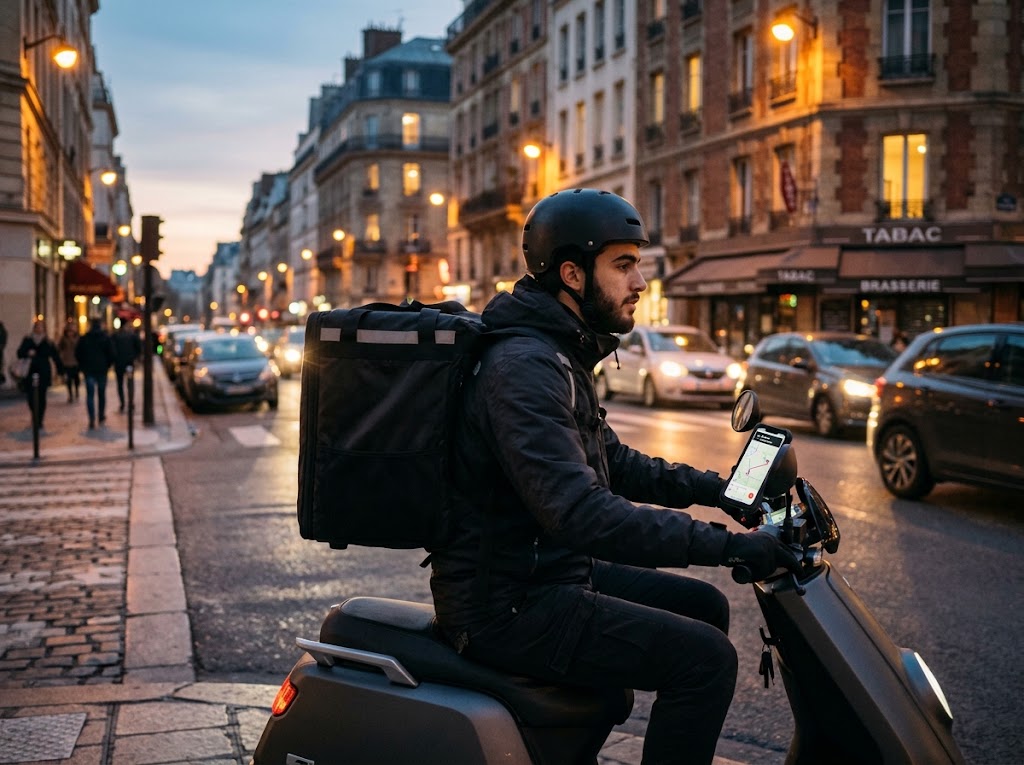
App-based delivery only became possible once most people carried a smartphone.
Changes in Consumer Wants
What customers want changes over time, and new businesses spring up to supply it.
-
Healthier lifestyles
Growing interest in health has created demand for gyms, protein snacks, low-sugar drinks and fitness apps.
-
Ethical and green choices
Customers increasingly want products that are sustainable, recyclable, plant-based or fairly traded - opening markets for refill shops and vegan food brands.
-
Convenience
Busy lives mean customers will pay for things that save time: meal kits, next-day delivery, click-and-collect.
-
Fashions and trends
Tastes change quickly, often driven by social media, so a product that is popular this year may not be next year.
Products and Services Becoming Obsolete
Obsolete means out of date - no longer wanted because something better has replaced it.
-
What happens
When a product becomes obsolete, demand for it falls, often very quickly, and businesses that rely on it may fail.
-
Why it happens
Usually because new technology produces a better product, or because consumer wants have changed.
-
The opportunity
Every obsolete product leaves customers who still have the need, so an entrepreneur can supply the replacement.
-
Examples
DVDs and CDs replaced by streaming, film cameras by phone cameras, paper road maps by sat-nav and map apps.
Case in Point: Watching Films at Home
The way people watch films at home has been replaced three times in forty years. Each change made one business model obsolete and created a new one.
- 1980s Video shops rent out VHS tapes and become a feature of every high street.
- 1997 DVDs go on sale, and Netflix is founded in the USA to post DVDs to customers.
- 2007 Netflix launches streaming, using faster broadband to play films online.
- 2012 Netflix launches in the UK.
- 2013 Blockbuster's UK stores close: renting a disc from a shop is now obsolete.
From Obsolete to New
The same need - watching a film at home - met in two very different ways.
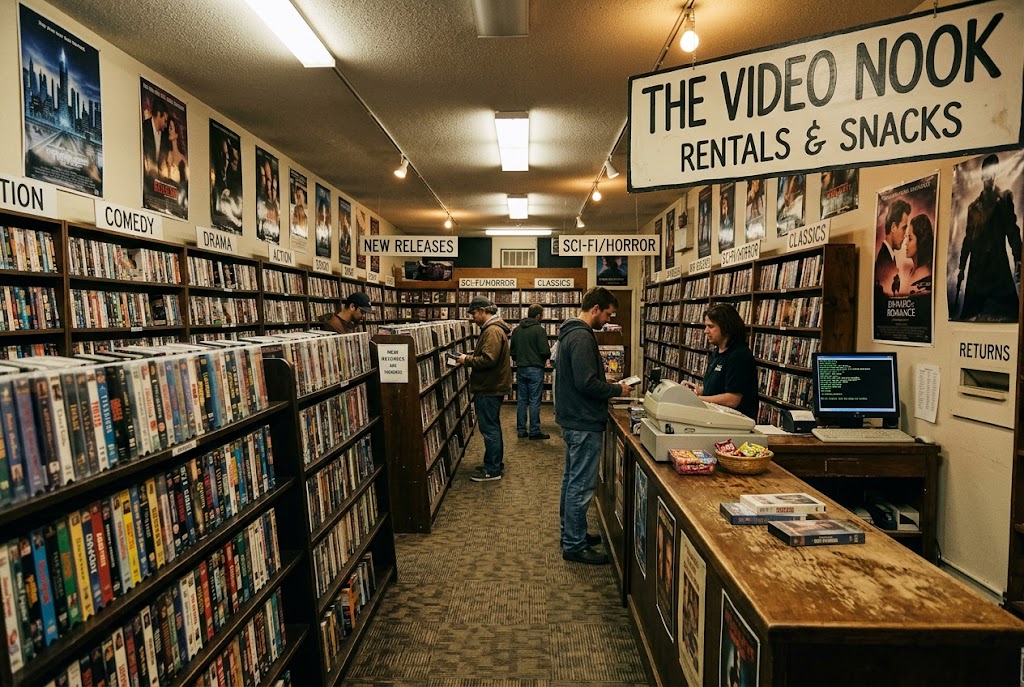
Renting a disc from a shop: now obsolete.
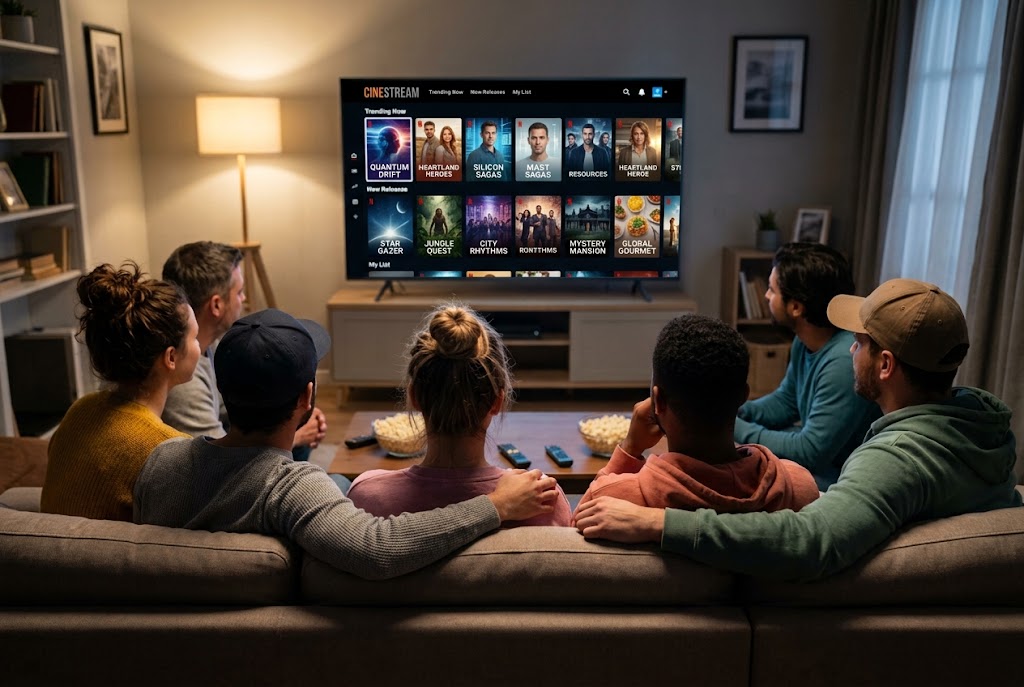
Streaming: the service that replaced it.
Original Ideas or Adapting Existing Ones?
Original ideas
- Something genuinely new that has not been done before.
- Often comes from new technology or an invention.
- Can give the business the whole market to itself at first.
- Riskier: nobody knows yet whether customers will want it.
- Example: Dyson's bagless vacuum cleaner.
Adapting existing ideas
- Taking a product, service or idea that already exists and changing it.
- Often comes from spotting a weakness in what is already on offer.
- Customers already understand the product, so it is easier to sell.
- Less risky, but there will already be competitors.
- Example: a café adding vegan options, or a gym opening 24 hours a day.
Original Ideas
An original idea is a completely new product or service.
-
What it is
An idea that has not been done before, often the result of an invention or a new use of technology.
-
Advantage
The business may be first into the market with no direct competitors, and can often charge a higher price.
-
Disadvantage
It is risky: there is no proof that customers want it, and developing something new can be expensive and slow.
-
Example
James Dyson invented a vacuum cleaner that did not need a bag, which no other manufacturer offered at the time.
Adapting Existing Products, Services and Ideas
Most new businesses do not invent something new - they improve something that already exists.
-
Improving a product
Making it better, cheaper, faster, healthier or more convenient than what is already sold.
-
A new market
Taking an idea that works in one place or for one group of customers and offering it somewhere else or to someone else.
-
Combining ideas
Putting two existing ideas together, for example a bookshop with a café in it.
-
Why it works
Customers already understand the product, so there is less risk - but the business must find a way to stand out from existing competitors.
Case study
Netflix: Adapting to Survive
Netflix began in 1997 by adapting an existing idea: instead of customers going to a shop to rent a DVD, it posted the DVDs to them. When faster broadband arrived, Netflix adapted again and moved to streaming in 2007, making its own DVD-by-post business out of date before a competitor could. Blockbuster, which did not adapt quickly enough, closed its UK shops in 2013. Netflix shows all three reasons for new ideas at once: new technology (broadband), changing consumer wants (instant, on-demand viewing) and an obsolete product (the rented disc).
Match the Change to the Business
Which reason explains each new business?
-
A refill shop selling loose pasta and washing-up liquid
Changing consumer wants: less plastic packaging
-
A phone repair stall in a shopping centre
Changing technology: almost everyone owns a smartphone
-
A music streaming app
A product becoming obsolete: CDs replaced by streaming
-
A vegan burger range
Changing consumer wants: more people eating less meat
-
An electric car charging company
Changing technology: the switch to electric cars
Spot the Gap
Choose three products or services you or your family have stopped using in the last five years. For each one, say what replaced it, which reason for new business ideas explains the change, and whether the new business was an original idea or an adaptation.
1. Name the old product and what replaced it.
2. Name the reason for the change.
3. Decide: original idea or adaptation? Explain why.
A good answer shows: Three examples, each linked to a named reason (technology, consumer wants or obsolescence) and a judgement of original or adapted, with a reason.
Can I...?
- 1Explain what is meant by the dynamic nature of business.
- 2Explain how changes in technology lead to new business ideas.
- 3Explain how changes in consumer wants lead to new business ideas.
- 4Explain what obsolete means and how it creates new business ideas.
- 5Explain the difference between an original idea and an adapted idea.
- 6Use a real example for each.
Summary & Exam Focus
- Business is dynamic: technology, customer wants and competition change all the time.
- New ideas come about because of changes in technology, changes in consumer wants and products becoming obsolete.
- New ideas are either original or adaptations of existing products, services and ideas.
- Adapting is less risky than an original idea, but there is more competition.
Exam focus
Outline one reason why new business ideas come about. (2 marks) (2 marks)
Outline questions are worth 2 marks: 1 for the reason and 1 for developing it. Name the reason, then add a linked point that shows why it leads to a new business idea - an example helps.
Key terms
The vocabulary this lesson expects you to use. Each one is linked from the first place it appears above.
- Dynamic
- Constantly changing. Business markets are dynamic because technology, customer wants and competition keep changing.
- Obsolete
- Out of date and no longer wanted, usually because a better product has replaced it.
- Consumer wants
- The goods and services that customers would like to buy.
- Original idea
- A completely new product or service that has not been offered before.
- Adapting
- Changing an existing product, service or idea to improve it or to suit different customers.
- Innovation
- Turning a new idea into a product or service that is actually sold.
Questions and answers
9 questions set on this lesson, with the mark schemes and model answers open.
Define the term 'obsolete'.
Mark scheme — 1 mark available
- Out of date / no longer wanted or used — 1 mark
Model answer
A product or service that is out of date and no longer wanted by customers, usually because something better has replaced it.
State one reason why new business ideas come about.
Mark scheme — 1 mark available
- Any one of: changes in technology; changes in consumer wants; products or services becoming obsolete — 1 mark
Model answer
Changes in technology.
Outline one reason why new business ideas come about.
Mark scheme — 2 marks available
- A reason identified, e.g. changes in technology / consumer wants / products becoming obsolete — 1 mark
- Developed: why this leads to a new business idea — 1 mark
Model answer
Changes in technology create new business ideas (1) because they make new products and services possible, for example smartphones made app-based food delivery services such as Deliveroo possible (1).
Outline one way an entrepreneur can come up with a new business idea.
Mark scheme — 2 marks available
- A way identified: an original idea / adapting an existing product, service or idea — 1 mark
- Developed: how this produces a business idea — 1 mark
Model answer
An entrepreneur can adapt an existing product (1). Observing existing products can lead to ideas about how they might be improved, so the entrepreneur can innovate an existing product rather than start from nothing (1).
Explain one risk to a business of its product becoming obsolete.
Mark scheme — 3 marks available
- A risk identified, e.g. falling sales / revenue / business failure — 1 mark
- First linked point of explanation — 1 mark
- Second linked point of explanation — 1 mark
Model answer
Its sales could fall sharply (1) because customers will switch to the newer product that has replaced it (1). As a result the business's revenue falls, and if it cannot adapt quickly enough it may be forced to close, as Blockbuster's UK stores did when streaming replaced DVD rental (1).
What does it mean when a product becomes obsolete?
Why: Obsolete means out of date: customers no longer want it because something better has replaced it.
Which one of the following is a reason why new business ideas come about?
Why: Changes in technology make new products and services possible. The other options are not reasons from the specification.
A café starts offering vegan cakes because more of its customers are eating plant-based food. Which reason for a new business idea is this?
Why: The café is responding to what its customers now want - a change in consumer wants.
Which of these is the best example of adapting an existing idea?
Why: A 24-hour gym changes an idea that already exists (the gym) to suit customers who want to train at any time.