Viewing as
Teaching this? The teacher view adds 2 files, the mark schemes and the model answers.
Business · Making marketing decisions
Place
Place is how a product gets from the business that makes it to the customer who buys it - through retailers, e-tailers and intermediaries such as wholesalers. Many businesses now sell through several channels at once.
Last Lesson
Answer from memory before the answers appear.
-
Name three promotional methods.
Any three of: advertising, sponsorship, product trials, sales promotions, PR, branding.
-
What is targeted advertising?
Online adverts shown only to people who match the target market.
-
What is public relations?
Gaining positive media coverage without paying for it directly.
-
How should promotion match a market segment?
Use methods and media the target customers actually see.
Learning Objectives
- 1Explain distribution channels and the role of intermediaries.
- 2Explain the role of retailers and e-tailers (e-commerce).
- 3Explain multi-channel distribution.
- 4Explain the advantages and disadvantages of each method of distribution.
What Is Place?
Place is about how and where customers can buy a product.
-
Distribution
The process of getting products from the producer to the customer.
-
Distribution channel
The route a product takes from producer to customer.
-
Intermediary
A business in the middle of the channel, such as a wholesaler or retailer.
-
Why it matters
Customers can only buy a product if it is available where and when they want it.
Distribution Channels
-
Direct
Route: Producer to consumer. Example: A farm shop, or a brand's own website
-
One intermediary
Route: Producer to retailer to consumer. Example: A clothing brand sold in department stores
-
Two intermediaries
Route: Producer to wholesaler to retailer to consumer. Example: Sweets sold to a wholesaler, then to corner shops
Intermediaries
Intermediaries sit between the producer and the customer.
-
Wholesaler
Buys large quantities from producers and sells smaller quantities to retailers. Breaks bulk, stores stock and delivers.
-
Retailer
Sells to the final customer, in shops or online.
-
Advantages
Producers reach many more customers and do not need their own shops.
-
Disadvantages
Each intermediary adds its own profit, raising the final price, and the producer has less control over how its product is sold.
Breaking Bulk
A corner shop could never order a lorry-load of crisps straight from the factory. A wholesaler buys in bulk from many producers and sells to small shops in the quantities they need - adding a margin for the service.
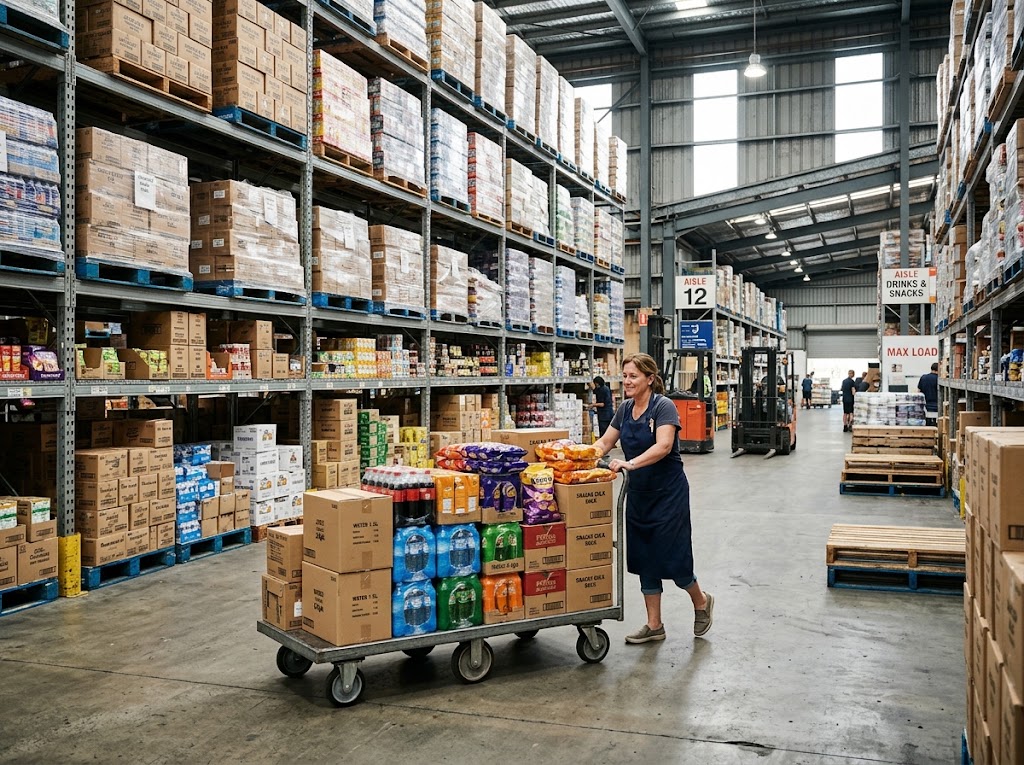
A wholesaler buys in bulk from producers and sells smaller amounts to shops.
Retailers or E-tailers?
Retailers (physical shops)
- Customers can see, touch and try products.
- Face-to-face service and advice.
- Customers take products home immediately.
- But: high costs of rent and staff.
- Limited to customers who can visit.
E-tailers (e-commerce)
- Lower costs: no shop rent.
- Reach customers anywhere, 24 hours a day.
- Can offer a huge range.
- But: delivery costs and returns.
- Customers cannot try before buying.
Two Ways to Buy
The same product, bought in a shop or delivered to the door.
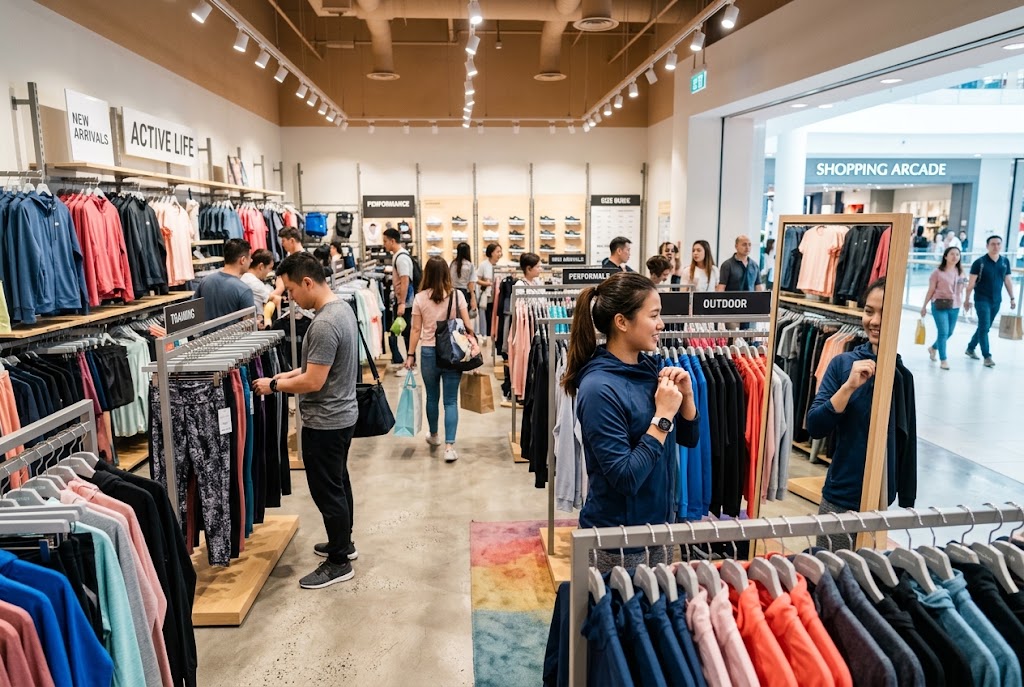
Retail: try it on, take it home today.
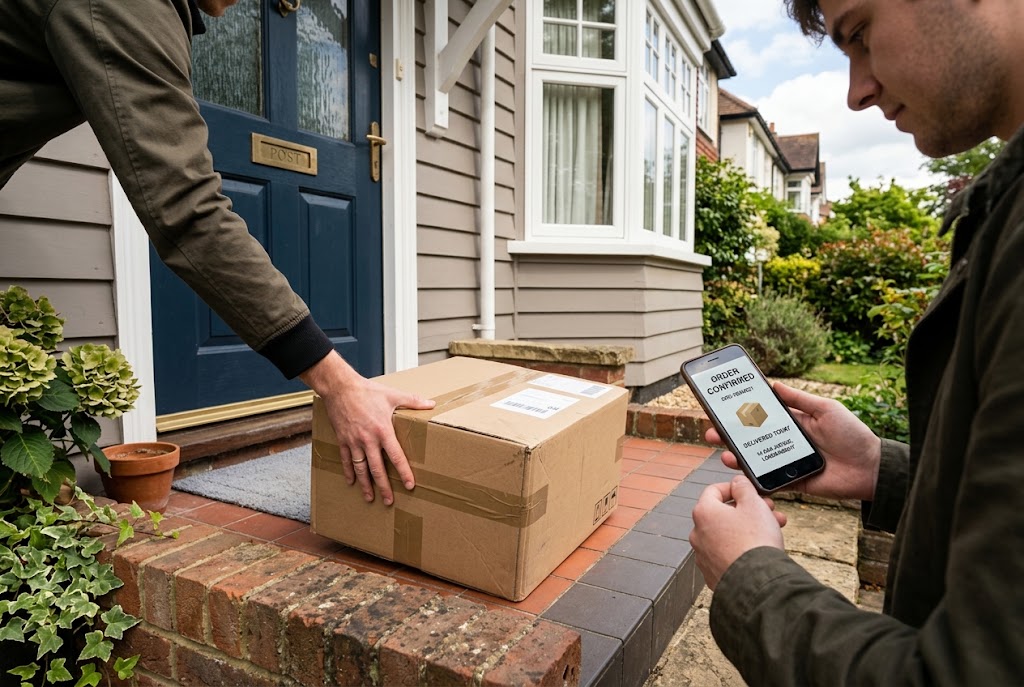
E-commerce: ordered online, delivered to the door.
Multi-channel Distribution
Multi-channel distribution means selling through more than one channel at once.
-
How it works
A business sells in its own shops, on its own website, through an app, on online marketplaces and through other retailers.
-
Click-and-collect
Customers order online and collect from a shop - combining the convenience of both.
-
Advantages
Reaches more customers, in the way each prefers to shop, so sales rise.
-
Disadvantages
More complex and expensive to manage; prices and stock must be consistent across every channel.
Case study
Gymshark: From Online to the High Street
Gymshark began in 2012 as a purely online business, selling gym clothing through its own website and promoting it on social media. For ten years it had no shops. In 2022 it opened its first permanent flagship store, on Regent Street in London, where customers could try on clothes, join workouts and meet the brand in person. By adding a physical store to its website, Gymshark moved to multi-channel distribution - reaching customers who want to try before they buy.
Choose the Channel
Recommend a distribution channel for each product and explain why: handmade wedding cakes; a new brand of crisps; luxury watches; a mobile phone game; fresh flowers from a local grower. Then choose one and explain how it could use multi-channel distribution.
1. Choose a channel for each product.
2. Explain why.
3. Plan multi-channel distribution for one.
A good answer shows: A suitable channel for each, linked to the product and customer, and a realistic multi-channel plan.
Can I...?
- 1Explain what a distribution channel is.
- 2Describe the three main channels.
- 3Explain the role of wholesalers.
- 4Explain the role of retailers.
- 5Explain e-tailers and e-commerce.
- 6Compare retailers and e-tailers.
- 7Explain multi-channel distribution.
Summary & Exam Focus
- Place is how products get from producer to customer.
- Channels can be direct, or use intermediaries such as wholesalers and retailers.
- Retailers offer a physical experience; e-tailers offer low costs and wide reach.
- Multi-channel distribution reaches more customers but is harder to manage.
Exam focus
Explain one benefit to a business of using multi-channel distribution. (3 marks) (3 marks)
Link the channel to the product and the customer - fresh food needs a short channel; a mass-market snack needs as many channels as possible.
Key terms
The vocabulary this lesson expects you to use. Each one is linked from the first place it appears above.
- Place
- How and where customers can buy a product.
- Distribution channel
- The route a product takes from producer to customer.
- Intermediary
- A business between the producer and the customer, such as a wholesaler or retailer.
- Wholesaler
- A business that buys in bulk from producers and sells smaller quantities to retailers.
- Retailer
- A business that sells to the final customer.
- E-tailer
- A retailer that sells online.
- Multi-channel distribution
- Selling through several channels at once.
Downloads
Free to keep, print and annotate.
Something here looks wrong?
Tell us what and we will go and look. It goes to whoever writes these pages, nobody else, and we do not ask who you are — so there is nothing to sign and nothing comes back to you.