7.11 Biodiversity, pollution and waste
What biodiversity is and why it matters, how a growing human population uses more resources and produces more waste, and how pollution of water (including eutrophication), land and air reduces biodiversity.
Biodiversity
Key terms
- Biodiversity: the variety of all the different species of organisms on Earth, or within an ecosystem.
- Pollution: harmful substances released into the environment.
- Eutrophication: the build-up of nutrients in water, causing algae to grow rapidly and leading to the death of other organisms.
A high biodiversity ensures the stability of ecosystems by reducing the dependence of one species on another for food, shelter and the maintenance of the physical environment. The future of the human species on Earth relies on us maintaining a good level of biodiversity. Many human activities are reducing it, and only recently have we started taking measures to stop this.
People, resources and waste
The human population is growing rapidly, and the standard of living is rising. More resources are used and more waste is produced. Unless waste and chemical materials are properly handled, more pollution will be caused.
| Where | Sources | Effects |
|---|---|---|
| Water | Sewage, fertiliser run-off, toxic chemicals from industry | Kills plants and animals; eutrophication |
| Land | Landfill, toxic chemicals such as pesticides and herbicides | Toxic chemicals pass into food chains; land lost to waste |
| Air | Smoke, acidic gases (sulfur dioxide) from burning fuels | Acid rain damages trees, lakes and buildings; smog |
Pollution kills plants and animals, which can reduce biodiversity.
Eutrophication
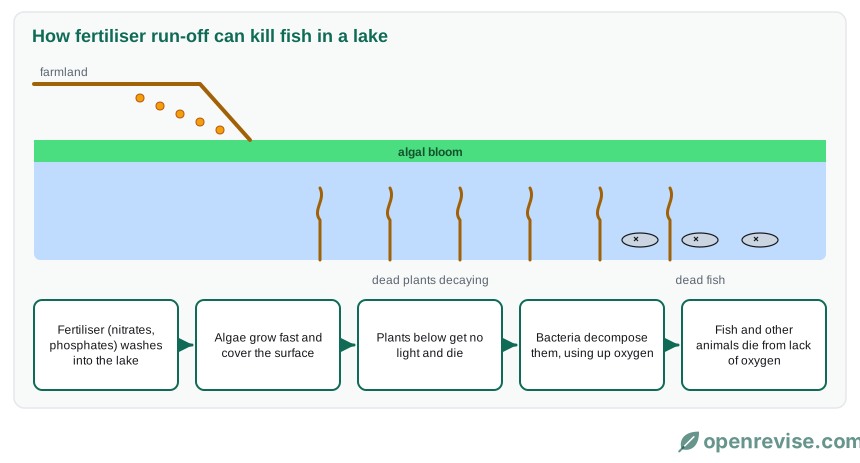
- Fertilisers containing nitrates and phosphates are washed from fields into rivers and lakes (sewage can do the same).
- Algae grow rapidly using the extra nutrients and cover the surface (an algal bloom).
- The algae block light, so plants underneath cannot photosynthesise and die.
- Bacteria decompose the dead plants and algae. As they respire, they use up the oxygen in the water.
- Fish and other aquatic animals die from lack of oxygen.
Test yourself on this lesson
5 exam questions · 12 marks · with mark schemes and model answers
Found a mistake?