7.14 Maintaining biodiversity
How scientists, governments and individuals try to reduce the negative effects of humans on ecosystems: breeding programmes, protecting and regenerating habitats, hedgerows and field margins, reforestation, recycling, ecotourism and international agreements, and the conflicting pressures involved.
Why it matters
Key terms
- Conservation: protecting species and habitats to maintain biodiversity.
- Breeding programme: breeding an endangered species in captivity to increase its numbers.
- Reforestation: replanting forests where they have been cut down.
- Ecotourism: tourism that has a low impact on the environment and helps fund conservation.
Scientists and concerned citizens have put in place programmes to reduce the negative effects of humans on ecosystems and biodiversity. Maintaining biodiversity protects species for the future, keeps food chains and ecosystems stable, and protects resources we may need, such as new medicines from plants.
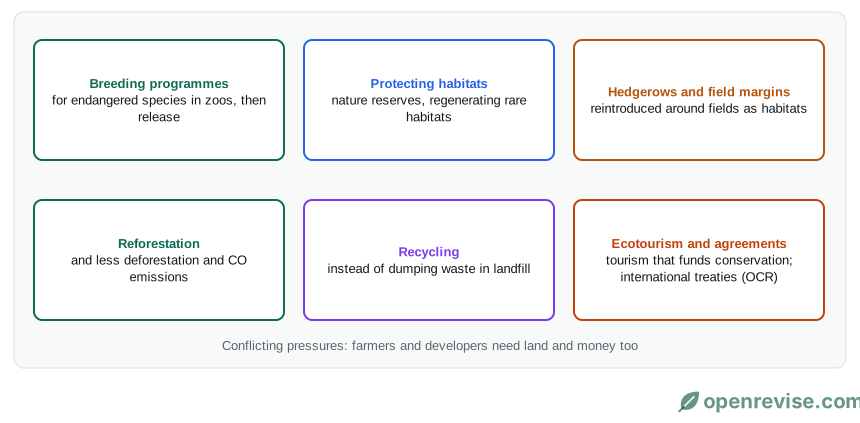
What is being done
- Breeding programmes for endangered species, such as giant pandas, with animals later released into the wild.
- Protection and regeneration of rare habitats, such as nature reserves and restored peat bogs.
- Reintroduction of field margins and hedgerows in farms where only one crop is grown. These give a habitat and food for many species.
- Reduction of deforestation and carbon dioxide emissions by some governments, and reforestation, which provides new habitats and removes carbon dioxide.
- Recycling resources rather than dumping waste in landfill.
- Ecotourism (OCR): tourists pay to see wildlife, which gives local people a reason to protect it.
- International agreements (OCR): for example, controlling trade in endangered species, and limits on fishing.
Conflicting pressures
Maintaining biodiversity often conflicts with other needs:
- farmers need to produce food and make a living, so they want large fields with no hedges
- developers need land for houses and roads
- conservation costs money, and protecting a species in one country may depend on others.
Decisions often need a balance between these pressures.
Test yourself on this lesson
5 exam questions · 12 marks · with mark schemes and model answers
Found a mistake?