7.6 The carbon cycle
How carbon is cycled between the air, plants, animals, decomposers and fossil fuels by photosynthesis, feeding, respiration, decay and combustion, and why decomposers matter.
Why materials are cycled
Key terms
- Carbon cycle: the movement of carbon between the air, living things and the ground.
- Decomposer: a microorganism (bacterium or fungus) that breaks down dead organisms and waste.
- Combustion: burning a fuel, which releases carbon dioxide.
All materials in the living world are recycled to provide the building blocks for future organisms. The carbon in your body was once in carbon dioxide in the air, and before that in other living things.
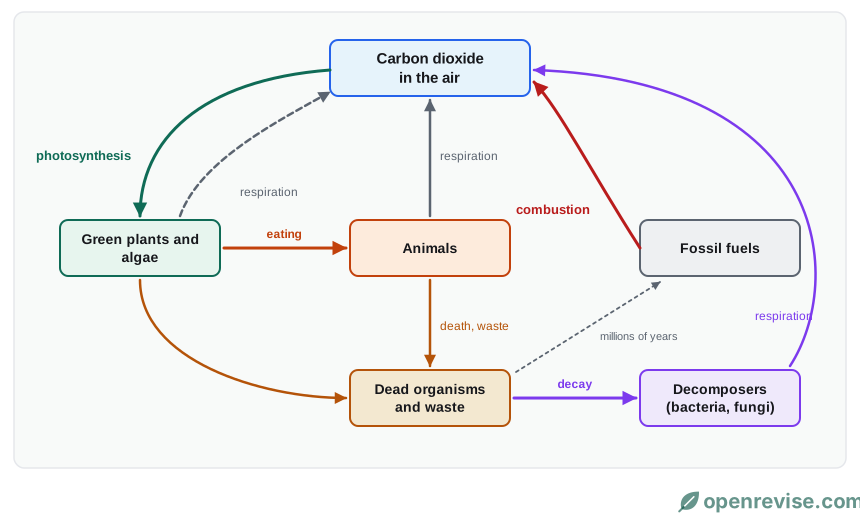
The processes
- Photosynthesis by green plants and algae removes carbon dioxide from the air. The carbon becomes part of glucose, then of carbohydrates, fats and proteins.
- Feeding passes carbon compounds along food chains when animals eat plants and other animals.
- Respiration by plants, animals and decomposers returns carbon dioxide to the air.
- When organisms die, or produce waste such as faeces, decomposers break them down. As they respire, the carbon returns to the air as carbon dioxide, and mineral ions are returned to the soil.
- Some dead organisms do not decay. Over millions of years they form fossil fuels (coal, oil and gas). Combustion of fossil fuels and wood releases the carbon as carbon dioxide.
Keeping the balance
For millions of years, photosynthesis and respiration kept the level of carbon dioxide in the air roughly constant. Burning fossil fuels and cutting down forests (deforestation) add more carbon dioxide than is removed, so the level is rising, which contributes to global warming.
Test yourself on this lesson
5 exam questions · 12 marks · with mark schemes and model answers
Found a mistake?