7.8 The nitrogen cycle
Edexcel: how nitrogen is cycled by nitrogen-fixing, nitrifying and denitrifying bacteria and decomposers, why plants need nitrates, and how farmers use fertilisers and crop rotation with legumes to increase soil nitrates.
Edexcel
2 min read
Why nitrogen matters
Key terms
- Nitrogen-fixing bacteria: bacteria that turn nitrogen gas from the air into nitrogen compounds, such as ammonium, that plants can use.
- Nitrifying bacteria: bacteria that turn ammonium compounds into nitrates.
- Denitrifying bacteria: bacteria that turn nitrates back into nitrogen gas.
- Crop rotation: growing different crops in a field each year, including legumes, to keep the soil fertile.
Living things need nitrogen to make proteins (and DNA). The air is 78% nitrogen, but nitrogen gas is very unreactive, so plants and animals cannot use it directly. Plants take in nitrogen as nitrate ions from the soil, by active transport through their root hair cells.
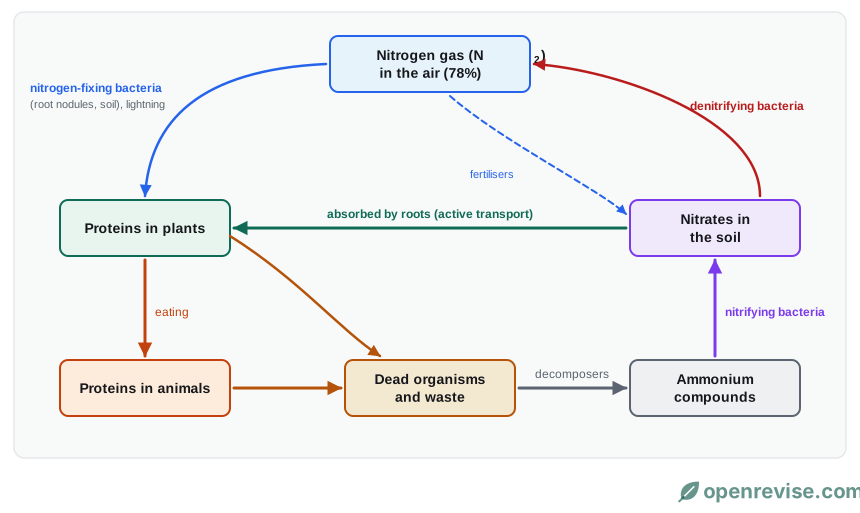
The cycle
- Nitrogen-fixing bacteria, living free in the soil or in root nodules of legumes (peas, beans, clover), turn nitrogen gas into nitrogen compounds. Lightning also fixes some nitrogen.
- Plants absorb nitrates and use them to make proteins. Animals get nitrogen by eating plants.
- When plants and animals die or produce waste (urine, faeces), decomposers break down the proteins and urea into ammonium compounds.
- Nitrifying bacteria turn ammonium compounds into nitrates, which plants can absorb.
- Denitrifying bacteria, in waterlogged soil with little oxygen, turn nitrates back into nitrogen gas.
Farming and soil nitrates
- Fertilisers: farmers add nitrates or ammonium compounds to the soil to replace those taken away when crops are harvested.
- Crop rotation: growing a legume crop every few years adds nitrogen compounds to the soil (from the bacteria in its root nodules). Ploughing the legume back in adds even more when it decays.
- Keeping soil well drained and ploughed adds oxygen, which helps nitrifying bacteria and stops denitrifying bacteria.
Test yourself on this lesson
5 exam questions · 11 marks · with mark schemes and model answers
Found a mistake?