5.11 Adrenaline and thyroxine
How adrenaline prepares the body for fight or flight, and how thyroxine controls metabolic rate through negative feedback involving TRH and TSH.
Adrenaline: fight or flight
Key terms
- Adrenaline: a hormone made by the adrenal glands in times of fear or stress. It prepares the body for "fight or flight".
- Thyroxine: a hormone made by the thyroid gland that stimulates the basal metabolic rate.
- Basal metabolic rate: the rate at which chemical reactions happen in the body at rest.
- TSH: thyroid stimulating hormone, released by the pituitary gland; it makes the thyroid release thyroxine.
- TRH: thyrotropin releasing hormone, released by the hypothalamus; it makes the pituitary release TSH.
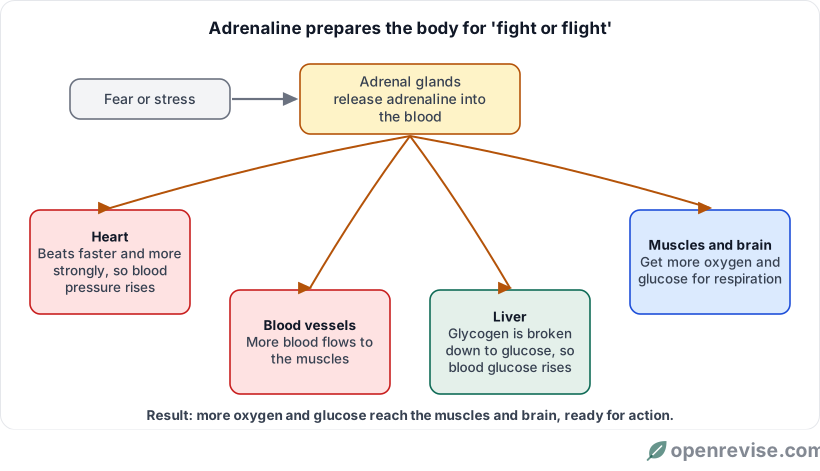
When you are frightened, excited or stressed, your adrenal glands (on top of the kidneys) release adrenaline into the blood. Adrenaline gets the body ready to fight or to run away, by getting more oxygen and glucose to the brain and muscles, ready for fast respiration.
Adrenaline:
- increases heart rate (and the force of each beat), so more blood is pumped to the muscles each minute;
- increases blood pressure;
- increases blood flow to the muscles, by widening the blood vessels that supply them (and narrowing those to the gut and skin);
- raises blood glucose, by stimulating the liver to convert glycogen into glucose;
- also increases breathing rate and widens the pupils.
So the muscles and brain receive more oxygen and glucose, respire faster and release more energy, which helps the body respond quickly to danger. Adrenaline is not controlled by negative feedback: its release is triggered by the nervous system when you sense danger.
Thyroxine and metabolic rate
The thyroid gland in the neck makes thyroxine. Thyroxine:
- stimulates the basal metabolic rate: how fast cells carry out reactions such as respiration and protein synthesis;
- plays an important role in growth and development, for example of the brain and bones in children.
Thyroxine levels must stay fairly constant, so they are controlled by negative feedback.
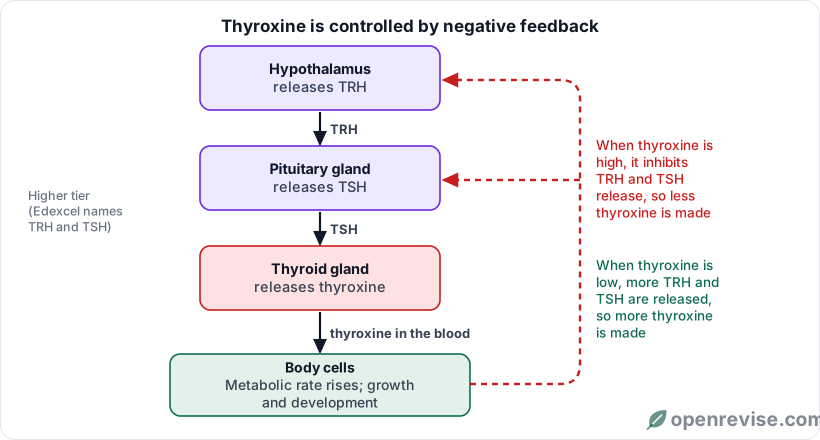
- If the level of thyroxine in the blood is low, the hypothalamus releases TRH.
- TRH makes the pituitary gland release TSH (thyroid stimulating hormone).
- TSH travels in the blood to the thyroid, which releases more thyroxine.
- When the thyroxine level returns to normal, thyroxine inhibits the release of TRH from the hypothalamus and TSH from the pituitary.
- So less thyroxine is made, and the level does not rise too high.
If the level drops again, the inhibition is removed, more TRH and TSH are released, and the thyroid makes more thyroxine. This keeps the level close to normal.
| Feature | Adrenaline | Thyroxine |
|---|---|---|
| Gland | Adrenal glands | Thyroid gland |
| Released when | Fear, stress, excitement | Thyroxine level falls (via TRH and TSH) |
| Main effect | Prepares body for fight or flight | Controls basal metabolic rate, growth and development |
| Speed and duration | Fast, short-lived | Slow, long-lasting |
| Controlled by negative feedback? | No | Yes |
Test yourself on this lesson
6 exam questions · 16 marks · with mark schemes and model answers
Found a mistake?