3.3 Bacterial, fungal and protist diseases
AQA: salmonella and gonorrhoea (bacteria), rose black spot (a fungus) and malaria (a protist carried by mosquitoes): symptoms, how each spreads and how the spread is controlled.
AQA
2 min read
Four diseases to know
Key terms
- Salmonella: bacteria that cause food poisoning.
- Gonorrhoea: a sexually transmitted disease caused by bacteria.
- Rose black spot: a fungal disease of roses that causes black spots on the leaves.
- Malaria: a disease caused by a protist, spread by mosquitoes.
- Fungicide: a chemical that kills fungi.
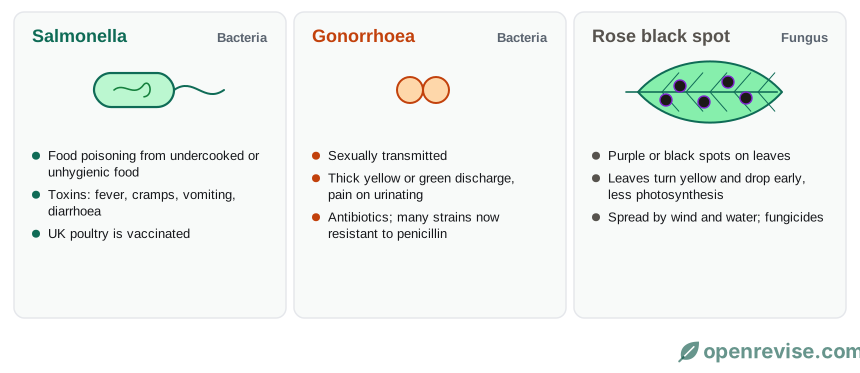
Salmonella (bacteria)
- Spread: in food, for example undercooked chicken or eggs, or food prepared in unhygienic conditions.
- Symptoms: fever, abdominal cramps, vomiting and diarrhoea, caused by the toxins the bacteria release.
- Control: in the UK, poultry are vaccinated against Salmonella. Cooking food thoroughly and good kitchen hygiene, such as washing hands and keeping raw meat separate, also stop it spreading.
Gonorrhoea (bacteria)
- Spread: by sexual contact.
- Symptoms: a thick yellow or green discharge from the vagina or penis, and pain when urinating.
- Control: it used to be treated with the antibiotic penicillin, but many strains are now resistant to it, so other antibiotics are used. Using a condom and tracing and treating sexual partners stop the spread.
Rose black spot (fungus)
- Spread: spores are carried in the environment by water and wind.
- Symptoms: purple or black spots on the leaves, which often turn yellow and drop early.
- Fewer healthy leaves mean less photosynthesis, so the plant grows less well.
- Control: spraying with fungicides, and removing and destroying the affected leaves.
Malaria (protist)
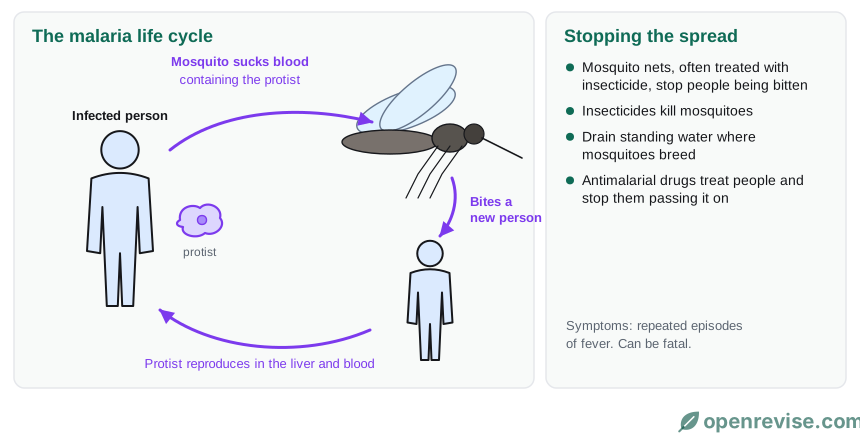
- The malaria protist has a life cycle that includes mosquitoes, which are vectors.
- Symptoms: recurrent (repeated) episodes of fever. Malaria can be fatal.
- Control: stop the vectors breeding, for example by draining standing water and using insecticides, and use mosquito nets to avoid being bitten.
Test yourself on this lesson
6 exam questions · 13 marks · with mark schemes and model answers
Found a mistake?