3.2 Viral diseases: measles, HIV and TMV
AQA: the three viral diseases to know. Measles (droplets, fever and rash), HIV (body fluids, damages the immune system, leading to AIDS) and tobacco mosaic virus (mosaic leaves that reduce photosynthesis), with how each spreads and is controlled.
AQA
2 min read
Viruses and disease
Viruses reproduce inside cells and damage them. AQA asks about two human viral diseases and one plant viral disease.
Key terms
- Measles: a viral disease spread by droplets, causing fever and a red skin rash.
- HIV: human immunodeficiency virus, which attacks the body's immune cells.
- AIDS: the late stage of HIV infection, when the immune system is so damaged that it cannot fight other infections or cancers.
- Tobacco mosaic virus (TMV): a plant virus that causes a mosaic pattern of discoloured patches on leaves.
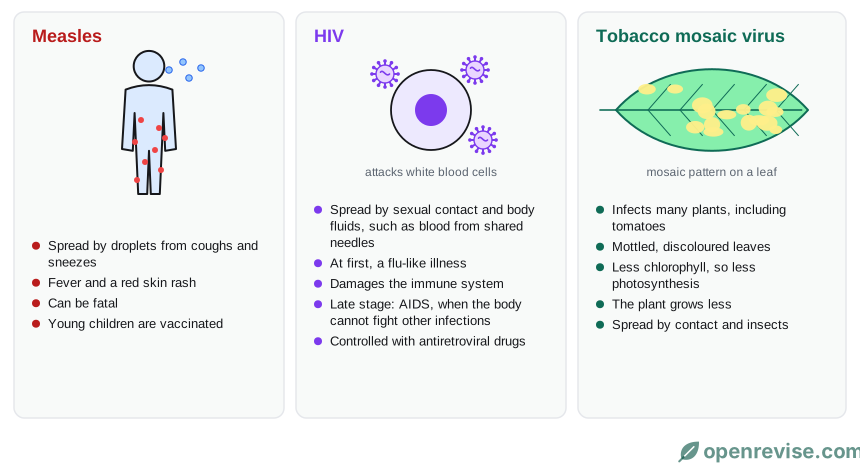
Measles
- Spread: breathing in droplets from the coughs and sneezes of an infected person.
- Symptoms: a fever and a red skin rash.
- Measles is a serious disease that can be fatal if there are complications, such as damage to the brain or lungs.
- Control: most young children are vaccinated against measles. There is no treatment, so infected people are isolated.
HIV
- Spread: by sexual contact or the exchange of body fluids, such as blood when drug users share needles, or from mother to baby.
- Symptoms: at first, a flu-like illness. The virus then attacks the body's immune cells (white blood cells).
- If it is not treated, the immune system becomes so badly damaged that the body can no longer deal with other infections or cancers. This late stage is called AIDS.
- Control: antiretroviral drugs stop the virus reproducing, so people with HIV can live long, healthy lives. Using condoms and not sharing needles reduce spread.
Tobacco mosaic virus (TMV)
- TMV infects many species of plant, including tomatoes and tobacco.
- Symptoms: a distinctive mosaic pattern of yellow and light green discoloured patches on the leaves.
- The discoloured parts have less chlorophyll, so the plant carries out less photosynthesis, which reduces its growth.
- Spread: by contact between plants, on the hands or tools of people, and by insects.
- Control: there is no treatment, so infected plants are removed and destroyed, and growers use TMV-resistant varieties.
Test yourself on this lesson
6 exam questions · 13 marks · with mark schemes and model answers
Found a mistake?