3.11 Antibiotics and painkillers
How antibiotics such as penicillin kill bacteria but not viruses, why painkillers only treat symptoms, how antibiotic resistance develops and how to slow it, and how antivirals and antiseptics are used.
AQA
Edexcel
OCR
2 min read
Medicines that fight disease
Key terms
- Antibiotic: a medicine, such as penicillin, that kills bacteria (or stops them growing) inside the body.
- Painkiller: a medicine, such as aspirin or paracetamol, that relieves symptoms but does not kill pathogens.
- Antiseptic: a chemical that kills microorganisms outside the body, for example on skin or surfaces.
- Antibiotic resistance: when bacteria are no longer killed by an antibiotic.
Antibiotics
- Antibiotics kill bacteria inside the body. Different bacteria need different antibiotics, so doctors must use the right one for the infection.
- Since antibiotics were introduced in the 1940s, deaths from bacterial diseases have fallen hugely.
- Antibiotics do not work on viruses. Viruses live and reproduce inside the body's cells, so it is very hard to make drugs that kill them without damaging body tissue.
Painkillers and other medicines
| Medicine | What it does | Example |
|---|---|---|
| Antibiotic | Kills bacteria inside the body | Penicillin |
| Antiviral | Stops viruses reproducing (does not cure every viral disease) | Drugs for HIV and flu |
| Painkiller | Treats symptoms such as pain and fever; does not kill the pathogen | Aspirin, paracetamol |
| Antiseptic | Kills microorganisms on skin and surfaces, outside the body | Alcohol hand gel, iodine |
For a cold or flu, painkillers help you feel better while your immune system destroys the virus.
Antibiotic resistance
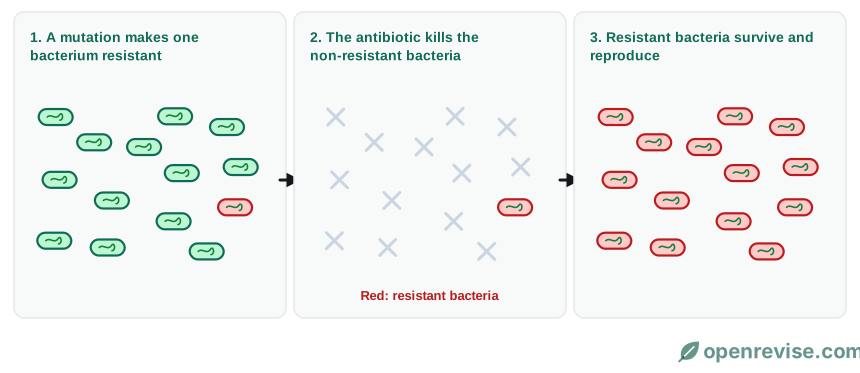
- Bacteria reproduce very quickly. Occasionally a random mutation makes one bacterium resistant to an antibiotic.
- When the antibiotic is used, the non-resistant bacteria are killed, but the resistant ones survive.
- The resistant bacteria reproduce, so soon most of the population is resistant. This is natural selection.
MRSA is a strain of bacteria resistant to many antibiotics. To slow the spread of resistance:
- doctors should not prescribe antibiotics for viral infections or mild infections
- patients should finish the whole course, so all the bacteria are killed and resistant ones are not left to multiply
- the use of antibiotics in farming should be restricted.
Test yourself on this lesson
6 exam questions · 13 marks · with mark schemes and model answers
Found a mistake?