3.10 Vaccination
How a vaccine of dead or inactive pathogen makes lymphocytes produce antibodies and memory cells, why this gives immunity, how herd immunity protects people who are not vaccinated, and the advantages and disadvantages of vaccination.
AQA
Edexcel
OCR
2 min read
What a vaccine is
Key terms
- Vaccine: a small amount of a dead or inactive form of a pathogen (or just its antigens), given to make the body immune.
- Immunity: the ability to destroy a pathogen quickly, before it causes illness, because memory cells are present.
- Herd immunity: when so many people in a population are immune that a pathogen cannot spread, protecting those who are not immune.
How vaccination works
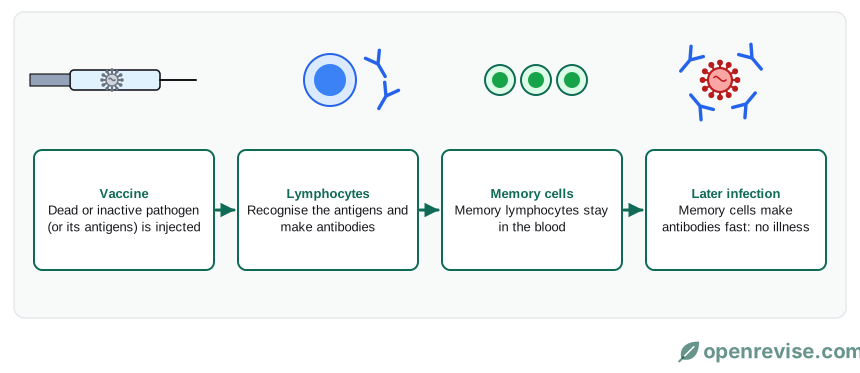
- A small quantity of a dead or inactive form of the pathogen is put into the body, usually by injection. It cannot cause the disease, but it still carries the pathogen's antigens.
- The antigens stimulate lymphocytes to make antibodies against them.
- Memory lymphocytes are also made, and stay in the blood.
- If the real pathogen enters the body later, the memory cells recognise its antigens and the lymphocytes make the right antibodies quickly and in large amounts. The pathogen is destroyed before the person becomes ill.
Some vaccines need a booster dose later to keep the number of memory cells high.
Herd immunity
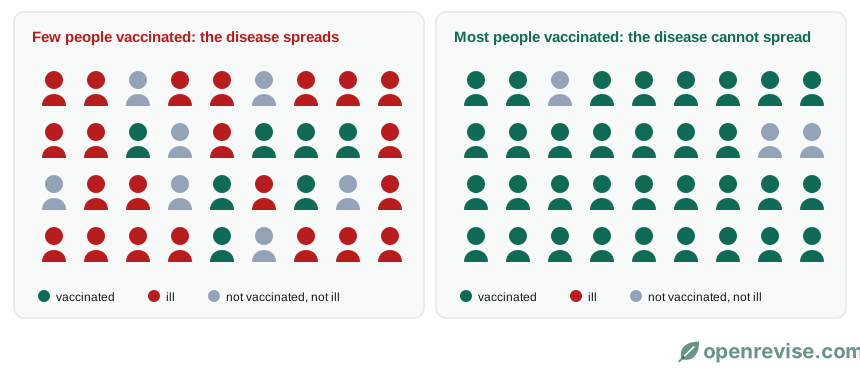
If a large proportion of a population is vaccinated, the pathogen has very few people it can infect, so it cannot spread. This protects people who cannot be vaccinated, such as young babies and people with weak immune systems.
Advantages and disadvantages
| Advantages | Disadvantages |
|---|---|
| Has controlled many serious diseases, such as polio and measles, and wiped out smallpox | Vaccines do not always give immunity |
| Prevents epidemics through herd immunity | Some people have side effects, such as swelling or a fever; serious reactions are very rare |
| Cheaper to prevent a disease than to treat it | Some pathogens change their antigens quickly (such as flu), so a new vaccine is needed every year |
Test yourself on this lesson
6 exam questions · 12 marks · with mark schemes and model answers
Found a mistake?