3.8 Non-specific defences
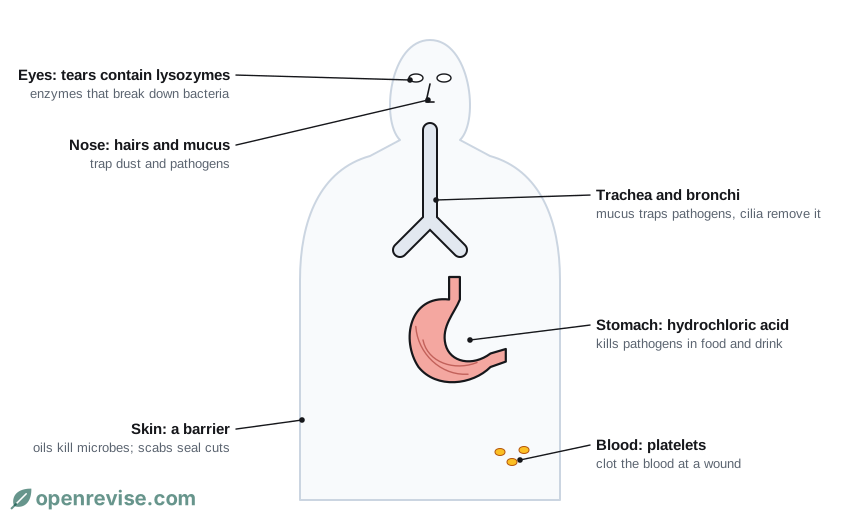
How the body stops pathogens getting in: the skin, hairs and mucus in the nose, mucus and cilia in the trachea and bronchi, hydrochloric acid in the stomach, lysozymes in tears and blood clotting.
AQA
Edexcel
OCR
2 min read
Stopping pathogens getting in
The body's first line of defence is non-specific: it works against all pathogens in the same way, by stopping them entering the body or killing them as they do.
Key terms
- Non-specific defence: a defence that works against any pathogen, not one particular type.
- Mucus: a sticky liquid that traps pathogens and dust.
- Cilia: tiny hair-like structures on cells lining the airways that beat to move mucus.
- Lysozyme: an enzyme in tears (and other fluids) that breaks down the cell walls of bacteria.
Physical barriers
- Skin: a tough outer layer that pathogens cannot easily get through. It also makes oily, antimicrobial secretions, and is covered with harmless bacteria that compete with pathogens. If the skin is cut, platelets help the blood clot and a scab forms to seal the wound.
- Nose: hairs and mucus trap particles that could contain pathogens.
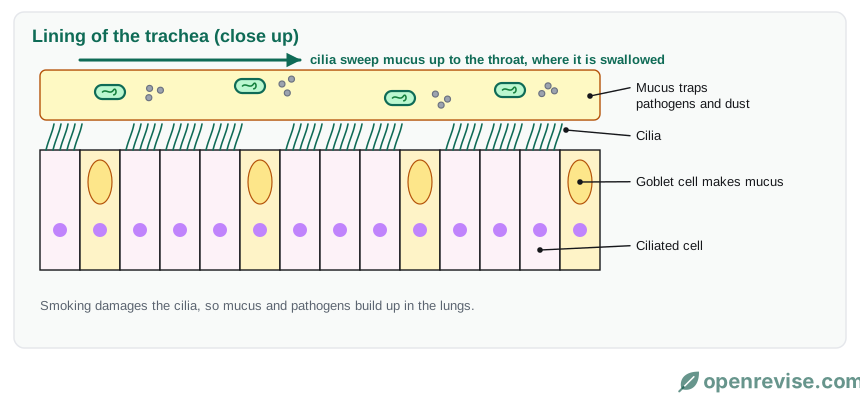
- Trachea and bronchi: cells lining the airways make mucus, which traps pathogens. Other cells have cilia that beat to sweep the mucus up to the back of the throat, where it is swallowed.
Chemical defences
- Stomach: produces hydrochloric acid, which kills most pathogens in the food we eat and the mucus we swallow.
- Tears: contain lysozymes, enzymes that break down bacterial cell walls, so the bacteria burst. Lysozymes are also in saliva and mucus.
If pathogens get past these defences, the immune system takes over.
Test yourself on this lesson
6 exam questions · 11 marks · with mark schemes and model answers
Found a mistake?