3.9 White blood cells and the immune response
How white blood cells defend the body: phagocytosis, antibodies that fit the antigens on a pathogen, antitoxins, memory lymphocytes, and why the secondary immune response is faster and larger than the primary response.
The immune system
If a pathogen gets past the body's barriers, the immune system destroys it. The key cells are white blood cells.
Key terms
- Antigen: a molecule, such as a protein, on the surface of a pathogen that the immune system recognises as foreign.
- Antibody: a protein made by lymphocytes that binds to a specific antigen.
- Phagocytosis: when a white blood cell engulfs and digests a pathogen.
- Antitoxin: a substance made by lymphocytes that binds to and neutralises a toxin.
- Memory lymphocyte: a long-lived white blood cell that remembers an antigen, giving immunity.
Three ways white blood cells work
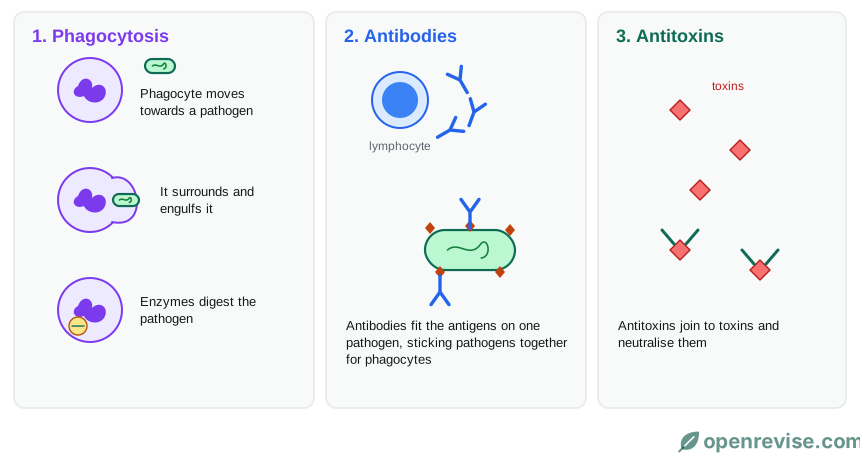
- Phagocytosis: phagocytes are attracted to pathogens. They engulf (surround and take in) the pathogen and digest it with enzymes. This is non-specific: phagocytes attack any pathogen.
- Producing antibodies: every pathogen has antigens on its surface. Lymphocytes recognise the antigens as foreign and make antibodies with a shape that fits them. Antibodies are specific: each one only binds to one type of antigen. They stick pathogens together and mark them, so phagocytes can find and destroy them.
- Producing antitoxins: some lymphocytes make antitoxins, which bind to the toxins made by bacteria and neutralise them.
Immunity and memory cells
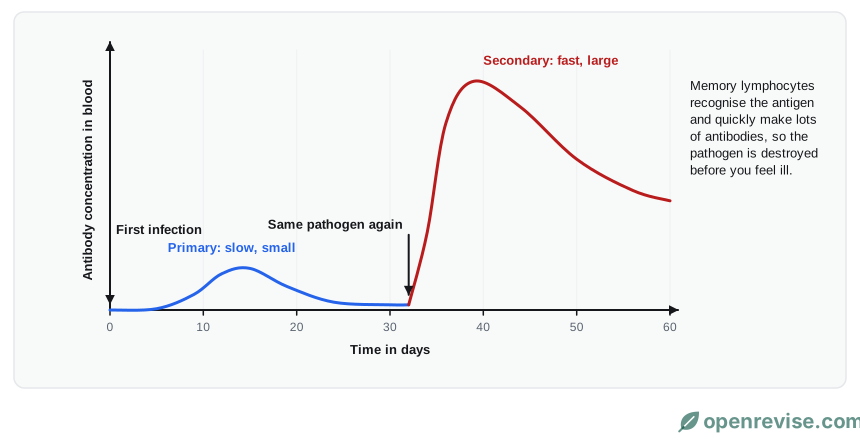
The first time you meet a pathogen, it takes time for the right lymphocytes to be found and to multiply. Antibodies are made slowly, so you become ill: this is the primary response. Some of the lymphocytes become memory lymphocytes, which stay in the blood for years.
If the same pathogen gets in again, the memory lymphocytes recognise its antigens straight away. They multiply quickly and make large amounts of antibodies very fast: this is the secondary response. The pathogen is destroyed before you feel ill, so you are immune.
Test yourself on this lesson
6 exam questions · 12 marks · with mark schemes and model answers
Found a mistake?