3.15 Detecting and identifying plant diseases
The signs that a plant is diseased (stunted growth, spots, decay, growths, malformed parts, discolouration, pests), mineral deficiencies such as nitrate and magnesium, and how plant diseases are identified in the field and in the laboratory.
Separate only
AQA
Edexcel
OCR
2 min read
What can harm a plant
Plants can be infected by viruses (such as TMV), bacteria (such as Agrobacterium) and fungi (such as rose black spot). They can also be damaged by pests, such as aphids, which suck sap from the phloem and can carry viruses, and by a lack of mineral ions in the soil.
Key terms
- Symptom: a sign that something is wrong, such as spots or yellow leaves.
- Aphid: a small insect pest that feeds on phloem sap and can spread plant viruses.
- Chlorosis: yellowing of leaves because they cannot make enough chlorophyll.
Signs of disease
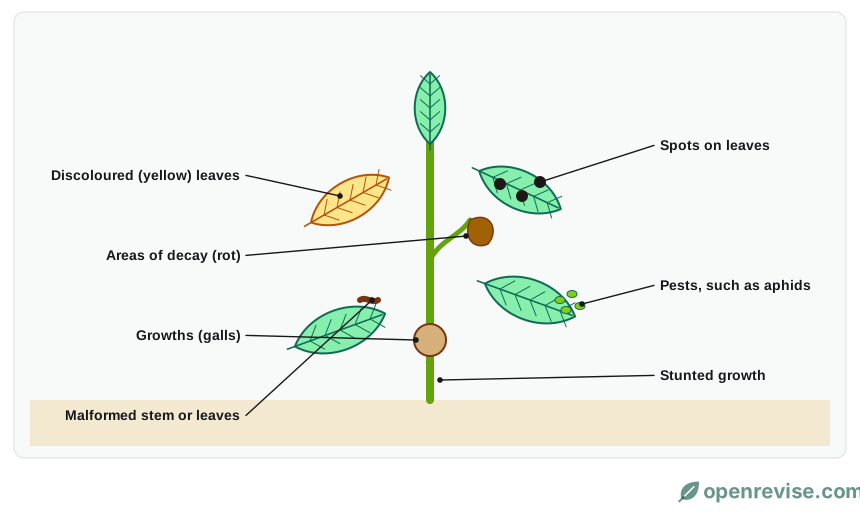
- stunted growth
- spots on leaves
- areas of decay (rot)
- growths, such as galls
- malformed stems or leaves
- discolouration, such as yellow leaves
- the presence of visible pests.
Mineral ion deficiencies
Plants need mineral ions, taken up from the soil by active transport, to make many substances.
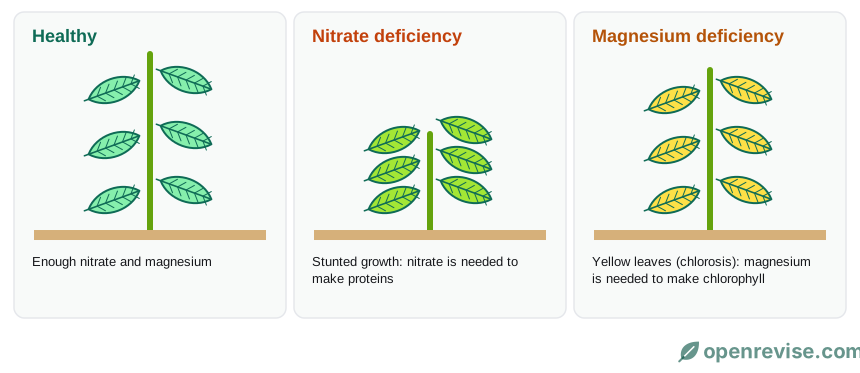
| Mineral ion | Needed for | Symptom when lacking |
|---|---|---|
| Nitrate | Making proteins, so the plant can grow | Stunted growth |
| Magnesium | Making chlorophyll | Chlorosis: yellow leaves, less photosynthesis |
Identifying the disease
- In the field (garden or farm): look closely at the symptoms and where they appear, and compare them with a gardening manual or website. See whether the pattern of affected plants suggests a cause: a disease spreading from plant to plant, or a whole area affected, which suggests a problem with the soil.
- In the laboratory: send the plant to a lab, where scientists can grow the pathogen and look at it under a microscope, or test its DNA.
- Testing kits: kits containing monoclonal antibodies that bind to a particular pathogen's antigens can identify it quickly, even in the field.
Test yourself on this lesson
5 exam questions · 12 marks · with mark schemes and model answers
Found a mistake?