3.16 Plant defences
How plants defend themselves against pathogens and herbivores: physical barriers (cellulose cell walls, waxy cuticle, bark), chemical defences (antibacterial chemicals and poisons) and mechanical adaptations (thorns, hairs, drooping leaves, mimicry), and plant chemicals used as medicines.
Why plants need defences
Plants cannot move away from pathogens or from animals that eat them. Instead, they have physical, chemical and mechanical defences.
Key terms
- Physical defence: a barrier that stops pathogens getting in, such as the cell wall or cuticle.
- Chemical defence: a substance made by the plant that kills pathogens or deters animals.
- Mechanical defence: a structure or response that stops animals touching or eating the plant.
- Herbivore: an animal that eats plants.
Physical defences
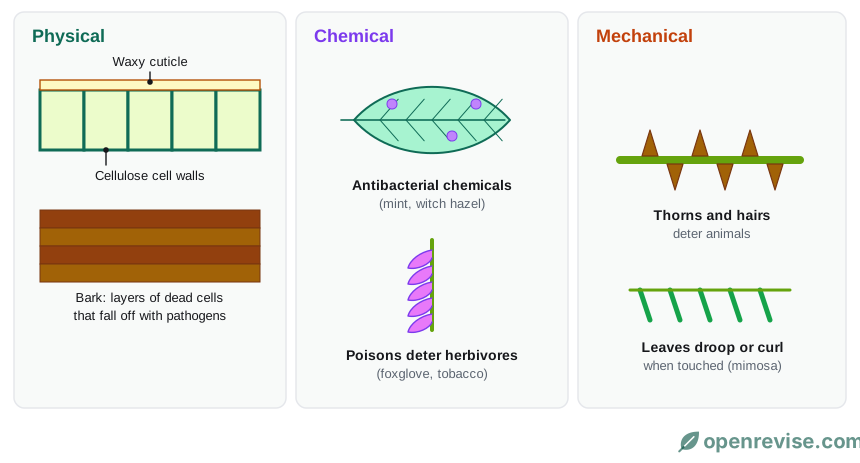
- Cellulose cell walls are strong and hard for pathogens to break through.
- A tough waxy cuticle on the leaves stops pathogens getting in.
- Bark on trees is made of layers of dead cells. It acts as a barrier, and as it falls off, any pathogens on it fall off too.
Chemical defences
- Some plants make antibacterial chemicals that kill bacteria, such as those in mint and witch hazel.
- Some make poisons that deter herbivores, such as foxgloves, tobacco and deadly nightshade.
Mechanical defences
- Thorns and hairs stop animals touching or eating the plant.
- Some leaves droop or curl when they are touched, such as the sensitive plant Mimosa. This can knock insects off and makes the plant look less appetising.
- Mimicry tricks animals: for example, some plants have yellow spots that look like butterfly eggs, so butterflies do not lay their eggs there.
Plant chemicals as medicines
Many of the chemicals plants make to defend themselves are useful to us. Aspirin was developed from a chemical in willow bark, and digitalis, a heart drug, comes from foxgloves. Scientists still search for new medicines among the defence chemicals of plants, for example in rainforests.
Test yourself on this lesson
6 exam questions · 11 marks · with mark schemes and model answers
Found a mistake?