4.3 Extracting metals with carbon
Why unreactive metals are found as elements, how metals less reactive than carbon are extracted by reduction with carbon, why more reactive metals are extracted by electrolysis, and how cost affects the method used.
Ores
Key terms
- Ore: a rock that contains enough of a metal or metal compound to make it worth extracting.
- Native metal: a metal found in the Earth as the uncombined element.
Most metals are found in the Earth's crust as compounds, often oxides, because they have reacted with oxygen and other elements. Very unreactive metals such as gold are found as the element itself, so they only need to be separated from the rock.
Choosing the method
The method depends on the metal's position in the reactivity series compared with carbon.
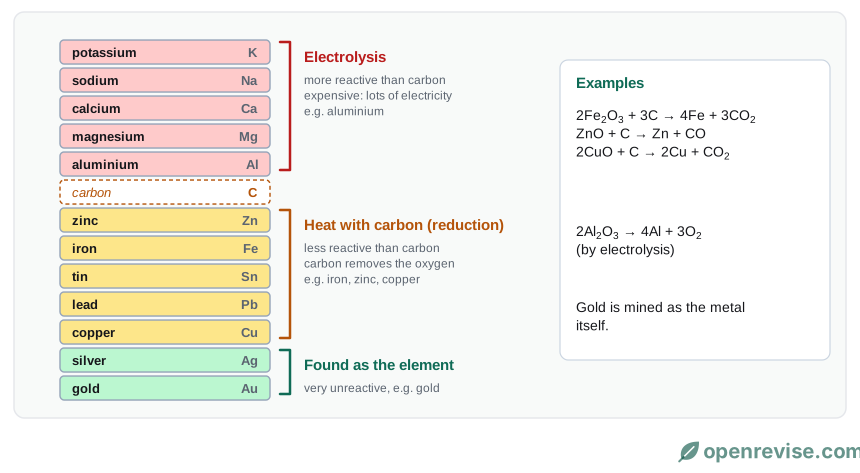
- Metals less reactive than carbon (such as zinc, iron, tin, lead and copper) are extracted by heating the oxide with carbon. Carbon is more reactive, so it takes the oxygen from the metal oxide. The metal oxide is reduced.
- Metals more reactive than carbon (such as aluminium and magnesium) cannot be reduced by carbon. They are extracted by electrolysis of the molten compound.
Reduction with carbon
- 2Fe2O3 + 3C → 4Fe + 3CO2
- 2ZnO + C → 2Zn + CO2
- 2CuO + C → 2Cu + CO2
In each case the metal oxide loses oxygen (reduction) and carbon gains oxygen (oxidation).
In a blast furnace, iron oxide is mostly reduced by carbon monoxide made from coke: Fe2O3 + 3CO → 2Fe + 3CO2.
Cost
| Method | Used for | Cost |
|---|---|---|
| Heating with carbon | metals below carbon, e.g. iron | cheaper: carbon (coke) is cheap |
| Electrolysis | metals above carbon, e.g. aluminium | expensive: needs large amounts of electricity and heat to melt the ore |
So electrolysis is only used when carbon cannot do the job.
Test yourself on this lesson
5 exam questions · 9 marks · with mark schemes and model answers
Found a mistake?