10.3 Waste water treatment
How sewage and agricultural and industrial waste water are treated by screening, sedimentation, anaerobic digestion of sludge and aerobic treatment of effluent, and how the ease of obtaining potable water depends on its source.
AQA
OCR
1 min read
Why treat waste water?
Key terms
- Effluent: the liquid that is left at the top after sedimentation.
- Sludge: the solid material that settles at the bottom of a sedimentation tank.
Urban lifestyles and industry produce large amounts of waste water. Sewage and agricultural waste water must have organic matter and harmful microbes removed before being put back into the environment. Industrial waste water may also need harmful chemicals removed.
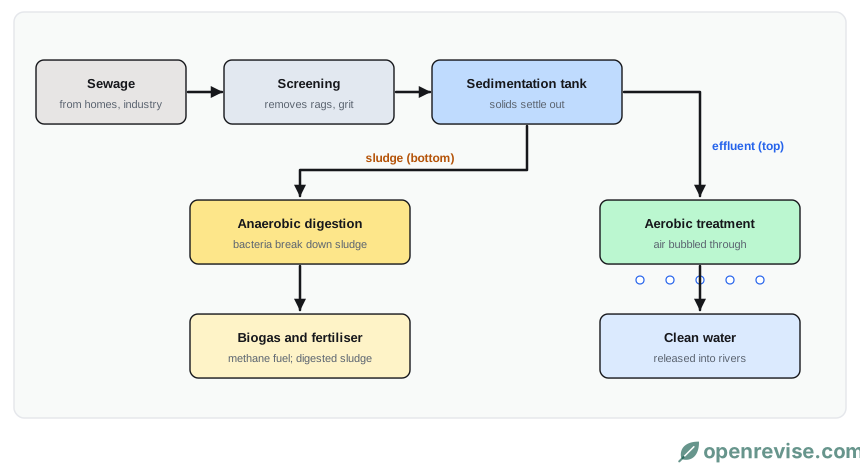
Stages of sewage treatment
- Screening and grit removal: removes large objects (such as rags and plastics) and grit.
- Sedimentation: the sewage is left in large tanks. Heavy solids sink to form sludge; the lighter liquid on top is the effluent.
- Anaerobic digestion of sludge: bacteria break down the organic matter without oxygen. This produces biogas (mainly methane), which can be burned as a fuel, and digested sludge, which can be used as a fertiliser.
- Aerobic biological treatment of effluent: air is bubbled through the effluent so that aerobic bacteria break down any remaining organic matter and kill harmful microbes. The clean water can then be released into rivers.
Comparing sources of potable water
| Source | Processes needed | Comment |
|---|---|---|
| groundwater | filtration and sterilisation | fewest processes; often the easiest |
| waste water | screening, sedimentation, digestion, aerobic treatment, then sterilisation | more processes and more energy |
| salt water | desalination | uses the most energy |
In some places, treated waste water is used to top up supplies, but many people are uneasy about drinking recycled sewage.
Test yourself on this lesson
5 exam questions · 9 marks · with mark schemes and model answers
Found a mistake?