Flashcards · Biology · Transport in Cells
Diffusion
-
What is diffusion?
The spreading out of particles of a gas, or of a substance in solution, resulting in a net movement from a higher concentration to a lower concentration.
-
What does "net movement" mean?
The overall movement in one direction. Particles move both ways, but more move one way.
-
Does diffusion need energy from the cell?
No. The particles move on their own.
-
What is a concentration gradient?
The difference in concentration between two places.
-
Which way do particles move in diffusion?
From a higher concentration to a lower concentration, down the concentration gradient.
-
Name two gases that move by diffusion in gas exchange.
Oxygen and carbon dioxide.
-
Which waste product diffuses from cells into the blood plasma?
Urea.
-
What happens to urea once it is in the blood plasma?
The kidneys remove it so it can be excreted.
-
Which way does oxygen diffuse into a respiring cell, and why?
Into the cell, because oxygen is used up there, so its concentration is lower inside.
-
Why does carbon dioxide diffuse out of respiring cells?
Respiration makes it, so its concentration is higher inside the cell.
-
Name the three factors that affect the rate of diffusion.
The concentration gradient, the temperature, and the surface area of the membrane.
-
What happens to the rate of diffusion if the concentration gradient gets bigger?
It increases.
-
Why does diffusion speed up as temperature rises?
The particles have more energy and move faster.
-
Why does a larger surface area speed up diffusion?
More particles can cross the membrane at the same time.
-
When does diffusion stop?
Never for the particles themselves, but there is no net movement once they are evenly spread.
-
How do you calculate a rate?
Divide the amount that changed by the time it took.
-
A cell takes in 30 units in 6 minutes. What is the rate?
5 units per minute.
-
What keeps the concentration gradient steep in the alveoli?
Breathing brings fresh air in, and flowing blood carries oxygen away.
-
What is the usual mistake about diffusion?
Saying particles move only from high to low. They move both ways, but the net movement is from high to low.
-
Which process moves particles from low to high concentration?
Active transport, which needs energy.
-
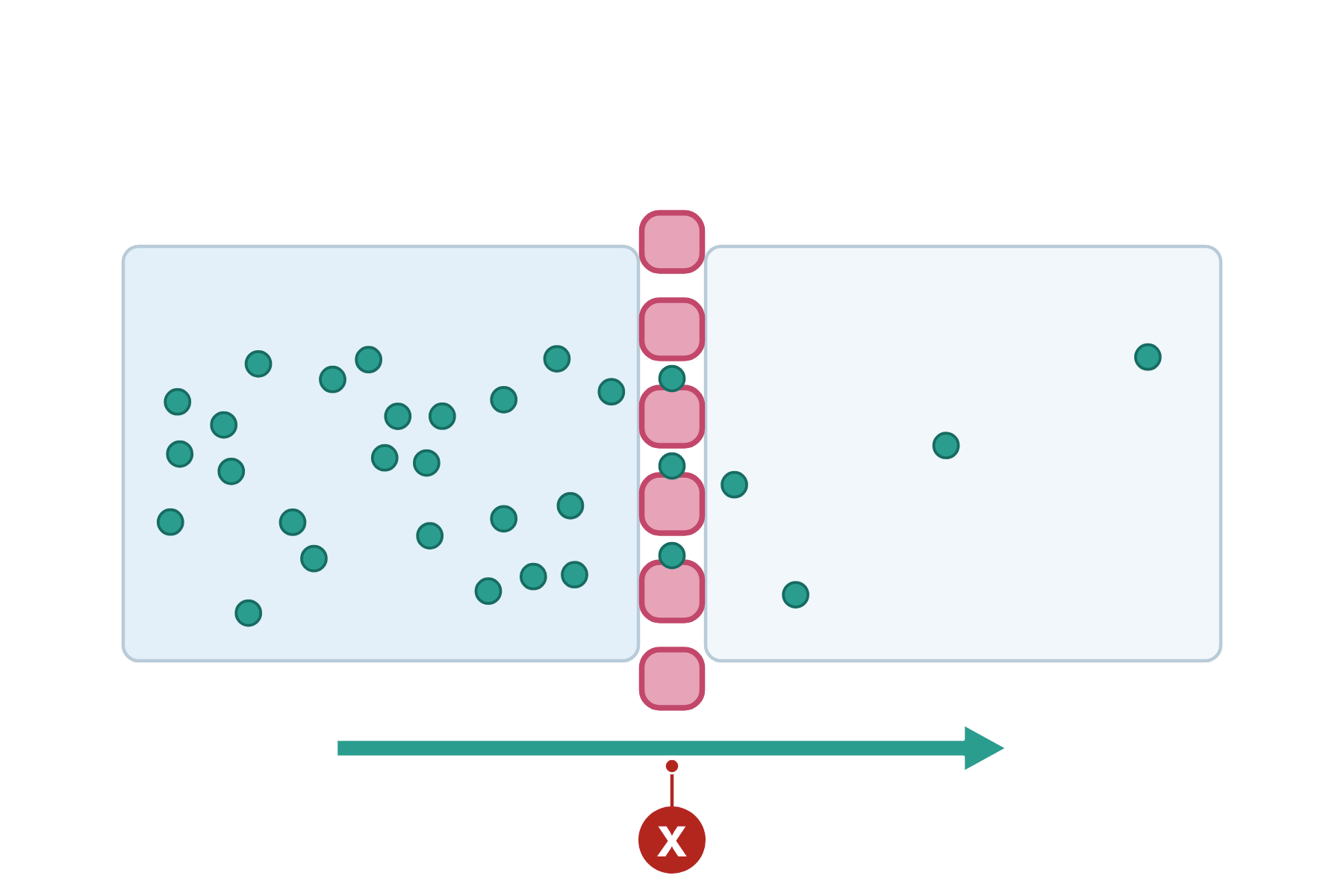 What does the arrow marked X show?
 The net movement of particles across the membrane, from the higher concentration to the lower concentration. This is diffusion.
-
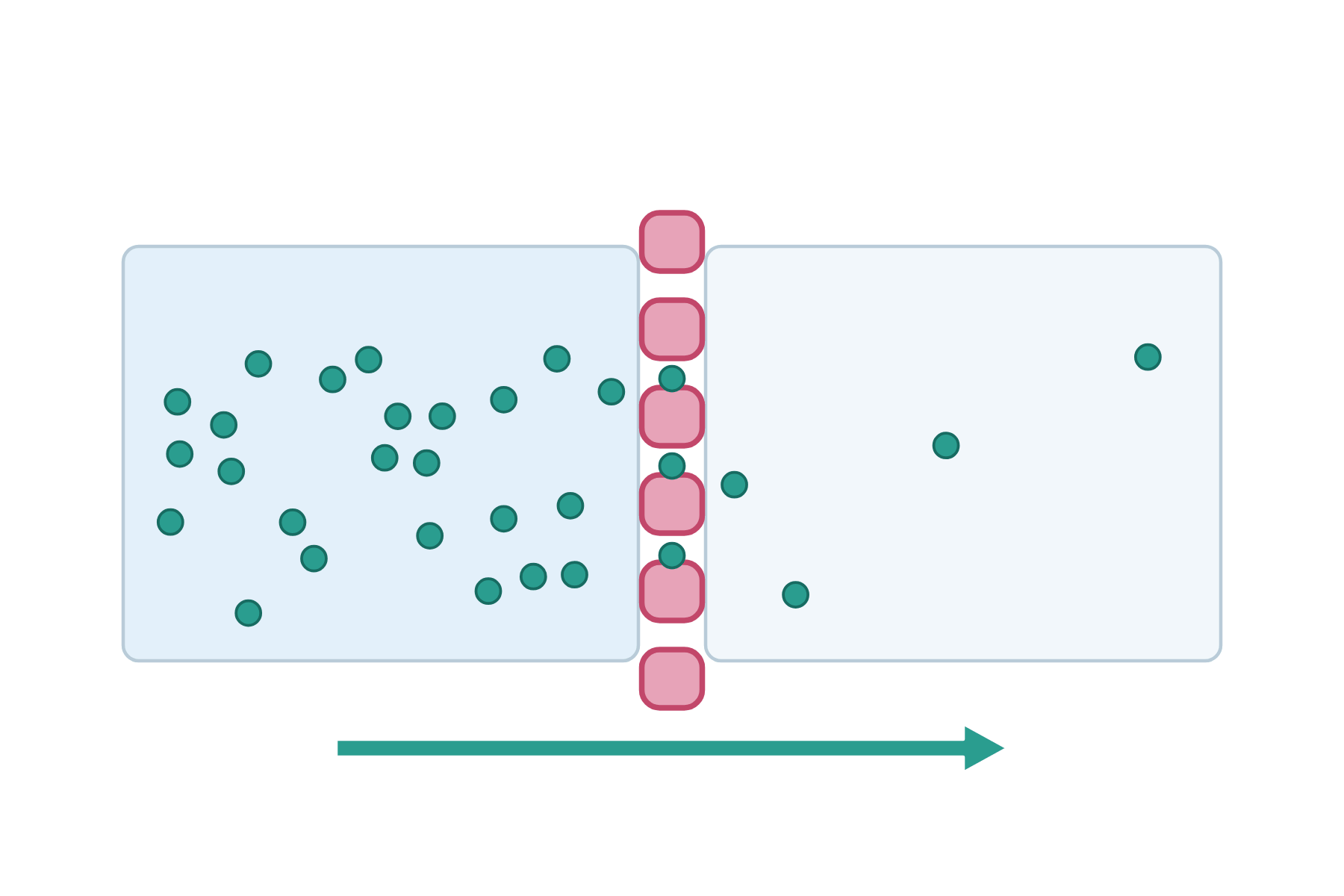 Label this diagram of diffusion across a cell membrane.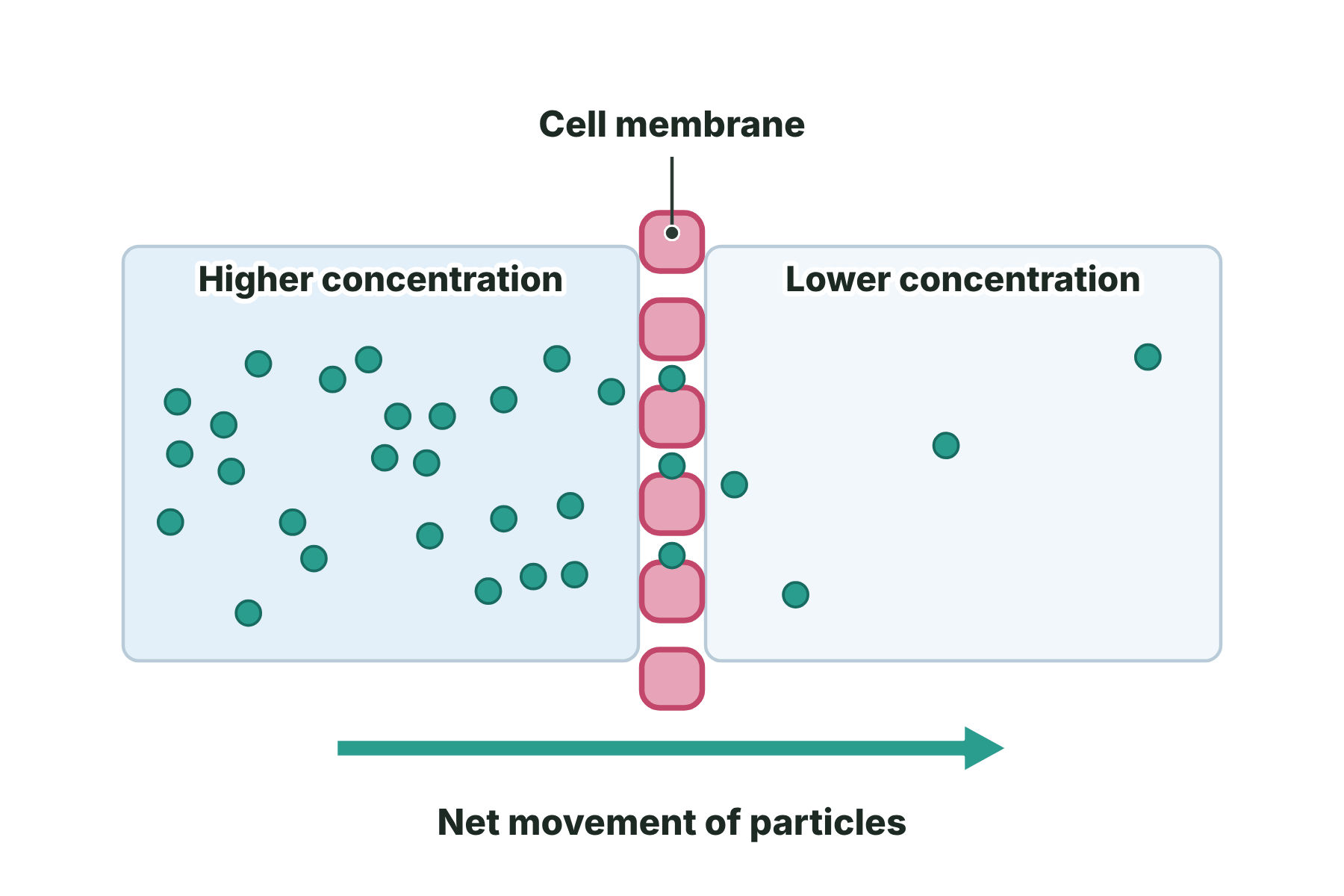
-
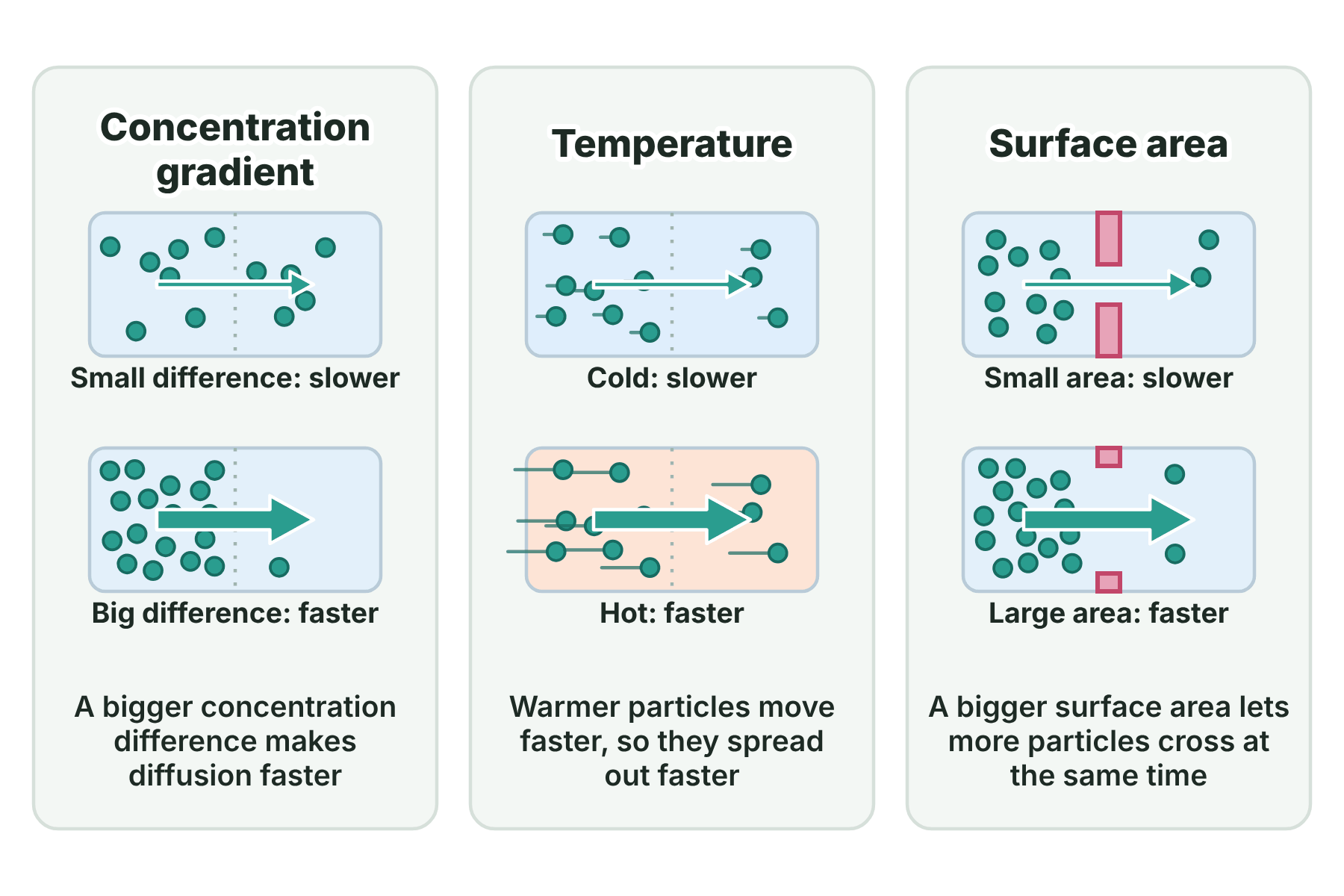 Which of these three changes make diffusion faster?
 All three: a bigger concentration gradient, a higher temperature and a larger surface area of membrane.