7.8 Core practical: combustion of alcohols
Edexcel core practical: burning ethanol, propanol, butanol and pentanol in spirit burners to heat water, measuring the temperature rise and mass of fuel burned, and comparing the energy released per gram.
The investigation
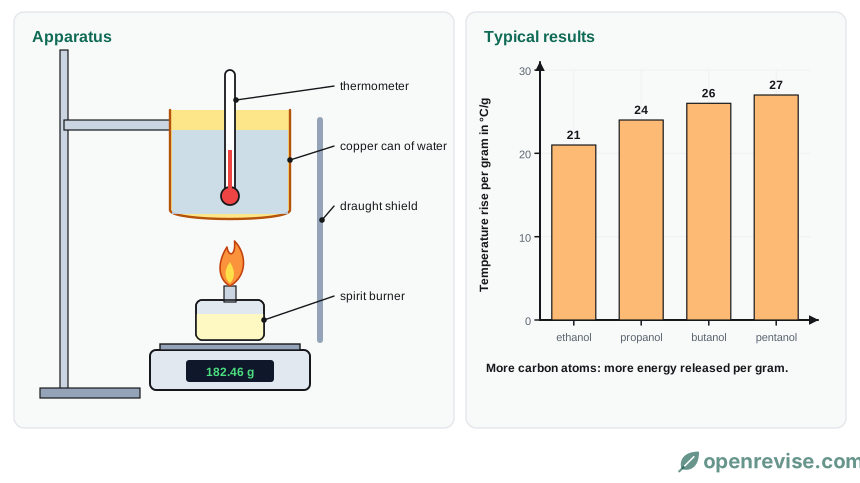
This is Edexcel core practical 9.28C: investigate the temperature rise produced in a known mass of water by the combustion of the alcohols ethanol, propanol, butanol and pentanol.
Method
- Measure 100 cm3 of water into a copper can and clamp it above the spirit burner.
- Record the starting temperature of the water.
- Weigh the spirit burner (with its cap) containing the alcohol.
- Light the burner and heat the water, stirring, until the temperature has risen by about 20 °C.
- Put out the flame with the cap and reweigh the burner straight away.
- Repeat for each alcohol, using fresh water each time.
- Calculate the temperature rise per gram of alcohol burned: temperature rise ÷ mass of alcohol used.
Variables
- Independent: the alcohol used
- Dependent: temperature rise per gram of fuel
- Control: volume of water, distance from flame to can, size of wick, using the same can
Results
The more carbon atoms in the alcohol, the more energy is released per gram, so the bigger the temperature rise per gram. Each extra CH2 group adds more bonds to break and make.
Sources of error and improvements
| Problem | Improvement |
|---|---|
| energy lost heating the air and the can | use a draught shield and a lid; keep the can close to the flame |
| incomplete combustion (soot on the can) | make sure there is a good air supply |
| alcohol evaporates from the wick | replace the cap quickly and reweigh straight away |
The measured values are much lower than the true energy released, mainly because of energy lost to the surroundings.
Safety
Alcohols are highly flammable: keep the bottles closed and away from the flame, and never refill a lit burner. Wear eye protection.
Test yourself on this lesson
5 exam questions · 8 marks · with mark schemes and model answers
Found a mistake?