7.11 Problems with polymers and recycling
The problems caused by the use and disposal of polymers, including the finite supply of crude oil, persistence in landfill and gases from burning, and the advantages and disadvantages of recycling polymers.
Separate only
Edexcel
1 min read
Problems with polymers
Key terms
- Biodegradable: able to be broken down by microorganisms in the environment.
- Recycling: collecting used materials and processing them to make new products.
Polymers are very useful, but using and disposing of them causes problems.
Starting materials
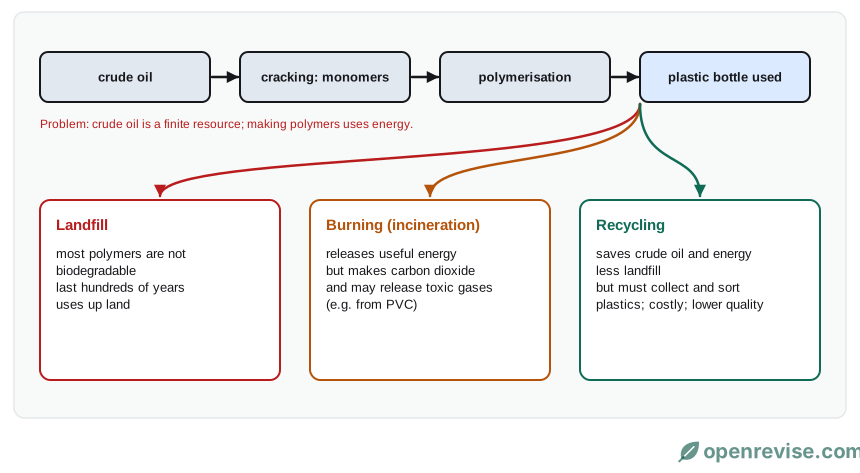
Most polymers are made from crude oil, which is a finite resource. Making polymers also uses a lot of energy.
Disposal
- Landfill: most polymers are not biodegradable. They stay in the ground for hundreds of years, take up space and can harm wildlife. Plastic litter also pollutes rivers and oceans.
- Burning (incineration): releases energy that can generate electricity, but produces carbon dioxide (a greenhouse gas). Some polymers release toxic gases: PVC releases hydrogen chloride. Incomplete combustion produces carbon monoxide and soot.
Recycling polymers
| Advantages | Disadvantages |
|---|---|
| saves crude oil, a finite resource | used polymers must be collected and transported |
| uses less energy than making new polymer | different polymers must be sorted, which is difficult and expensive |
| less waste goes to landfill | the recycled polymer is often lower quality |
| reduces litter and pollution | some polymers cannot be recycled |
Reducing the problem
- Reduce and reuse plastic items, such as using refillable bottles.
- Use biodegradable polymers, for example ones made from starch, for some uses.
Test yourself on this lesson
5 exam questions · 11 marks · with mark schemes and model answers
Found a mistake?